Buying guide
Best tennis balls under $50
Balls are the only equipment you buy repeatedly, so the question is not price per can but how many sessions a can survives. Those are different answers.
By Janet H.Updated
The short answer
The Wilson US Open is the best tennis ball under $50: The Tennis Tribe's best overall pick, and the ball they rate as holding its bounce longest, available in regular and extra duty. The Penn Championship is the budget pick and their best value award, with the trade stated plainly: it goes flat sooner. For multi-session life, the Penn Pro Marathon.
Disclosure — we earn a commission on qualifying purchases made through links on this page, at no extra cost to you. It never changes which product we rank first. How this site is funded.
Our picks
| # | Product | Best for | Score | Price |
|---|---|---|---|---|
| 1 | 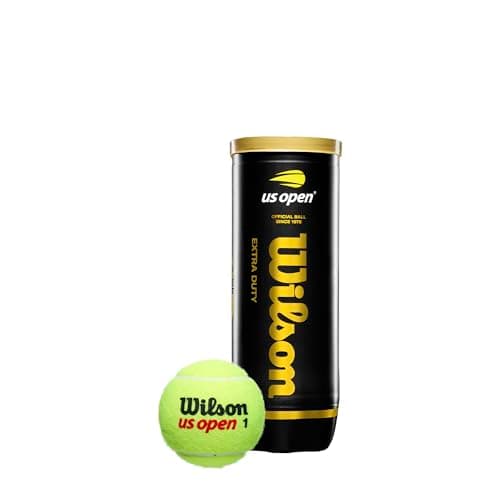 Wilson US OpenTop pick | Match play, and anyone buying one ball for everything | 9.04 criteria | |
| 2 | 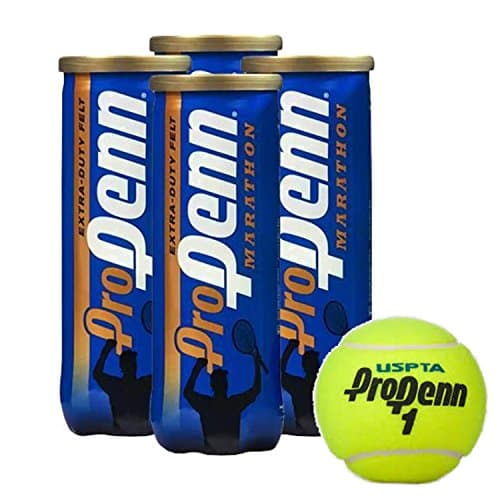 Penn Pro MarathonLongest life | Players who want a can to survive several sessions | 8.74 criteria | |
| 3 | 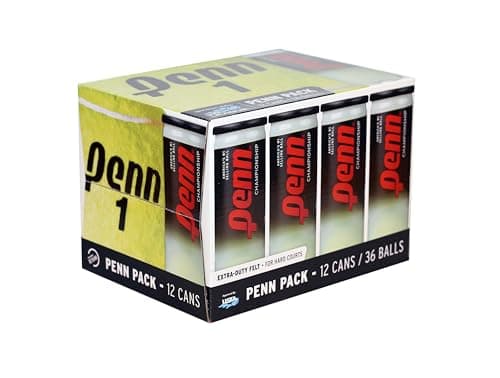 Penn ChampionshipBudget pick | Feeding baskets, and practice where bounce consistency does not matter | 7.64 criteria | |
| 4 | 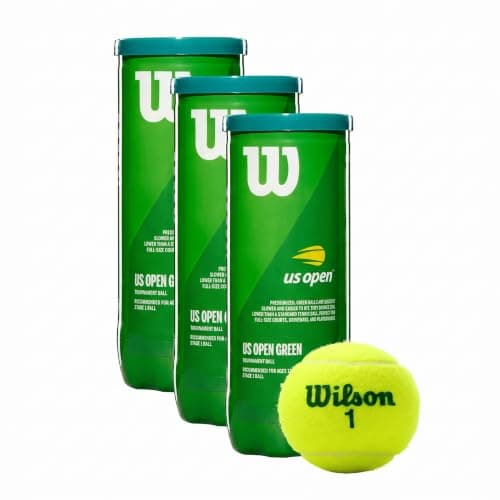 Wilson US Open Green TournamentBest learning ball | Players aged roughly eleven to twelve, and adult beginners | 8.24 criteria |
The picks in detail
01Wilson US Open
Top pickBest for: Match play, and anyone buying one ball for everything
The Tennis Tribe give this their best overall award and report that it holds its bounce longer than rival balls, which is the single most useful fact about a tennis ball. It is also the ball most US club players already recognise, so it is what your opponents will be bringing and what your club will be putting out.
It is sold in both regular and extra duty, which matters more than brand. Extra duty has a thicker, more felted cover built for abrasive hard courts; regular duty has a thinner one that lasts longer on clay and indoor surfaces, where a thick nap picks up material and fluffs. Having both in one product line means you can match the surface without changing ball. [Extra duty vs regular duty tennis balls](/guides/extra-duty-vs-regular-duty-tennis-balls) covers the difference.
The honest cost is that it is a pressurised ball like everything else here, so it starts going flat the moment the can is opened whether you play with it or not. Nobody publishes a measured bounce-decay figure for tennis balls, so the bounce-life claims on this page are The Tennis Tribe's reported findings rather than lab numbers, and we say so rather than presenting them as measurements.
Our score
- Performance
- 9.5
- Comfort
- 8.0
- Durability
- 9.0
- Value
- 9.5
- Overall
- 9.0
Verified specs
- Duty
- Regular and extra duty
- Type
- Pressurized
- Award
- Best Overall — The Tennis Tribe
- Reported life
- Holds bounce longer than rival balls
Specs as published by The Tennis Tribe, checked September 2026.
Buy if
- You play matches
- You want one ball for every situation
- You want the longest reported bounce life
Pass if
- You are feeding baskets of balls
- You want the lowest cost per ball
- You need a low-compression learning ball
02Penn Pro Marathon
Longest lifeBest for: Players who want a can to survive several sessions
Penn's durability line, and the one to buy if a can has to last several sessions rather than one match. The Tennis Tribe report that it maintains bounce and quality for weeks, which is the strongest longevity claim of any ball on this page.
The arithmetic that makes it the value pick for regular players rather than the expensive option is simple: a ball that survives three sessions at a slightly higher price per can is cheaper per session than a value ball that survives one. If you play twice a week with the same group and nobody is playing a sanctioned match, this is usually the right purchase.
The honest cost is that longevity in a pressurised ball is relative rather than absolute. It is still going flat, just more slowly, and a ball that has been played for three weeks does not behave like a new one even if it bounces adequately. Like everything here it is sold in regular and extra duty, so match the cover to your surface. [How long do tennis balls last](/guides/how-long-do-tennis-balls-last) covers opened and sealed life.
Our score
- Performance
- 9.0
- Comfort
- 8.0
- Durability
- 9.5
- Value
- 8.5
- Overall
- 8.7
Verified specs
- Duty
- Regular and extra duty
- Type
- Pressurized
- Reported life
- Maintains bounce and quality for weeks
Specs as published by The Tennis Tribe, checked September 2026.
Buy if
- You play several sessions a week
- You want the longest reported life
- You are not playing sanctioned matches
Pass if
- You play one match a week
- You want the lowest cost per can
- You need tournament-standard feel every time
03Penn Championship
Budget pickBest for: Feeding baskets, and practice where bounce consistency does not matter
The Tennis Tribe's best value award, and the trade is stated plainly in their own assessment: it goes flat faster than the US Open ball. That is not a criticism when you know what you are buying it for, which is the point of this card.
The use case is specific and common. If you are feeding a basket of a hundred balls for a serving session, or hitting against a wall, or running a junior group, bounce consistency over three weeks is irrelevant and cost per ball is everything. A ball that goes flat sooner but costs meaningfully less per can is the correct purchase for that job.
The honest cost shows up the moment you use them for the wrong thing. A flat ball sits down, which changes your timing and teaches you to swing differently, so practising with dead balls and then playing a match with new ones is actively counterproductive. Buy these for drills and buy something above for play.
Our score
- Performance
- 7.0
- Comfort
- 7.5
- Durability
- 6.0
- Value
- 9.5
- Overall
- 7.6
Verified specs
- Duty
- Regular and extra duty
- Type
- Pressurized
- Award
- Best Value — The Tennis Tribe
- Trade-off
- Goes flat faster than the US Open ball
Specs as published by The Tennis Tribe, checked September 2026.
Buy if
- You are feeding baskets or drilling
- You want the lowest cost per ball
- Bounce consistency over weeks does not matter
Pass if
- You play matches with them
- You want a can to last several sessions
- You are working on timing
04Wilson US Open Green Tournament
Best learning ballBest for: Players aged roughly eleven to twelve, and adult beginners
A full-size green-stage ball: the same dimensions as a match ball at 75 percent of the compression, per the green-stage specification, played on a full 78 by 27 foot singles court. The published age bracket is eleven to twelve, and it is the last rung of the ITF and USTA 10-and-under pathway before a standard yellow ball.
It belongs on this page because it is also the most underused ball in adult tennis. A lower-compression ball sits down where a developing swing can reach it, which makes rallying possible sooner for an adult beginner than a standard ball does, and rallying is the thing that actually builds technique. Nobody suggests it to adults, and for a genuine beginner it is often the better buy.
The honest cost is that it is not a match ball and should not be used as one once a player can rally with yellow. A 75 percent compression ball rewards a shorter swing and gives different feedback on spin, so staying on it too long builds habits that have to be unlearned. [Best tennis balls for beginners](/gear/best-tennis-balls-for-beginners) covers the progression properly.
Our score
- Performance
- 8.0
- Comfort
- 9.0
- Durability
- 8.0
- Value
- 8.5
- Overall
- 8.2
Verified specs
- Stage
- Green (ITF/USTA 10-and-under green stage)
- Size
- Standard size, per the green-stage specification
- Compression
- 75% compression of a yellow ball, per the green-stage specification
- Court
- Full court - 78 ft by 27 ft singles
- Published age bracket
- Eleven to twelve, per the green-stage specification
- Type
- Pressurized, low compression
Specs as published by Wikipedia, checked September 2026.
Buy if
- You are buying for a player aged around eleven or twelve
- You are an adult beginner who cannot yet rally
- You want a full-size ball with lower compression
Pass if
- You play matches with yellow balls
- You can already rally consistently
- You want a standard-compression ball
Why bounce life is the only ranking that makes sense
Tennis balls are the only equipment on this site you buy repeatedly and consume completely, which means price per can is close to meaningless on its own. The number that matters is cost per session, and that depends entirely on how long a can holds its bounce. A cheap ball that is finished after one match can easily cost more per session than a durability ball that survives three.
The complication is that nobody publishes a measured bounce-decay figure. There is an ITF specification for a new ball's rebound height, but no independent lab tracks how a given ball degrades over weeks of club use. What exists is reported experience from reviewers who use them, and The Tennis Tribe's assessments are what this page is ranked on. We present those as reported findings rather than as measurements, because that is what they are.
We do not write prices into the text of our pages, because a typed price is wrong within days. Every buy button on this page carries the current retailer price with its own as-of date, refreshed daily, so if a pick has moved you see that rather than our guess.
The four, side by side
| Ball | Type | Duty options | Reported bounce life | Tennis Tribe award |
|---|---|---|---|---|
| Wilson US Open | Pressurised | Regular and extra duty | Holds bounce longer than rival balls | Best overall |
| Penn Pro Marathon | Pressurised | Regular and extra duty | Maintains bounce and quality for weeks | Durability line |
| Penn Championship | Pressurised | Regular and extra duty | Goes flat faster than the US Open ball | Best value |
| Wilson US Open Green Tournament | Pressurised, low compression | Green stage, standard size | Not reported | Not rated; ITF/USTA green stage |
The duty column is the one that should change your order. Extra duty has a thicker felt cover for abrasive hard courts; regular duty has a thinner one that lasts longer on clay and indoors, where a thick nap fluffs up. Getting that wrong costs you more bounce life than choosing the wrong brand does.
What this ceiling rules out
Two things, both at the top of the category.
- The pressureless and eco options at case quantity. The Wilson Triniti, Wilson's recyclable-packaging ball rated for long bounce life, and the Wilson Championship at case volume both sit above this bracket in the quantities they are listed in. The Tennis Tribe report the Championship has the shortest life of any ball they review, which is the right trade only when the balls are going into a basket.
- Bulk buying generally. The real cost saving on tennis balls comes from case quantity rather than from brand, and a case of anything is above a $50 ceiling. If you run a group or a club session, that is the move rather than finding a cheaper can.
Two practical notes. A can is pressurised, so it begins losing bounce once opened whether you play or not, which means buying more cans than you will use within a few weeks is a false economy. And storing an opened can does not help much: how long do tennis balls last covers opened and sealed life, and best tennis balls ranks the whole category.
How these picks were made
Racket & Rally does not run a test lab and has not hit with any of this equipment. Nothing on this page is written as though we had, because we have not. What we do is read the published specifications, the retailer awards and the independent reviews cited at the foot of the page, set them against each other, and say which differences change something you will actually notice.
Every product here was confirmed on sale when its registry entry was built, and every claim traces to one of the sources listed at the bottom. Our full selection criteria set out the method, and the editorial policy covers corrections and how often pages are revisited. Where a brand or a retailer does not state a figure, we say so rather than filling the gap.
Common questions
What are the best tennis balls under $50?
The Wilson US Open. The Tennis Tribe give it their best overall award and report it holds its bounce longer than rival balls, and it is available in both regular and extra duty so you can match the surface. For a can that survives several sessions, the Penn Pro Marathon; for feeding baskets, the Penn Championship.
Are expensive tennis balls worth it?
Think in cost per session rather than cost per can. A ball that holds its bounce for three sessions at a modestly higher price is cheaper per session than a value ball that is finished after one. The exception is drilling: if you are feeding a basket, bounce consistency over weeks does not matter and cost per ball is everything.
What is the difference between extra duty and regular duty?
The felt cover. Extra duty has a thicker, more heavily felted cover built for abrasive hard courts; regular duty has a thinner one that lasts longer on clay and indoor surfaces, where a thick nap picks up material and fluffs up. Getting this wrong costs you more bounce life than choosing the wrong brand. Extra duty vs regular duty tennis balls covers it.
How long do tennis balls last?
Reported experience rather than measurement, because nobody publishes a bounce-decay figure. The Tennis Tribe report the Penn Pro Marathon maintaining bounce for weeks and the Wilson Championship not lasting more than several days. The important point is that a pressurised can starts losing bounce once opened whether you play or not. How long do tennis balls last goes through opened and sealed life.
Should beginners use a different tennis ball?
Often yes, and almost nobody suggests it to adults. A green-stage ball is the same size as a match ball at 75 percent of the compression, so it sits down where a developing swing can reach it, which makes rallying possible much sooner. Rallying is what builds technique. Best tennis balls for beginners covers the progression.
Is it cheaper to buy tennis balls in bulk?
Per ball, yes, and it is the only real saving in this category. But a pressurised can loses bounce once opened and degrades slowly even sealed, so buying more than you will get through in a few weeks converts a saving into waste. Bulk makes sense for a club, a coach or a group, and rarely for an individual.
Read next
Sources
Every source above was retrieved while writing this page. Specifications are quoted from the listing or manufacturer page cited, not from memory.