Buying guide
Best pickleball bags in 2026
Two features decide whether a bag is actually a pickleball bag: something to hang it on the fence with, and somewhere to put wet shoes that is not next to your phone. Everything else is personal.
By Janet H.Updated
The short answer
The HEAD Tour Pickleball Backpack 22L is the best pickleball bag for most players: 22 liters, stated three-racquet capacity, a hanging fence hook and a separate shoe compartment, with nothing else to pay for. If you go to the court straight from work, the JOOLA Vision II adds a padded laptop sleeve; if you want the cheapest bag that still works courtside, the Franklin Deluxe Competition has the fence hook and a lined valuables pocket.
Disclosure — we earn a commission on qualifying purchases made through links on this page, at no extra cost to you. It never changes which product we rank first. How this site is funded.
Our picks
| # | Product | Best for | Score | Price |
|---|---|---|---|---|
| 1 | 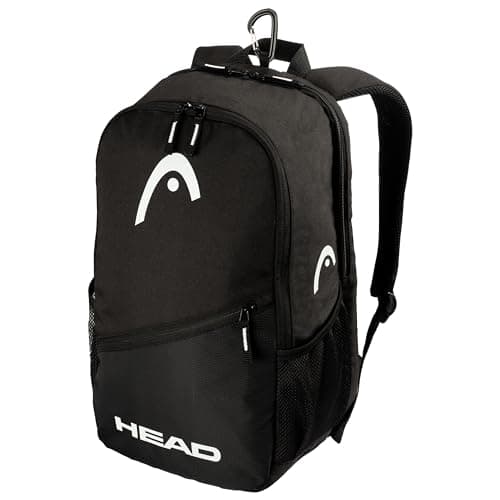 HEAD Tour Pickleball Backpack 22LTop pick | Most players, most of the time | 8.84 criteria | |
| 2 | 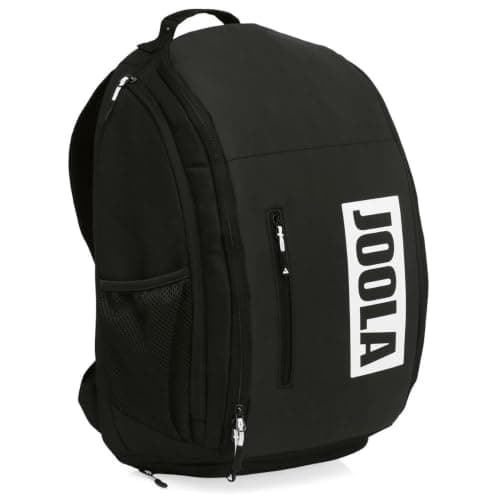 JOOLA Vision II Pickleball BackpackBest for commuters | Going to the court straight from work | 8.64 criteria | |
| 3 | 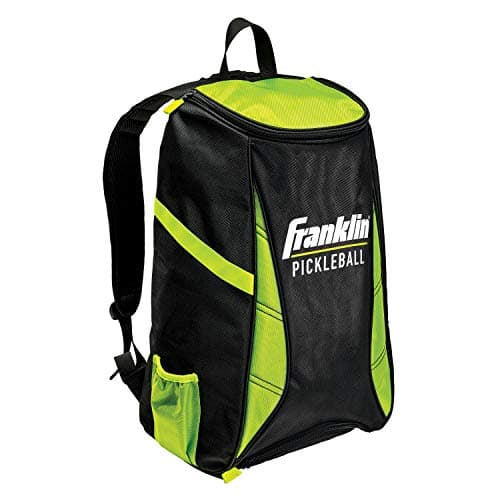 Franklin Deluxe Competition Pickleball BackpackBest value | The cheapest bag that still works courtside | 8.14 criteria | $28.99 · View on Amazon Price as of November 13, 2026 · was $64.99, 55% off |
| 4 |  JOOLA Tour Elite Pickleball BagBest for tournaments | All-day tournaments | 8.44 criteria | |
| 5 | 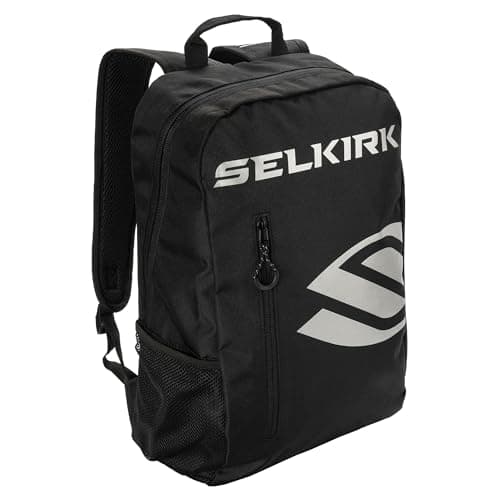 Selkirk Day BackpackBest minimal bag | Carrying as little as possible | 8.04 criteria | |
| 6 | 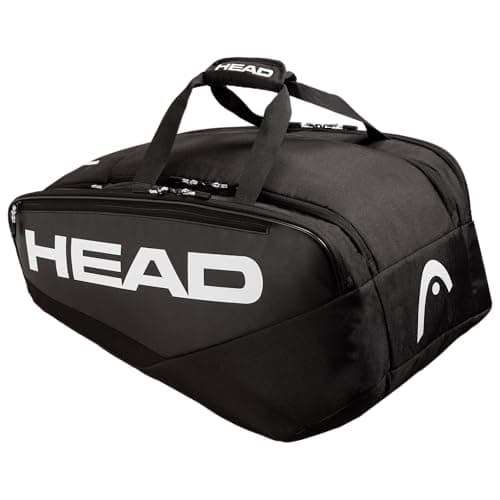 HEAD Pro Pickleball BagBiggest capacity | Carrying a club's worth of paddles | 7.94 criteria |
The picks in detail
01HEAD Tour Pickleball Backpack 22L
Top pickBest for: Most players, most of the time
This is the bag that does the two things a pickleball bag has to do and then stops. Its listing states a 22-liter capacity, a three-racquet (3R) designation, a hanging fence hook and a shoe compartment - which covers courtside storage, wet shoes and spare paddles without adding a single feature you will carry around unused.
Three-paddle capacity is the right number for the overwhelming majority of players, and it is more useful than it sounds even if you own one paddle: the second and third slots are where a loaner for a friend and your partner's spare go, and they are the difference between organizing a game and not. The 22-liter body is a normal daypack volume, so it behaves like a bag you would carry anyway.
The honest cost is that the listing is terse. It does not itemize the internal pockets, state the material, or give a weight - so if you want to know exactly how the inside is divided before you buy, this is not the bag with the most information behind it. It was also showing limited stock when we checked, which in this category changes week to week.
Our score
- Performance
- 9.0
- Comfort
- 8.5
- Durability
- 8.5
- Value
- 9.0
- Overall
- 8.8
Verified specs
- Type
- Backpack
- Capacity
- 22 L, 3-racquet (3R)
- Fence hook
- Yes - hanging fence hook
- Shoe compartment
- Yes
- Other pockets
- Not itemized by the listing we read
Specs as published by the Amazon product listing, checked September 2026.
Buy if
- You want a fence hook and a shoe compartment and nothing else
- You carry up to three paddles
- You want a normal-sized daypack rather than a kit bag
Pass if
- You need a laptop sleeve
- You carry four or more paddles
- You want a fully itemized pocket list before buying
02JOOLA Vision II Pickleball Backpack
Best for commutersBest for: Going to the court straight from work
This is the most completely specified bag on the page, and it is the one aimed at a real scheduling problem. Its listing states a padded laptop sleeve, paddle and gear storage, a ventilated shoe compartment, accessory pockets, a side mesh bottle holder and a fence hook - which is every feature in this roundup in a single bag.
The ventilated shoe compartment is the detail worth paying for if this is your one bag. A sealed shoe pocket keeps the smell away from your gear and traps the moisture inside it; a vented one lets the shoes dry between sessions, which matters a lot more when the same bag is going back into an office the next morning. The laptop sleeve means you are not carrying two bags to play after work.
The honest cost is that a bag with every feature is a bag with every feature's weight and bulk, and that the listing does not state a paddle count - it says paddle and gear storage without a number, so if capacity is your deciding factor this is the bag you know least about. It also does not publish dimensions or a volume, unlike the HEAD above.
Our score
- Performance
- 9.0
- Comfort
- 9.0
- Durability
- 8.0
- Value
- 8.5
- Overall
- 8.6
Verified specs
- Type
- Backpack
- Capacity
- Paddle and gear storage; count not stated by the listing
- Fence hook
- Yes
- Shoe compartment
- Yes - ventilated
- Laptop sleeve
- Yes
- Bottle holder
- Side mesh bottle holder
Specs as published by the Amazon product listing, checked September 2026.
Buy if
- You play before or after work
- You want your shoes to dry rather than steam
- You want one bag that does everything
Pass if
- You want the lightest possible bag
- You need a stated paddle capacity
- You already carry a separate work bag
03Franklin Deluxe Competition Pickleball Backpack
Best valueBest for: The cheapest bag that still works courtside
This is the cheapest bag on the page and it still has the two features that actually matter when you get to the court: its listing states a courtside fence hook and a fleece valuables pocket, plus padded straps, roomy zippered storage and a water bottle holder. A lined pocket for a phone and keys and a hook to get the bag off wet grass is most of what a pickleball bag is for.
For a player who has just bought their first paddle, this is also the correct order of spending. A bag is the least performance-relevant thing in the sport - it does not change a single shot - and spending at the top of the category before you know whether you will play twice a week or twice a month is money that could have gone on a better paddle.
Two honest costs. The listing does not state a paddle capacity or a shoe compartment, which are the two specs the bags above lead with - so assume one or two paddles and plan to carry shoes separately or in a plastic bag. And at the bottom of a category, materials and zippers are where cost comes out; this is a bag to replace when it fails rather than one to expect years from.
Our score
- Performance
- 7.5
- Comfort
- 7.5
- Durability
- 7.0
- Value
- 9.5
- Overall
- 8.1
Verified specs
- Type
- Backpack
- Fence hook
- Yes - courtside fence hook
- Valuables pocket
- Fleece-lined
- Straps
- Padded
- Bottle
- Holds a water bottle
- Paddle capacity
- Not stated by the listing we read
- Shoe compartment
- Not stated by the listing we read
Specs as published by the Amazon product listing, checked September 2026.
Buy if
- You have just started and want to spend on a paddle instead
- You want a fence hook and a lined valuables pocket at the lowest price
- You carry one or two paddles
Pass if
- You need a dedicated shoe compartment
- You want a stated paddle capacity
- You want a bag to last several seasons
Price as of November 13, 2026 · was $64.99, 55% off
04JOOLA Tour Elite Pickleball Bag
Best for tournamentsBest for: All-day tournaments
The format is the feature here. Its listing describes a convertible backpack and duffle carrying four or more paddles plus accessories and gear, with a fence hook and multiple storage pockets - and convertibility is what makes a bag survive a tournament day. You wear it as a backpack between courts and lay it open as a duffle at your assigned court, which is how you find things without unpacking onto the ground.
Four-plus paddle capacity is a real requirement for a narrow but definite group: anybody playing multiple events in a day, anybody who rotates paddles as faces wear, and anybody carrying a doubles partner's kit. If you are in that group, the bags above genuinely do not fit your gear.
The honest cost is that it is the second-most expensive bag here and most of what you are paying for is capacity and format you will not use at a weekly open-play session. Its listing also does not state a shoe compartment, which is a surprising omission at this tier - so check that before you buy it as your only bag.
Our score
- Performance
- 9.5
- Comfort
- 8.0
- Durability
- 8.5
- Value
- 7.5
- Overall
- 8.4
Verified specs
- Type
- Convertible backpack and duffle
- Capacity
- 4+ paddles, plus accessories and gear
- Fence hook
- Yes
- Pockets
- Multiple storage pockets
- Shoe compartment
- Not stated by the listing we read
Specs as published by the Amazon product listing, checked September 2026.
Buy if
- You play tournaments or multiple events in a day
- You carry four or more paddles
- You want a bag that opens flat courtside
Pass if
- You play weekly open play and own one paddle
- You need a stated shoe compartment
- You want the lightest or cheapest option
05Selkirk Day Backpack
Best minimal bagBest for: Carrying as little as possible
Selkirk's own listing describes this as a compact, lightweight backpack for quick trips to pickleball practice, holding two paddles, with a padded front pocket and organization pockets - and that description is refreshingly free of ambition. If you drive to the court, play for an hour and drive home, this is the correct amount of bag.
The padded front pocket is the spec that matters in a small bag, because a paddle face is the thing you are protecting and a thin pocket against your back is not where it should live. Two-paddle capacity also covers the realistic maximum for a recreational player plus one spare.
Two honest costs, and they are the same cost twice: the listing states no fence hook and no shoe compartment. For a bag you throw in the car that is fine; for a bag that spends two hours on the ground beside a public court in the wet, a fence hook is the feature you will wish you had bought. The HEAD or the Franklin are the answers there.
Our score
- Performance
- 7.0
- Comfort
- 9.0
- Durability
- 8.0
- Value
- 8.5
- Overall
- 8.0
Verified specs
- Type
- Backpack - compact and lightweight
- Capacity
- Holds 2 paddles
- Pockets
- Padded front pocket plus organization pockets
- Fence hook
- Not stated by the listing we read
- Shoe compartment
- Not stated by the listing we read
Specs as published by the Amazon product listing, checked September 2026.
Buy if
- You drive to the court and play for an hour
- You carry two paddles at most
- You want the least bag that still protects a paddle face
Pass if
- You need a fence hook
- You carry shoes to and from the court
- You want room for a change of clothes
06HEAD Pro Pickleball Bag
Biggest capacityBest for: Carrying a club's worth of paddles
Its listing states a six-racquet capacity, and that is the entire reason it is on this page. Six paddles is coach-and-organizer territory: the person who brings the loaners so new players can try the sport, the club rep carrying demos, or the household where three people play and nobody wants three bags.
There is a second, quieter use for it. Paddle faces wear - raw carbon polishes smooth with use - so players who care about spin rotate between paddles rather than running one into the ground, and a six-slot bag is how that gets carried. Our [paddles for spin](/pickleball/best-paddles-for-spin) roundup covers why the face is the thing that wears.
The honest cost is that this is the least informative listing in the roundup and the least suitable bag for a normal player. It states a capacity and nothing else: no fence hook, no shoe compartment, no pocket list, no dimensions. Six paddles is also a lot of bag to carry to a session where you will use one - if that is your situation, the HEAD Tour 22L at the top of this page is the same brand doing the right job.
Our score
- Performance
- 9.0
- Comfort
- 6.5
- Durability
- 8.5
- Value
- 7.0
- Overall
- 7.9
Verified specs
- Type
- Racquet bag
- Capacity
- 6-racquet
- Fence hook
- Not stated by the listing we read
- Shoe compartment
- Not stated by the listing we read
- Pockets
- Not itemized by the listing we read
Specs as published by the Amazon product listing, checked September 2026.
Buy if
- You carry paddles for other people
- You rotate between several paddles
- Three people in your household play
Pass if
- You own one or two paddles
- You want a fence hook or a shoe compartment
- You want a bag you barely notice
Two features separate a pickleball bag from a backpack
Almost everything sold as a pickleball bag is a backpack with a paddle pocket, and most of the marketing is about the paddle pocket. The paddle pocket is not the point. Two other features are what you are actually buying.
The first is a fence hook: a loop or clip that hangs the bag on the chain-link at the side of the court. Pickleball is played on public outdoor courts far more than any other racquet sport on this site, and public courts do not have benches, dry ground or anywhere to put a bag. A hook keeps your gear off wet concrete and in your eyeline, and it is the single feature most likely to be missing from a cheap bag.
The second is a separate shoe compartment, and the detail that matters is whether it is ventilated. A sealed shoe pocket keeps the smell out of your clothes and keeps the moisture in your shoes, which is how a court shoe's upper fails early. A vented one lets them dry. If the bag is also your work bag, this stops being a nicety.
The four criteria we ranked on, and the data problem
Every bag here is scored on the same four axes this site uses for gear, so a score means the same thing on every page. These are our editorial judgments drawn from what each bag's own listing states; they are not user ratings and we have not carried any of them.
- Performance - read here as fitness for purpose on a court: fence hook, shoe compartment, stated paddle capacity, bottle holder. The spread on this axis is the whole ranking.
- Comfort - padded straps, body volume and how much bag you are carrying relative to what you need. A six-paddle bag scores low here by definition, and that is not a criticism of the bag.
- Durability - materials and construction, and the honest truth is that this is the axis we know least about, because almost no listing in the category states a fabric weight or a warranty.
- Value - features per dollar rather than sticker price. A cheap bag with a fence hook and a lined pocket scores well; an expensive bag whose extra cost is capacity you will not use does not.
Now the data problem, stated plainly: nobody independently tests racquet bags. There is no lab figure, no abrasion test and no measured capacity comparison anywhere for this category, the way RunRepeat measures court shoes. So the specification source on this page is each bag's own retailer listing, read on 2026-11-05 together with its live stock status, and every blank in the table below is a feature the listing genuinely does not mention rather than a feature we know is absent.
That has one practical consequence worth acting on: when two bags look similar, prefer the one whose listing says more. A manufacturer that states a liter capacity, a paddle count and a ventilated shoe compartment is a manufacturer making claims you can hold them to, and in a category with no independent testing that is the only accountability available.
The features side by side
Read this across rather than down, and read the blanks as missing information rather than as a missing feature.
| Bag | Type | Stated paddle capacity | Fence hook | Shoe compartment | Notable extra |
|---|---|---|---|---|---|
| HEAD Tour Pickleball Backpack 22L | Backpack, 22 L | 3-racquet (3R) | Yes | Yes | The only stated volume figure here |
| JOOLA Vision II | Backpack | Not stated | Yes | Yes - ventilated | Padded laptop sleeve, side mesh bottle holder |
| Franklin Deluxe Competition | Backpack | Not stated | Yes | Not stated | Fleece-lined valuables pocket |
| JOOLA Tour Elite | Convertible backpack / duffle | 4+ paddles | Yes | Not stated | Converts between backpack and duffle |
| Selkirk Day Backpack | Backpack, compact | 2 paddles | Not stated | Not stated | Padded front pocket |
| HEAD Pro Pickleball Bag | Racquet bag | 6-racquet | Not stated | Not stated | The largest stated capacity here |
Two things fall out of that table. The first is that only two of six bags state a paddle capacity and only one states a volume, which tells you how loosely this category is specified. The second is that the two features we named at the top of the page - fence hook and shoe compartment - are both stated on exactly two bags, and those two bags are the top two picks. That is not a coincidence; it is what happens when you rank a category on what its listings actually commit to.
What size bag you actually need
Capacity is the spec people get wrong in both directions, and it maps onto how you play rather than how good you are.
- 01One or two paddles, driving to the court, playing an hour: a compact two-paddle backpack. Anything larger is weight you carry to no purpose, and the Selkirk Day Backpack is the honest version of this.
- 02Up to three paddles, playing open play at a public court: a three-paddle backpack with a fence hook and a shoe compartment. This is the majority case and the HEAD Tour 22L is it.
- 03Coming from or going to work: the same again plus a padded laptop sleeve and a ventilated shoe pocket, which is the JOOLA Vision II.
- 04Four or more paddles, or a tournament day: a convertible backpack-duffle. You need it to open flat courtside and you need the capacity, which is the JOOLA Tour Elite.
- 05Six paddles: you are carrying for other people, and the HEAD Pro is the only bag here that does it.
One cross-sport note that saves money. If you already play tennis or padel and own a six-racquet tennis bag, you do not need a pickleball bag at all - a six-pack swallows paddles, shoes and kit with room over, and our best tennis bags and padel bags pages cover those. The crossover runs one way: a pickleball bag will not take a 27-inch tennis frame.
What to put in it
A bag is only worth buying if the right things end up in it. For pickleball specifically, four of them are not obvious.
- Two kinds of ball, kept separate. Outdoor balls have 40 holes and indoor balls have 26, and the only way to end up playing the wrong one is to not know which sleeve you grabbed - best pickleball balls covers why it matters.
- A spare overgrip. Grip is the cheapest change you can make to how a paddle feels, and a wet grip is the most common reason a paddle starts slipping mid-session. Best overgrips for sweaty hands covers the dry-feel versus tacky question.
- Court shoes, not running shoes, and ideally in their own compartment. A pickleball court is a 20-by-44-foot box and the loading is lateral - what are court shoes explains why a running shoe is the wrong tool, and the Skechers Viper Court Pro 2.0 review covers the most commonly worn option.
- Your second paddle, if you have one. Not for you - for the person who turns up wanting to try the sport. It is the cheapest way to grow a group, and it is why three-paddle capacity beats two.
How to narrow it to one
Work in this order.
- 01If you want a bag that does the job and stops, buy the HEAD Tour Pickleball Backpack 22L. Fence hook, shoe compartment, three paddles, a stated volume.
- 02If you play around work, buy the JOOLA Vision II for the laptop sleeve and the ventilated shoe compartment.
- 03If you have just started and would rather spend on a paddle, buy the Franklin Deluxe Competition - it still has the fence hook and a lined valuables pocket.
- 04If you play tournaments or carry four-plus paddles, buy the JOOLA Tour Elite for the convertible format.
- 05If you want to carry almost nothing, buy the Selkirk Day Backpack, and accept that there is no stated fence hook.
- 06If you carry paddles for other people, buy the HEAD Pro for the six-racquet capacity.
And if you own a tennis or padel six-pack already, buy nothing. The best pickleball bag for a lot of people is the bag in their hall cupboard.
How these picks were made
Racket & Rally does not run a test lab. Nothing on this page is written as though we had worn, carried or measured anything ourselves, because we have not. What we do is read the published specifications, the independent guides and the retailer listings cited at the foot of the page, set them against each other, and say which differences change something you will actually notice.
Every product here was confirmed on sale when its registry entry was built, and every claim traces to one of the sources listed at the bottom. Our full selection criteria set out the method, and the editorial policy covers corrections and how often pages are revisited. Where a brand or a listing does not state a figure, we say that rather than filling the gap.
Common questions
What should I look for in a pickleball bag?
A fence hook and a separate shoe compartment, in that order. Pickleball is played on public outdoor courts with nowhere to put a bag, so a hook that hangs it on the chain-link keeps your gear off wet ground; a ventilated shoe pocket keeps the smell out of your clothes and lets the shoes dry. Paddle capacity matters third, and a padded paddle pocket is enough protection.
How many paddles should a pickleball bag hold?
Three covers the overwhelming majority of players, even if you own one paddle - the spare slots are where a loaner for a new player and a partner's paddle go. Two is enough if you drive to the court and play for an hour. Four or more is tournament and multi-event territory, and six means you are carrying for other people.
Can I use a tennis bag for pickleball?
Yes, and if you own one you probably should. A six-racquet tennis bag swallows paddles, shoes and a change of kit with room left over, because a pickleball paddle is much shorter than a 27-inch tennis frame. The crossover only runs that way - a pickleball bag will not take a tennis racket.
Do pickleball paddles need a padded bag?
They need the face kept away from zippers and keys, and not much more. A paddle is a rigid composite slab with nothing under tension, so unlike a strung tennis racket there is nothing in it to go out of shape in a bag. A padded pocket is sufficient; a thermal paddle sleeve is solving a problem recreational players do not have.
What is a fence hook on a pickleball bag?
A loop or clip that lets you hang the bag on the chain-link fence at the side of the court. It sounds trivial until you are at a public court with no bench, wet ground and your phone in the bag. It is the feature most often missing from cheap bags and the single thing we would not buy without.
Is a backpack or a duffle better for pickleball?
A backpack for normal play, a convertible for tournaments. A backpack keeps your hands free between courts and is a normal thing to carry; a bag that converts to a duffle opens flat at your assigned court, which is how you find things during an all-day event without unpacking onto the ground.
Why is there so little information published about pickleball bags?
Because nobody independently tests them. There is no lab figure, abrasion test or measured capacity comparison for racquet bags anywhere, so a brand's own listing is the only specification that exists - and most listings in this category do not state a paddle count, a volume or a material. Where two bags look similar, prefer the one whose listing commits to more.
Read next
Sources
- 01Amazon product listing - HEAD Tour Pickleball Backpack 22L
- 02Amazon product listing - JOOLA Vision II Pickleball Backpack
- 03Amazon product listing - Franklin Sports Deluxe Competition Pickleball Backpack
- 04Amazon product listing - JOOLA Tour Elite Pickleball Bag
- 05Amazon product listing - Selkirk Sport Day Backpack
- 06Amazon product listing - HEAD Pro Pickleball Bag
Every source above was retrieved while writing this page. Specifications are quoted from the listing or manufacturer page cited, not from memory.