Buying guide
Best pickleball paddles for tennis elbow in 2026
Lateral elbow pain is the complaint this sport produces most, and the paddle is only part of the answer. These four are the ones whose published specs point the right way - and the free changes below matter more than any of them.
By Janet H.Updated
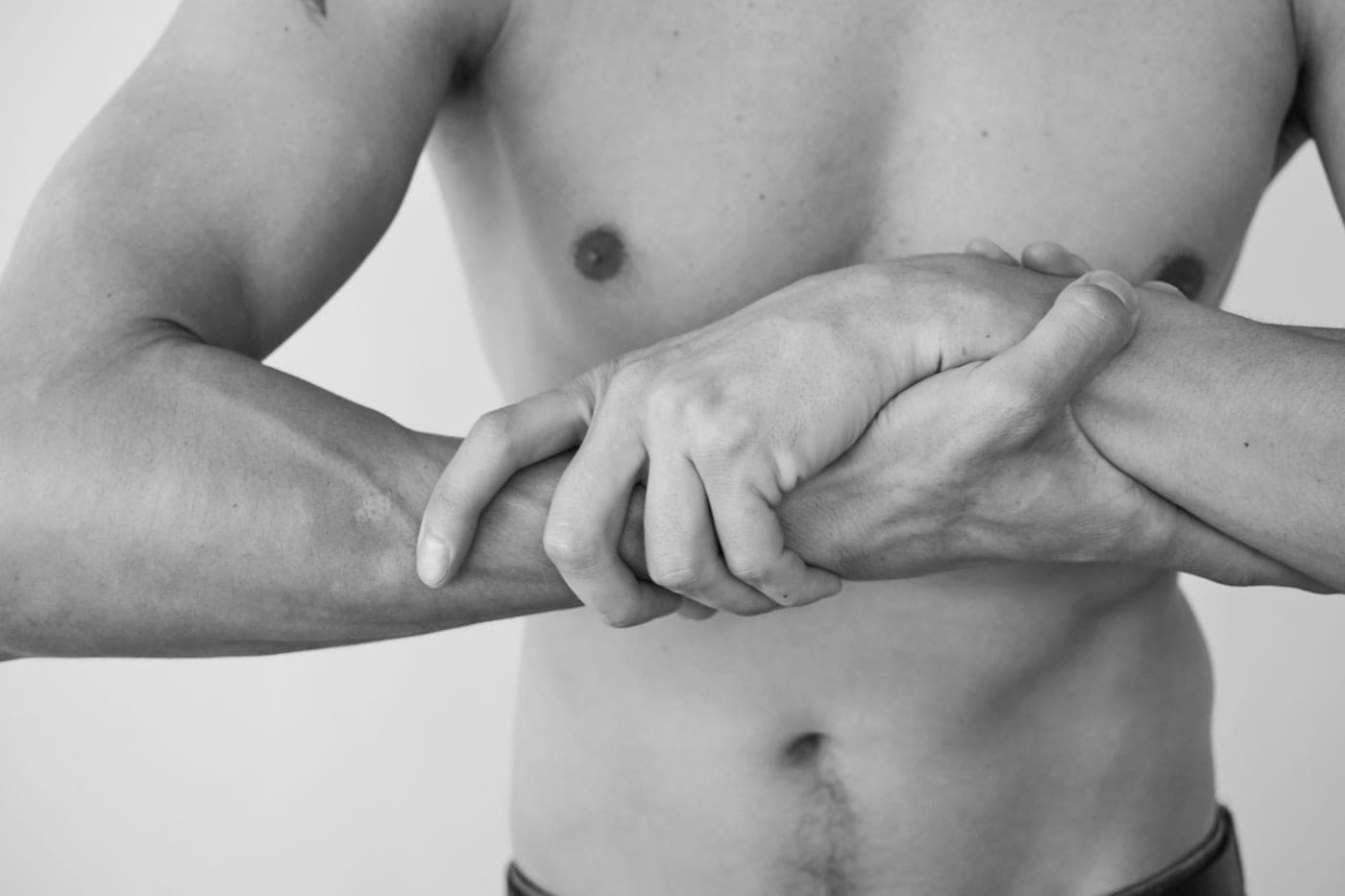
The short answer
The Paddletek Bantam EX-L is the best pickleball paddle for tennis elbow: at a published 7.2 to 7.8 oz it is the lightest paddle we track, and a lighter head is less mass for a sore forearm to start and stop hundreds of times a session. Pair it with a looser grip and a two-handed backhand before you spend anything else.
Disclosure — we earn a commission on qualifying purchases made through links on this page, at no extra cost to you. It never changes which product we rank first. How this site is funded.
Our picks
| # | Product | Best for | Score | Price |
|---|---|---|---|---|
| 1 | 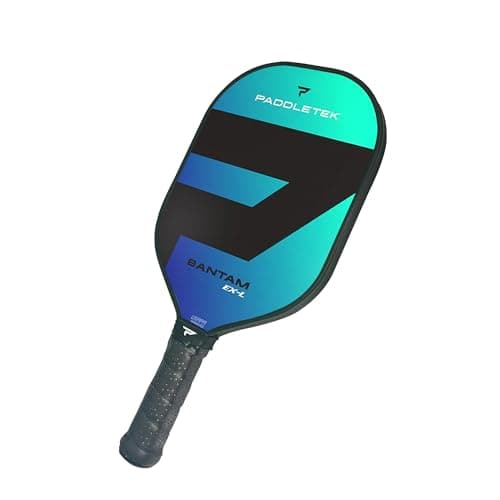 Paddletek Bantam EX-LTop pick | Most players with elbow pain | 8.45 criteria | |
| 2 |  Ronbus Quanta ProBest handle length | A two-handed backhand | 8.65 criteria | |
| 3 | 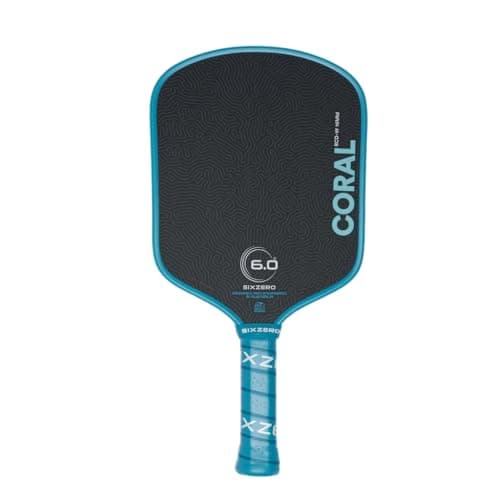 Six Zero CoralBest damping | Competitive players who will not drop down in performance | 8.75 criteria | |
| 4 | Vatic Pro V-SOL ProBest value | The cheapest sensible upgrade | 8.55 criteria |
The picks in detail
01Paddletek Bantam EX-L
Top pickBest for: Most players with elbow pain
Weight is the one paddle variable with an unambiguous link to forearm load, and this is the lightest paddle in our registry at a published 7.2 to 7.8 oz. Every gram out at the head has to be accelerated and then stopped by the muscles that attach at the lateral epicondyle - the extensor group OrthoInfo names as the usual site of tennis elbow - and in a sport played at the kitchen line those accelerations happen constantly rather than occasionally.
The rest of the build points the same way. Paddletek's polymer core with a graphite face is a soft, damped combination rather than a poppy one, and PickleballUS name it their control-first beginner pick. A paddle that absorbs rather than returns sends less of each impact up the handle, which is the whole mechanism you are shopping for.
The honest cost is power, and it is a real one: this is a control paddle, so a driving, aggressive player will feel they have to swing harder to get the same ball - exactly the wrong outcome for an elbow. If your game is built on put-aways, look at the Six Zero below and accept the extra weight. Paddletek also publishes the core as a material rather than a thickness, so there is no millimeter figure we can quote.
Our score
- Control
- 9.0
- Power
- 6.5
- Spin
- 7.0
- Sweet spot
- 8.5
- Value
- 8.0
- Overall
- 8.4
Verified specs
- PickleballUS award
- Best for Control-First Beginners
- Weight
- 7.2-7.8 oz
- Core
- Paddletek polymer
- Face
- Graphite
- Shape
- Standard
Specs as published by PickleballUS, checked September 2026.
Buy if
- You have current lateral elbow pain and play twice a week or more
- You want the lightest paddle available
- Your game is dinks, resets and placement rather than drives
Pass if
- You are a power player who will swing harder to compensate
- You want a published core thickness figure
- You want maximum spin from the face
02Ronbus Quanta Pro
Best handle lengthBest for: A two-handed backhand
7.9 oz on a 16 mm core with a 5.5-inch handle, and that handle is the reason it is here. A 5.5-inch grip is long enough to get a second hand on the paddle, and a two-handed backhand shares the load across both arms instead of asking one forearm to decelerate the whole stroke. For a player with one sore elbow, that is the most useful structural change on this page after weight itself.
The 16 mm core is the other half. A thicker polymer core deflects more on impact and returns less shock into the handle, which is why thick cores dominate every control-oriented paddle list. Ronbus use a NanoBond raw carbon face over it, so you keep the grit for spin that a graphite-faced control paddle gives up, and Pickleheads list it as their Best Under $100 pick.
The costs are documentation and grit life. Ronbus publish less than the larger brands - there is no stated grip circumference or balance figure to cite - and raw carbon faces lose their surface grit with use, which is a characteristic of the material rather than a defect. 7.9 oz is also heavier than the Paddletek, which is small but not nothing if weight is your limiting factor.
Our score
- Control
- 8.5
- Power
- 7.5
- Spin
- 8.5
- Sweet spot
- 8.0
- Value
- 9.5
- Overall
- 8.6
Verified specs
- Pickleheads award
- Best Under $100
- Weight
- 7.9 oz
- Core
- 16 mm
- Face
- NanoBond raw carbon
- Handle
- 5.5 in
- Price
- $99.99 as listed by Pickleheads
Specs as published by Pickleheads, checked September 2026.
Buy if
- You can hit, or want to learn, a two-handed backhand
- You want a thick core and a raw carbon face at a sub-$100 listed price
- You want spin as well as control
Pass if
- You play one-handed and want the lightest setup
- You want published grip circumference figures
- You dislike how a raw carbon face wears
03Six Zero Coral
Best dampingBest for: Competitive players who will not drop down in performance
Pickleheads' Best Control pick, built on a 16 mm core and a Diamond Tough carbon face that is deliberately damped rather than lively. This is the paddle for the player whose elbow hurts but who is not willing to become a worse player about it - you keep a competitive face and a competitive sweet spot, and the thick core does the shock work.
At 8 to 8.3 oz it is not heavy, and the handle comes in 5.5 or 5.75 inches, so the two-handed-backhand option is available here too. For a 4.0-and-up player managing an elbow through a league season, that combination - thick core, damped face, long handle, moderate weight - is the most complete answer on this page.
The cost is money and, marginally, weight. Pickleheads list it at $180, roughly double the two sub-$100 picks above, and 8 to 8.3 oz asks a little more of the forearm than 7.2 to 7.8 oz does. Buy it because you need to keep competing, not because it is the most expensive option here.
Our score
- Control
- 9.5
- Power
- 8.0
- Spin
- 8.5
- Sweet spot
- 9.0
- Value
- 6.5
- Overall
- 8.7
Verified specs
- Pickleheads award
- Best Control
- Weight
- 8-8.3 oz
- Core
- 16 mm
- Face
- Diamond Tough carbon
- Handle
- 5.5 / 5.75 in
- Price
- $180 as listed by Pickleheads
Specs as published by Pickleheads, checked September 2026.
Buy if
- You compete and will not trade performance for comfort
- You want a damped premium face on a thick core
- You want a 5.75-inch handle option
Pass if
- Weight is your single limiting factor
- You want the cheapest route to a thick core
- You are new to the sport
04Vatic Pro V-SOL Pro
Best valueBest for: The cheapest sensible upgrade
A T700 raw carbon face on a 16 mm core at a price Pickleheads list as $99.99 - a premium spec sheet at a mid-tier price, and their Best Budget award. If your current paddle is a thin-core starter and your elbow has started talking to you, this is the least expensive way to get the thick core that matters.
The handle runs 5.3 to 5.6 inches depending on the shape, which again puts a two-handed backhand within reach, and the published weight of 8 to 8.5 oz sits in the normal band rather than at the heavy end. For somebody who has been playing six months on a paddle that came in a set with two balls, this is a large and cheap improvement.
The honest cost is that it is the heaviest paddle on this page at the top of its range, and a raw carbon face is grippier and livelier than the damped graphite of the Paddletek - more spin, slightly more feedback into the hand. If your elbow is acute rather than grumbling, start with the lighter, softer Paddletek and keep this as the upgrade for when it settles.
Our score
- Control
- 8.5
- Power
- 8.0
- Spin
- 9.0
- Sweet spot
- 8.0
- Value
- 9.5
- Overall
- 8.5
Verified specs
- Pickleheads award
- Best Budget
- Weight
- 8-8.5 oz
- Core
- 16 mm
- Face
- T700 raw carbon
- Handle
- 5.3-5.6 in
- Price
- $99.99 as listed by Pickleheads
Specs as published by Pickleheads, checked September 2026.
Buy if
- You are replacing a thin-core starter paddle
- You want a thick core and raw carbon for the least money
- Your elbow is grumbling rather than acutely painful
Pass if
- You need the lightest possible paddle
- You want maximum damping rather than maximum spin
- You are mid-flare-up
Why pickleball produces so much elbow pain
Tennis elbow - lateral epicondylitis - is irritation of the tendon on the outside of the elbow, usually the extensor carpi radialis brevis, which attaches the muscle that extends your wrist to the bony bump on the outer side of the joint. OrthoInfo, the American Academy of Orthopaedic Surgeons' patient-information site, lists racquet sports among its common causes alongside a long list of trades, and notes that it most often affects people between 30 and 50.
Pickleball loads that tendon in a specific way. The paddle is held with a firm grip and the wrist does much of the work, because most shots happen inside a small box and there is no time for a long arm swing. Resets and dinks are decelerations - you are absorbing a ball rather than driving it - and deceleration is the eccentric load that frays extensor tendons. Then the sport's fastest-growing demographic overlaps precisely with the age band OrthoInfo names.
The consequence for shopping is that you are not trying to buy a paddle that is comfortable to hold. You are trying to reduce three things: the mass your forearm has to start and stop, the shock that arrives at your hand on each impact, and the proportion of each stroke your wrist is doing alone. Weight addresses the first, core thickness the second, and handle length the third, by letting a second hand onto the paddle.
The three specs that matter, and the two that do not
Paddle marketing talks about faces, cores, shapes and grit. Only some of it is relevant to an elbow.
- Weight - matters most. Every gram is accelerated and decelerated by the same muscles that attach at the painful spot. The spread on this page is 7.2 oz to 8.5 oz, which sounds trivial and is not: roughly a 15 percent difference in the mass your forearm manages on every shot.
- Core thickness - matters a lot. A 16 mm polymer core deflects more on impact than a 13 mm one and returns less shock up the handle. Every pick here with a published thickness is 16 mm, and the one 13 mm paddle in our registry is deliberately absent.
- Handle length - matters more than people expect. A handle of about 5.5 inches lets you add a second hand on the backhand, spreading the deceleration across two arms. Three of the four picks here are 5.3 inches or longer.
- Shape - mostly irrelevant to pain, relevant to play. An elongated paddle puts more mass further from your hand, which marginally raises swingweight; a standard shape is slightly easier on the arm but gives up reach.
- Face material and grit - irrelevant to pain. Raw carbon spins more than graphite and fiberglass pops more than both, but none of that changes the load on a tendon. Buy the face you want to play with.
The four side by side
| Paddle | Published weight | Core | Handle | Face |
|---|---|---|---|---|
| Paddletek Bantam EX-L | 7.2-7.8 oz | Paddletek polymer, no thickness published | Not published | Graphite |
| Ronbus Quanta Pro | 7.9 oz | 16 mm | 5.5 in | NanoBond raw carbon |
| Six Zero Coral | 8-8.3 oz | 16 mm | 5.5 / 5.75 in | Diamond Tough carbon |
| Vatic Pro V-SOL Pro | 8-8.5 oz | 16 mm | 5.3-5.6 in | T700 raw carbon |
Read down the weight column first and the handle column second. If your pain is acute, the top row is the answer and the rest of the table is for later. If it is a manageable ache and you want to keep competing, rows two and three are where the useful compromises live.
Four free changes that matter more than the paddle
If you only change the paddle, you have changed the smallest variable. These cost nothing and act on the same tendon.
- 01Loosen your grip. A death grip keeps the extensor muscles contracted continuously, which is the load pattern that irritates the tendon in the first place. Hold the paddle firmly enough that it does not move and no firmer - most players grip at eight out of ten when four would do.
- 02Add a second hand on the backhand. This is the biggest mechanical change available to you, and it is free if your handle is long enough. It is also why handle length is a column in the table above.
- 03Build up the grip. A grip that is too small makes you squeeze harder. An overgrip or two is the cheapest fit change in any racquet sport, and our overgrip picks work the same on a paddle handle.
- 04Stop driving every third ball. A drive is the highest-load stroke in the game for the forearm. Dinks and resets are lower-load and better pickleball anyway - the shot selection that protects your elbow is the shot selection that wins more points at the kitchen line.
- 05Then look at the paddle. Once the above are in place, weight and core thickness are a durable improvement rather than a substitute for technique.
How these picks were made
Racket & Rally does not run a test lab. Nothing on this page is written as though we had played with or measured anything ourselves, because we have not. What we do is read the published specification sheets and the independent guides cited at the foot of the page, set them against each other, and say which differences change something you will actually notice on court.
Every paddle here was confirmed on sale when its registry entry was built, and every claim traces to one of the sources listed at the bottom. Our full selection criteria set out the method, and the editorial policy covers corrections and how often pages are revisited. Paddle brands publish weights as ranges rather than measurements, and several publish no core thickness or grip circumference at all - where a figure is missing, we say so rather than estimating it.
Common questions
What paddle weight is best for tennis elbow?
Lighter, within reason. The forearm muscles that attach at the sore spot accelerate and decelerate the paddle on every shot, so less mass means less load. The lightest paddle we track is the Paddletek Bantam EX-L at a published 7.2 to 7.8 oz. Going so light that you swing harder to compensate defeats the purpose.
Does a thicker paddle core help with elbow pain?
It should, and the mechanism is straightforward: a thicker polymer core deflects more on impact, so less of each collision travels up the handle to your hand. Every paddle on this page with a published core figure is 16 mm, and the 13 mm paddle in our registry is deliberately excluded.
Is a longer handle better for tennis elbow?
Yes, if you use it. A handle around 5.5 inches lets you put a second hand on the paddle for the backhand, which shares the deceleration between two arms rather than loading one forearm. It is the biggest mechanical change on this list and it costs nothing once the handle is long enough.
Will a counterforce brace let me keep playing?
A counterforce brace is on OrthoInfo's nonsurgical treatment list, so it is part of the standard approach rather than a gimmick. Whether it lets you keep playing is a question for the person examining your arm. What a gear site can tell you is that a brace does nothing about paddle weight, core thickness or grip size - and those are the things you control at purchase.
Should I switch to padel or tennis to protect my elbow?
Not as an injury strategy. Padel involves similar wrist-led strokes at a similar frequency and padel rackets are heavier, and tennis elbow is named after tennis for a reason. The variables that matter - grip size, implement weight, how much your wrist does alone - exist in all three sports, which is why we cover them on each.
How long does tennis elbow take to settle?
Longer than most players expect. OrthoInfo notes that surgery is generally only considered after six to twelve months of nonsurgical treatment that has not worked, which tells you the normal recovery window is months rather than weeks, and reports roughly 80 to 95 percent success without surgery. Our tennis elbow vs golfer's elbow guide has the self-check.
Read next
Sources
- 01OrthoInfo (AAOS) - Tennis Elbow (Lateral Epicondylitis)
- 02Pickleheads - pickleball paddles guide
- 03PickleballUS - paddles for beginners
- 04Tennis Warehouse - best overgrips
Every source above was retrieved while writing this page. Specifications are quoted from the listing or manufacturer page cited, not from memory.