Buying guide
Best tennis rackets for seniors in 2026
Most senior racket advice starts with weight. It should start with stiffness, because a stiff light frame is harder on a joint than a soft heavier one.
By Janet H.Updated
The short answer
The Wilson Clash 108 v3 is the best senior racket for most players: 295 g strung, a 108 sq in head and a 58 RA, so it is light, forgiving and soft at the same time. If joint pain rather than fatigue is the problem, the ProKennex Ki Q+ 15 and its Kinetic mass system is the more specialized answer.
Disclosure — we earn a commission on qualifying purchases made through links on this page, at no extra cost to you. It never changes which product we rank first. How this site is funded.
Our picks
| # | Product | Best for | Score | Price |
|---|---|---|---|---|
| 1 | 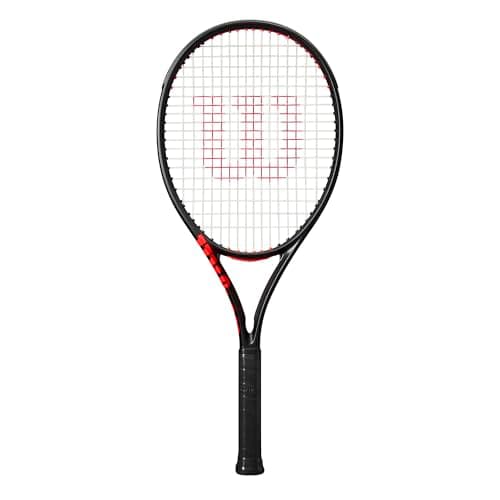 Wilson Clash 108 v3Top pick | Light, forgiving and soft together | 8.85 criteria | $212.45 · View on Amazon Price as of October 11, 2026 · was $222.87, 5% off |
| 2 |  ProKennex Ki Q+ 15 (285 g)Best for arm and shoulder pain | Chronic joint pain | 8.55 criteria | |
| 3 | 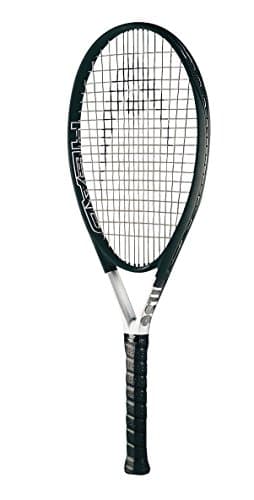 HEAD Titanium Ti.S6Lightest option | The lightest frame in common circulation | 8.05 criteria | |
| 4 | 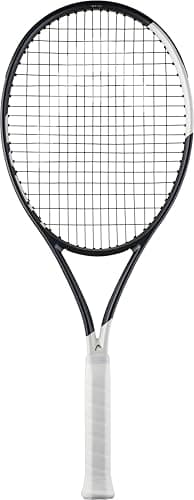 HEAD Speed MP UL 2026Best playing shape | Seniors who still play well | 8.45 criteria | |
| 5 | 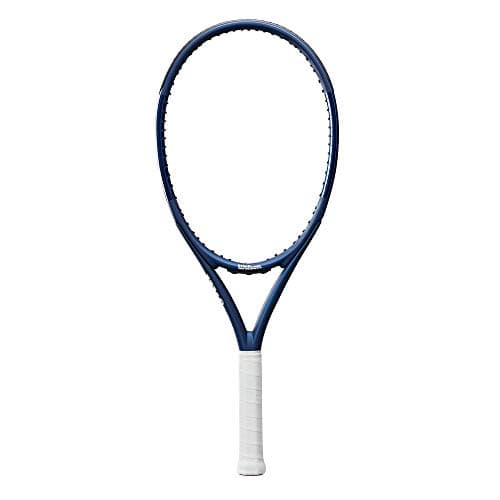 Wilson Triad ThreeMost damped construction | Comfort sold as the whole product | 8.15 criteria |
The picks in detail
01Wilson Clash 108 v3
Top pickBest for: Light, forgiving and soft together
This frame is on top because it refuses the trade-off the rest of the category makes. It is 295 g strung, which is genuinely light, and it has a 108 sq in head, which is genuinely forgiving, and it still measures 58 RA, which is soft. Most oversize light frames land in the high sixties or above.
The extra quarter-inch of length matters more than it sounds. At 27.25 inches it buys a little free depth on the serve without asking you to swing harder, which is exactly the compensation a player loses first and misses most.
The honest cost is that it is only 1 point head light, so it carries more weight toward the hoop than the static figure suggests, and a 312 swingweight on a 295 g frame is not trivial. If that is already too much, the Ti.S6 below is the lighter option.
Our score
- Power
- 8.0
- Control
- 7.0
- Forgiveness
- 9.5
- Arm comfort
- 9.5
- Maneuverability
- 8.5
- Overall
- 8.8
Verified specs
- Head size
- 108 sq in
- Strung weight
- 10.4 oz / 295 g
- Balance
- 1 pt head light
- Swingweight
- 312
- Stiffness (RA)
- 58
- Beam
- 24.5 mm uniform
- String pattern
- 16x19
- Length
- 27.25 in
Specs as published by Tennis Warehouse, checked September 2026.
Buy if
- You want one frame that is light, big and soft
- You want extra reach on the serve
- You play two or more times a week
Pass if
- You want the absolute lightest frame available
- You want a 100 sq in playing shape
- You still generate a lot of your own pace
Price as of October 11, 2026 · was $222.87, 5% off
02ProKennex Ki Q+ 15 (285 g)
Best for arm and shoulder painBest for: Chronic joint pain
ProKennex's Kinetic system puts loose mass inside sealed chambers in the frame corners. Those particles move on impact, which converts some of the shock into motion instead of sending it up the handle. It is the only genuinely different mechanical answer to impact shock in this roundup.
The published numbers are a 105 sq in head, 298 g strung, a 70 RA and 27.5 inches of length. That 70 RA is the figure people misread: static stiffness is not what this frame is selling, and the Kinetic mass does its work after the RA measurement is over.
It is also the heaviest-swinging frame here at a 329 swingweight, which is a real objection for a player whose problem is fatigue rather than pain. Buy this if your shoulder or elbow is the limiting factor; buy the Clash 108 if the third set is.
Our score
- Power
- 7.5
- Control
- 8.0
- Forgiveness
- 8.0
- Arm comfort
- 10.0
- Maneuverability
- 6.5
- Overall
- 8.5
Verified specs
- Head size
- 105 sq in
- Strung weight
- 10.5 oz / 298 g
- Balance
- 5 pts head light
- Swingweight
- 329
- Stiffness (RA)
- 70
- Beam
- 26 mm uniform
- String pattern
- 16x19
- Length
- 27.5 in
Specs as published by Tennis Warehouse, checked September 2026.
Buy if
- Joint pain is the reason you are shopping
- You have tried soft strings and still feel impact
- You want extra length for reach
Pass if
- Fatigue rather than pain is your limit
- You want a light swingweight
- You want the biggest possible sweet spot
03HEAD Titanium Ti.S6
Lightest optionBest for: The lightest frame in common circulation
At 8.6 oz - 244 g strung - with a 115 sq in head and 27.75 inches of length, nothing mainstream is easier to get moving. It is 7 points head heavy, which sounds like a drawback and is actually how a frame this light keeps any mass behind the ball at contact.
It arrives pre-strung and it is still listed at $99 by Tennis Warehouse, which makes it the obvious first purchase for a player returning to the game after a long gap. If the racket in the garage is a wooden-era relic, this is a bigger upgrade than any amount of money spent further up the page.
The caution is the 71 RA and the 27/28/27 mm beam. This is the stiffest frame on the page by a clear margin, and stiff is the wrong direction for a painful elbow. Pair it with a multifilament at a low tension, and if your arm already hurts read the [tennis rackets for tennis elbow](/tennis-rackets/best-for-tennis-elbow) page before you buy.
Our score
- Power
- 9.0
- Control
- 5.5
- Forgiveness
- 9.5
- Arm comfort
- 6.0
- Maneuverability
- 10.0
- Overall
- 8.0
Verified specs
- Head size
- 115 sq in
- Strung weight
- 8.6 oz / 244 g
- Balance
- 7 pts head heavy
- Swingweight
- 309
- Stiffness (RA)
- 71
- Beam
- 27 / 28 / 27 mm
- String pattern
- 16x19
- Length
- 27.75 in
Specs as published by Tennis Warehouse, checked September 2026.
Buy if
- Weight in the hand is your main problem
- You are returning to tennis after a break
- You want the biggest sweet spot for the least money
Pass if
- You currently have elbow or wrist pain
- You want control on a full swing
- You play against hard hitters
04HEAD Speed MP UL 2026
Best playing shapeBest for: Seniors who still play well
The Speed MP UL is the only frame here that gives you a light racket without an oversize head: 100 sq in, 278 g strung, and a 291 swingweight that is the lowest figure in any of our adult roundups.
A 61 RA on a 278 g frame is the rare part. Light frames are normally stiffened to replace the mass they do not have, and light plus stiff is the harshest combination in tennis. HEAD left this one soft, so it is kind to the arm as well as quick to swing.
It will not supply depth. At 278 g with a 23 mm uniform beam there is very little stored energy to give back, so the ball goes where your swing sends it. That is a feature if your technique is still sound and a problem if it is not.
Our score
- Power
- 6.5
- Control
- 8.5
- Forgiveness
- 7.0
- Arm comfort
- 9.0
- Maneuverability
- 9.5
- Overall
- 8.4
Verified specs
- Head size
- 100 sq in
- Strung weight
- 9.8 oz / 278 g
- Balance
- 2 pts head light
- Swingweight
- 291
- Stiffness (RA)
- 61
- Beam
- 23 mm uniform
- String pattern
- 16x19
- Length
- 27 in
Specs as published by Tennis Warehouse, checked September 2026.
Buy if
- Your strokes are still sound and you want to keep aiming
- You want a standard 100 sq in head
- You want the lightest swing of any standard frame
Pass if
- You need the racket to add pace
- You want maximum forgiveness
- You face heavy hitters regularly
05Wilson Triad Three
Most damped constructionBest for: Comfort sold as the whole product
Tennis Warehouse list the Triad Three in their Comfort category rather than in any performance bracket, and that is the right place for it. The construction isolates the head from the handle, so impact shock has to pass through a damping layer before it reaches your hand.
It is on this page as the alternative mechanical approach to the ProKennex. Both are sold against arm pain rather than as competition frames, and between them they cover the two designs on the market that do something structural about shock rather than merely measuring soft.
It is listed at $269 at Tennis Warehouse, the most expensive thing here, and Wilson do not publish the full spec sheet the other frames carry. We are not going to fill that gap with estimates - if the specific numbers matter to your decision, choose one of the four frames above.
Our score
- Power
- 7.5
- Control
- 7.0
- Forgiveness
- 8.5
- Arm comfort
- 9.5
- Maneuverability
- 7.5
- Overall
- 8.1
Verified specs
- Category
- Listed by Tennis Warehouse under Comfort
- Price band
- Listed at $269 by Tennis Warehouse
Specs as published by Tennis Warehouse, checked September 2026.
Buy if
- Arm comfort is worth paying a premium for
- You have already tried a soft string and need more
- You want a damped feel rather than a crisp one
Pass if
- You want published swingweight and RA figures
- Budget is a factor
- You want a competition-spec frame
Why stiffness comes before weight
The standard advice for an older player is to buy something lighter. That is half right, and the missing half causes real harm. Weight determines how tired your shoulder is in the third set. Stiffness determines how much of each impact arrives at your elbow. Those are two different problems with two different answers, and the frames that solve the first often make the second worse.
The mechanism is simple. A stiff frame deflects less on impact, so less of the collision energy is absorbed by the racket and more of it is returned - some into the ball as power, some back up the handle as shock. A light frame has less mass to oppose the ball, so the deceleration at contact is more abrupt. Light and stiff together is the harshest combination available, and it is exactly what a lot of beginner-and-senior shelves are full of.
So the order of operations is: rule out stiffness, then reduce weight as far as you can without going below the point where the frame stops helping. Our guide to tennis racket stiffness sets out what the RA number is and how it is measured.
The specs side by side
| Racket | Strung weight | Head size | Stiffness (RA) | Length |
|---|---|---|---|---|
| Wilson Clash 108 v3 | 295 g | 108 sq in | 58 | 27.25 in |
| ProKennex Ki Q+ 15 (285 g) | 298 g | 105 sq in | 70 | 27.5 in |
| HEAD Titanium Ti.S6 | 244 g | 115 sq in | 71 | 27.75 in |
| HEAD Speed MP UL 2026 | 278 g | 100 sq in | 61 | 27 in |
| Wilson Triad Three | Not published | Not published | Not published | Not published |
Read the fourth column first. Two of these frames are soft, two are stiff, and the two stiff ones are on the page for specific reasons - the Ti.S6 because nothing else is this light, the ProKennex because its shock management does not show up in an RA reading at all.
The two changes that help more than a new racket
Before you spend a couple of hundred dollars on a frame, there are two cheaper levers, and they are both larger than most people expect.
- String type. Moving from a polyester to a multifilament is the single biggest comfort change available, and it costs the price of a restring. If there is poly in your current racket and your elbow hurts, that is the first thing to change.
- String tension. Every pound you drop softens the bed. Going several pounds below your usual tension will not ruin your control at club pace, and it will measurably reduce impact shock.
Our tennis string tension guide covers the numbers, and how often to restring a tennis racket covers the schedule - a dead string bed is stiffer than a fresh one, so an overdue restring is itself a comfort problem.
How these picks were made
Racket & Rally does not run a test lab. Nothing on this page is written as though we had hit with, worn or measured anything ourselves, because we have not. What we do is read the published specification sheets and the third-party lab measurements cited at the foot of the page, set them against each other, and say which differences change something you will actually notice on court.
Every product here is already in our registry, which means it carries a cited retailer or review source and a verified listing. Our full selection criteria set out the method, and the editorial policy covers corrections and how often pages are revisited. No price is written into this page as a recommendation - the figure on each buy button is the live one.
Common questions
What is the best tennis racket for a senior player?
For most senior players, the Wilson Clash 108 v3 - it is one of very few frames that is light at 295 g, forgiving at 108 sq in and soft at 58 RA all at once. If joint pain rather than fatigue is the limiting factor, the ProKennex Ki Q+ 15 is the more targeted choice.
Should seniors use a lighter tennis racket?
Lighter helps with fatigue, but not at the cost of stiffness. A light, stiff frame transmits more shock to the arm than a slightly heavier soft one, so check the RA figure before the weight. Anything in the fifties is soft; anything over about 68 is stiff.
What head size should an older player use?
Usually 105 to 115 sq in. A bigger hoop widens the sweet spot, which matters more as reaction time shortens, and it adds power without asking for a faster swing. The cost is a little precision and more air resistance through the swing.
Is an extra-long racket worth it for a senior?
Often yes. The frames here run from 27 to 27.75 inches, and the extra length adds reach and a little free depth on the serve without extra effort. The trade is a slightly higher swingweight for the same static weight.
Does a softer racket mean less power?
Some, yes - a flexible frame returns less of the impact energy to the ball. A bigger head size is the usual way to buy that power back, which is why the soft frames on this page are also the large ones.
Can I just restring my old racket instead?
If the frame is from this century and the specs suit you, a fresh multifilament at a low tension is the cheapest meaningful improvement available. If the racket is a pre-1990s midsize, no string will fix the head size.
Read next
Sources
- 01Tennis Warehouse - Wilson Clash 108 v3
- 02Tennis Warehouse - ProKennex Ki Q+ 15
- 03Tennis Warehouse - HEAD Titanium Ti.S6
- 04Tennis Warehouse - HEAD Speed MP UL 2026
- 05Tennis Warehouse - Best Tennis Racquets
Every source above was retrieved while writing this page. Specifications are quoted from the listing or manufacturer page cited, not from memory.