Buying guide
Best tennis shoes for narrow feet in 2026
Width is the fit problem nobody solves for the narrow foot. Court brands publish wide and 2E and almost never publish a narrow, so the answer is to buy a shoe whose standard last is already snug - and these five are the snug ones.
By Janet H.Updated
The short answer
The Mizuno Wave Exceed Tour 7 AC is the best tennis shoe for narrow feet: RunRepeat's measurement write-up says plainly that it is not for wide feet, which is the exact sentence a narrow-footed player wants to read. If you need a true narrow width rather than a snug standard last, buy the New Balance Coco CG2 - it is sold in a B width at retail.
Disclosure — we earn a commission on qualifying purchases made through links on this page, at no extra cost to you. It never changes which product we rank first. How this site is funded.
Our picks
| # | Product | Best for | Score | Price |
|---|---|---|---|---|
| 1 | 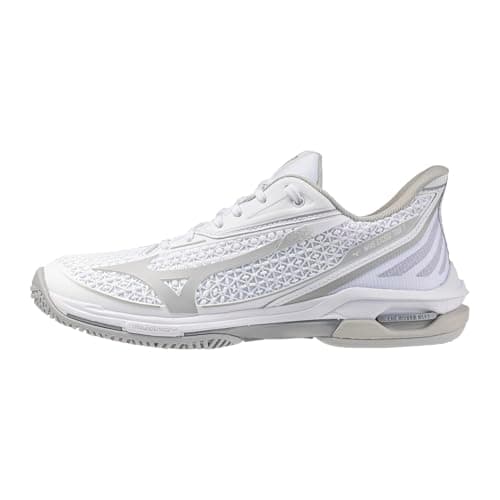 Mizuno Wave Exceed Tour 7 ACTop pick | Most narrow feet, hard court | 8.95 criteria | |
| 2 | 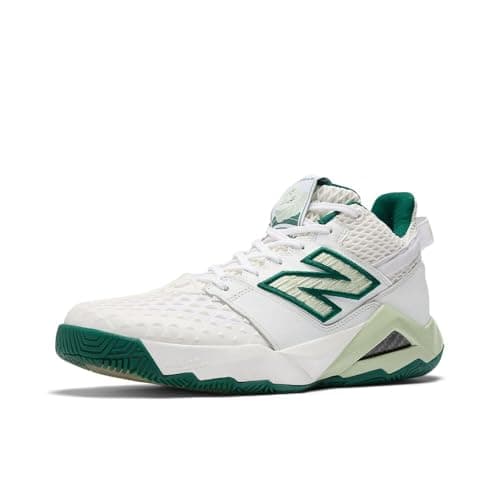 New Balance Coco CG2Best actual narrow width | A true narrow width, women's sizing | 8.75 criteria | $149.99 · View on Amazon Price as of October 17, 2026 · was $159.99, 6% off |
| 3 | 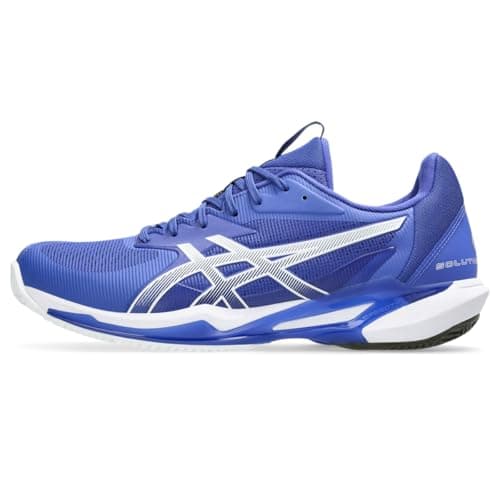 ASICS Solution Speed FF 3 ClayBest on clay | A narrow foot on clay | 8.15 criteria | |
| 4 | 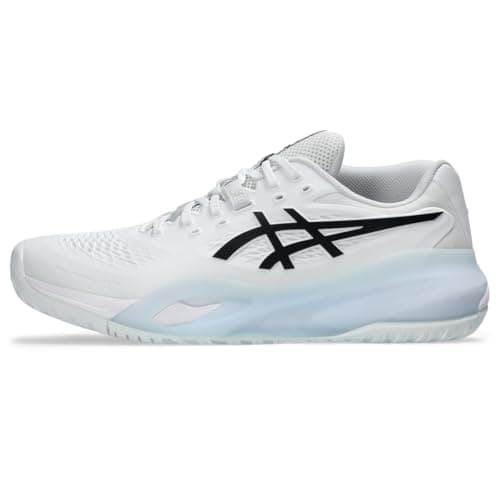 ASICS GEL-Resolution XMost stable | Narrow feet that still want maximum lockdown | 8.65 criteria | $139.95 · View on Amazon Price as of October 17, 2026 · was $164.95, 15% off |
| 5 | 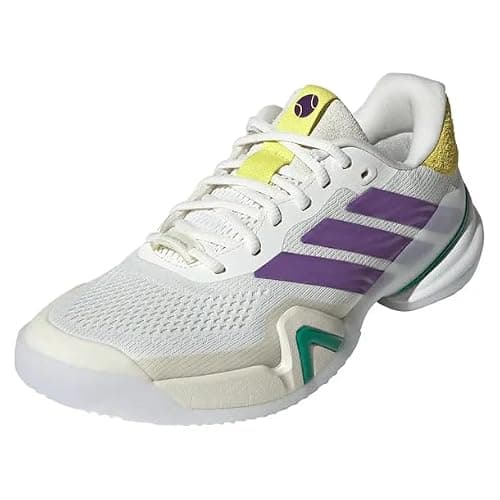 adidas Barricade 14Best court feel | Players who want to feel the court | 8.05 criteria |
The picks in detail
01Mizuno Wave Exceed Tour 7 AC
Top pickBest for: Most narrow feet, hard court
RunRepeat's measured review of this shoe carries a fit note that reads, in effect, as a warning to everybody else and an invitation to you: not for wide feet. A narrow chassis is normally something a reviewer complains about, and that complaint is the single most useful fit signal in the whole category - it means the upper actually closes around a slim foot instead of leaving a void you try to lace out.
The measurements say it is not a compromise shoe either. 343 g on a 30.4 mm heel and 19.3 mm forefoot, an 11.1 mm drop, and above-average energy return at both ends: 55.7% at the heel and 58.5% at the forefoot. Traction came in at 1.04, which is high for the category, and the outsole lost only 0.7 mm in RunRepeat's Dremel test. Mizuno also puts a six-month outsole warranty behind it.
The honest cost is the chassis. Torsional rigidity measured 12.9 Nm against a category average of 18.1 Nm, so this is a flexible shoe rather than a locked plate, and a heavy mover who wants the sole to refuse to twist will want the GEL-Resolution X below instead. The heel counter is 4/5 rather than 5/5. And if your foot is average width rather than slim, this is the wrong shoe on purpose.
Our score
- Lateral stability
- 8.0
- Cushioning
- 9.0
- Outsole durability
- 8.5
- Fit accommodation
- 9.5
- Lightness
- 8.5
- Overall
- 8.9
Verified specs
- RunRepeat score
- 90
- Tested pair
- Men's — women's AC version sold separately
- Weight
- 12.1 oz / 343 g
- Heel / forefoot stack
- 30.4 mm / 19.3 mm
- Drop
- 11.1 mm
- Energy return
- 55.7% heel / 58.5% forefoot
- Shock absorption
- 100 SA heel / 67 SA forefoot
- Traction
- 1.04
- Torsional rigidity
- 12.9 Nm (average 18.1 Nm)
- Heel counter stiffness
- 4/5
- Outsole wear
- 0.7 mm
- Fit note
- RunRepeat: not for wide feet
- Outsole warranty
- 6 months
Specs as published by RunRepeat, checked September 2026.
Buy if
- Court shoes normally leave slack across your forefoot
- You want a cushioned, springy ride rather than a rigid plate
- You play mostly on hard court and want a stated outsole warranty
Pass if
- Your foot is average width or wider
- You want maximum torsional rigidity
- You want the stiffest possible heel counter
02New Balance Coco CG2
Best actual narrow widthBest for: A true narrow width, women's sizing
This is the only shoe on the page that solves the problem as a width rather than as a snug last: New Balance lists it at retail in B and D, and B is a narrow width in women's sizing. If lacing has never been enough for you, buy the width and stop negotiating with the shoe.
It is also the most propulsive pick here. RunRepeat measured 60.4% forefoot energy return - the highest figure in their current court set - on a 28.2 mm heel and 22.0 mm forefoot with a low 6.2 mm drop, and recorded 113 SA at the heel and 72 SA at the forefoot for shock absorption. Torsional rigidity scored a full 5/5, which is unusual on a shoe this cushioned, and the outsole carries a six-month warranty.
Two real costs. The heel counter scored 3/5, the softest of the five shoes here, so if your fit problem is heel slip rather than forefoot slack the lockdown at the back is only moderate. And RunRepeat recorded 1.9 mm of Dremel wear on the outsole against 0.6 to 0.8 mm for the ASICS picks, with a measured traction coefficient of 0.63 - the lowest here. Soft exposed foam and a softer compound is what buys you the energy return.
Our score
- Lateral stability
- 8.5
- Cushioning
- 9.0
- Outsole durability
- 7.5
- Fit accommodation
- 9.5
- Lightness
- 8.5
- Overall
- 8.7
Verified specs
- RunRepeat score
- 92 — Best Overall, women's
- Tested pair
- Women's US 9.5
- Weight
- 12.6 oz / 356 g
- Heel / forefoot stack
- 28.2 mm / 22.0 mm
- Drop
- 6.2 mm
- Torsional rigidity
- 5/5
- Heel counter stiffness
- 3/5
- Forefoot energy return
- 60.4%
- Shock absorption
- 113 SA heel / 72 SA forefoot
- Outsole
- 89.4 HC, 1.9 mm Dremel wear
- Traction
- 0.63
- Widths at retail
- B and D
- Outsole warranty
- 6 months
Specs as published by RunRepeat, checked September 2026.
Buy if
- You wear a narrow or B width in street shoes
- You want the most energetic forefoot in the category
- You buy women's sizing
Pass if
- Your main complaint is heel slip rather than forefoot width
- You play on abrasive outdoor concrete every week
- You want the grippiest outsole on the page
Price as of October 17, 2026 · was $159.99, 6% off
03ASICS Solution Speed FF 3 Clay
Best on clayBest for: A narrow foot on clay
The speed chassis is the narrow-footed player's friend across the whole ASICS range, because a shoe built to be quick is built close to the foot. This is the clay version of it, scored 86 by RunRepeat, with a clay-specific herringbone outsole rather than a hard-court pattern.
If you play on clay with a slim foot you have a specific problem: clay rewards a controlled slide, and a slide is exactly when a foot moves inside a loose shoe. The speed last closes that gap without you cranking the laces, and because this is the lighter of ASICS' two clay chassis it keeps the shoe quick rather than planted.
The cost is that it is the lighter chassis, with everything that implies. It is not the stability shoe in the ASICS clay line - that is the GEL-Resolution 9 Clay, which we cover in the [clay court roundup](/tennis-shoes/best-for-clay-court) - so a heavy or aggressive mover gets less structure here. ASICS does not publish a weight, a stack height or a drop figure for this model, and we are not going to invent any of the three.
Our score
- Lateral stability
- 7.5
- Cushioning
- 7.5
- Outsole durability
- 7.5
- Fit accommodation
- 8.5
- Lightness
- 9.0
- Overall
- 8.1
Verified specs
- RunRepeat score
- 86
- Surface
- Clay-specific herringbone outsole
- Line
- Speed chassis rather than stability chassis
Specs as published by RunRepeat, checked September 2026.
Buy if
- You play mostly on clay and your foot is slim
- You want the lighter of the two ASICS clay chassis
- You slide into shots and lose your foot inside the shoe
Pass if
- You play mostly on hard court
- You are a heavy mover who wants a stability chassis
- You want published weight and stack figures
04ASICS GEL-Resolution X
Most stableBest for: Narrow feet that still want maximum lockdown
The reason a stability shoe belongs on a narrow-feet page is the heel. RunRepeat scored both the torsional rigidity and the heel counter stiffness of this shoe at a full 5/5 - the only pick here to take maximum marks on both - and a rigid heel counter is the single most effective structure for stopping a slim heel lifting out of the shoe on a hard change of direction.
The rest of the measurements back it up as the serious option. 30.8 mm heel and 21.9 mm forefoot, an 8.9 mm drop, 98 SA of heel shock absorption, and the hardest outsole in the set at 90.4 HC with only 0.6 mm of Dremel wear. If you play three or more times a week on outdoor hard court, this is the pick whose outsole will still be there next season.
The honest cost is weight and room. At 14.7 oz / 417 g it is the heaviest shoe on this page by a clear margin, and a light, quick player will feel that on the first step. The ASICS stability last is snug at the heel and midfoot rather than genuinely narrow through the forefoot, so this shoe fixes heel slip better than it fixes forefoot slack - which is why it sits below the Mizuno rather than above it.
Our score
- Lateral stability
- 9.5
- Cushioning
- 8.5
- Outsole durability
- 9.5
- Fit accommodation
- 8.0
- Lightness
- 6.5
- Overall
- 8.6
Verified specs
- RunRepeat score
- 90 — Best Stability
- Weight
- 14.7 oz / 417 g (men's 9)
- Heel / forefoot stack
- 30.8 mm / 21.9 mm
- Drop
- 8.9 mm
- Torsional rigidity
- 5/5
- Heel counter stiffness
- 5/5
- Heel shock absorption
- 98 SA
- Outsole wear
- 0.6 mm depth, 90.4 HC
Specs as published by RunRepeat, checked September 2026.
Buy if
- Your narrow-foot problem is heel slip on hard changes of direction
- You play several times a week on abrasive hard court
- You want the most rigid chassis available
Pass if
- You want a light shoe
- Your slack is across the forefoot rather than at the heel
- You want a soft, flexible ride
Price as of October 17, 2026 · was $164.95, 15% off
05adidas Barricade 14
Best court feelBest for: Players who want to feel the court
The Barricade earns RunRepeat's Best Court Feel award, and the measurement that explains it is the 14.4 mm forefoot stack - the lowest figure on this page. Less foam between your foot and the court means less lever to tip over and more information about where your weight actually is, and for a narrow foot that matters twice over: a tall stack magnifies every millimeter of sideways slide inside the shoe.
The heel sits at 26.3 mm, so the whole shoe is low rather than just the front, and the Barricade chassis has been the structural reference in this category for years. If your complaint about cushioned court shoes is that you feel vague and disconnected in them, this is the shoe that answers it.
The cost is printed right there in the shock-absorption numbers: 89 SA at the heel and 47 SA at the forefoot, against 116 and 78 for the New Balance CT-Rally v2. That is a large real difference underfoot, and a player with any history of heel or forefoot pain should read it as a reason to look at our [plantar fasciitis picks](/tennis-shoes/best-for-plantar-fasciitis) instead. adidas also sells this in a regular fit only.
Our score
- Lateral stability
- 8.5
- Cushioning
- 6.5
- Outsole durability
- 8.5
- Fit accommodation
- 8.0
- Lightness
- 7.5
- Overall
- 8.0
Verified specs
- RunRepeat award
- Best Court Feel
- Heel stack
- 26.3 mm
- Forefoot stack
- 14.4 mm
- Heel shock absorption
- 89 SA
- Forefoot shock absorption
- 47 SA
Specs as published by RunRepeat, checked September 2026.
Buy if
- You want the lowest, most connected ride here
- A tall stack makes your narrow foot feel unstable
- You trust the Barricade chassis
Pass if
- You need real cushioning underfoot
- You have a history of heel or forefoot pain
- You want a plush shoe for long sessions
Why a narrow foot slides, and what that costs
A court shoe has one job that a running shoe does not: hold your foot still when your momentum goes sideways. Every lateral push loads the inside edge of the forefoot and tries to shear your foot across the footbed. If the shoe is wider than your foot, that shear is free movement - your foot travels a few millimeters before the upper catches it, and it does that several hundred times a session.
Those millimeters cost you three things. Friction, first: a foot moving against a sock and a footbed is the definition of a blister, and it is why narrow-footed players get blisters on the ball of the foot and the back of the heel rather than at the toes. Then timing - a foot that slides before the shoe moves delays your change of direction, which is the whole point of buying a court shoe. And finally safety, because a foot sitting off-center on the midsole is a foot closer to the edge when the shoe loads up.
The standard fix is the wrong fix. Cranking the laces compresses the top of your foot instead of narrowing the base, which trades slide for pressure on the instep and can irritate the extensor tendons across the top of the foot. Sizing down shortens the shoe without narrowing it and jams your toes. What actually works is buying a shoe whose last is already slim, and - where it exists - buying a stated narrow width.
The five criteria we ranked on
Every shoe here is scored on the same five axes the whole site uses for court footwear, so a score means the same thing on every page. These are our editorial judgments drawn from published specs and RunRepeat's measured figures - they are not user ratings and we do not present them as our own lab results.
- Lateral stability - torsional rigidity, heel counter stiffness and stack height, which together decide whether the shoe stays under you when you load an edge. A rigid heel counter matters more for a narrow foot than for any other foot shape.
- Cushioning - measured shock absorption at the heel and forefoot, in RunRepeat's SA figures where they exist. Narrow feet are not better protected than wide ones; this axis is independent of fit.
- Outsole durability - rubber hardness in HC and the depth of the cavity left by RunRepeat's Dremel test. Outdoor hard court is the surface that decides this.
- Fit accommodation - here read as lockdown rather than roominess. A high score means the shoe closes around a slim foot, which is the reverse of what this axis rewards on our wide feet roundup.
- Lightness - how little the shoe asks of your first step. Weighted last on purpose: in court shoes a light shoe usually got light by removing structure.
The specs side by side
Read this across rather than down. The useful question is not which shoe has the best numbers but which gap matters for the surface you play on and the part of your foot that is sliding.
| Shoe | Weight | Heel / forefoot stack | Drop | Fit signal |
|---|---|---|---|---|
| Mizuno Wave Exceed Tour 7 AC | 12.1 oz / 343 g | 30.4 / 19.3 mm | 11.1 mm | RunRepeat: not for wide feet |
| New Balance Coco CG2 | 12.6 oz / 356 g | 28.2 / 22.0 mm | 6.2 mm | Sold in B and D widths |
| ASICS Solution Speed FF 3 Clay | Not published | Not published | Not published | Speed chassis, not stability chassis |
| ASICS GEL-Resolution X | 14.7 oz / 417 g | 30.8 / 21.9 mm | 8.9 mm | 5/5 heel counter stiffness |
| adidas Barricade 14 | Not published | 26.3 / 14.4 mm | Not published | Regular fit only |
Two things fall out of that table. The first is that the fit column, not the spec columns, is doing the work on this page - a measured 343 g tells you nothing about whether a shoe will hold your foot, while a one-line reviewer note about width tells you almost everything. The second is the drop spread: 6.2 mm on the Coco CG2 against 11.1 mm on the Mizuno is a large difference in how much your heel sits above your toes, and it matters if your calves or Achilles are a concern. We cover that trade on the Achilles tendonitis picks.
What to try before you spend anything
If you already own a court shoe that is too roomy, three cheap changes are worth making before you replace it. None of them turns a wide shoe into a narrow one, but together they can buy you most of the lockdown you are missing.
- 01Use the last eyelet with a heel lock. Thread the lace through the top eyelet to make a loop on each side, cross the ends through the opposite loop, then tie. It pulls the collar back and down onto the heel rather than squeezing the instep, which is the one lacing change that fixes heel slip without creating pressure.
- 02Add a thicker insole, not a thinner one. The stock insole in most court shoes is a thin sheet of EVA. A thicker aftermarket insole raises your foot slightly in the shoe so your instep meets the upper sooner, which takes up volume rather than width - the same trick that makes a roomy shoe fit a low-volume foot.
- 03Change socks. A cushioned court sock takes up real volume across the forefoot, which is the part of the shoe you cannot lace. A thin dress sock in a roomy court shoe is the worst combination on this list.
- 04Then check whether the shoe is simply finished. A worn-out midsole has already compressed and no longer holds anything; our replacement checks take two minutes and will tell you whether fit is really the problem.
How to narrow it to one
Work in this order and you will land on a single shoe without trying anything on.
- 01If you wear a stated narrow or B width in street shoes, buy the New Balance Coco CG2 and stop here. It is the only pick on this page sold as a narrow width rather than as a snug standard.
- 02If your slack is across the forefoot, take the Mizuno Wave Exceed Tour 7 AC. The chassis is slim by design and RunRepeat says so in print.
- 03If your slack is at the heel and you lift out of the shoe when you push off, take the ASICS GEL-Resolution X for its 5/5 heel counter, and accept the 417 g.
- 04If you play on clay, take the ASICS Solution Speed FF 3 Clay - the speed last is the snug one, and the herringbone outsole is the one that belongs on the surface.
- 05If cushioned shoes make you feel like you are standing on a platform, take the adidas Barricade 14 for its 14.4 mm forefoot, and read the shock-absorption numbers before you commit.
How these picks were made
Racket & Rally does not run a test lab. Nothing on this page is written as though we had played with, worn or measured anything ourselves, because we have not. What we do is read the published specification sheets, the independent measurements and the retailer listings cited at the foot of the page, set them against each other, and say which differences change something you will actually notice on court.
Every product here was confirmed on sale when its registry entry was built, and every claim traces to one of the sources listed at the bottom. Our full selection criteria set out the method, and the editorial policy covers corrections and how often pages are revisited. Where a brand does not publish a figure, we say that rather than filling the gap.
Common questions
Do any tennis shoes come in a narrow width?
Very few, and that is the central problem. On this page only the New Balance Coco CG2 is sold in a narrow width - B at retail, alongside D. Everything else is a standard last that happens to run slim, which is why reviewer fit notes matter more than brand width charts when your foot is narrow.
Should I size down if my tennis shoes are too wide?
No. Sizing down shortens the shoe without narrowing it, so your toes hit the front while the widest part of your foot still sits behind the widest part of the shoe. You get toe bruising and the same forefoot slide. Keep your length, fix volume with a thicker insole and socks, and buy a slimmer last next time.
Will tight lacing fix a shoe that is too wide?
Partly, and at a price. Lacing compresses the top of the foot rather than narrowing the base, so hard lacing trades sliding for pressure across the instep and can irritate the tendons running over the top of the foot. A heel-lock lacing pattern through the last eyelet is the exception worth using, because it pulls the collar onto the heel instead of squeezing the midfoot.
Are speed shoes always narrower than stability shoes?
As a rule of thumb within a single brand, yes - a chassis built to be quick is built close to the foot, which is why the ASICS Solution Speed line is the narrow-footed player's starting point in that range and the GEL-Resolution is not. It is a tendency rather than a specification, and no brand publishes it as one.
Does a narrow foot need less cushioning?
No. Fit and cushioning are independent. A narrow foot lands with the same force as a wide one, and the shock-absorption figures on this page - 116 SA at the heel for the CT-Rally v2 against 89 SA for the Barricade 14 - apply to you exactly as they would to anybody else. Pick the last for your shape and the stack for your joints.
Is a narrow foot more likely to roll an ankle?
A foot that slides inside a shoe sits further from the center of the midsole when the shoe loads up, which puts it closer to the edge at the moment it matters. That is a fit argument for lockdown rather than a medical claim, and the structural answer is a stiff heel counter and a low stack - the two things our ankle support picks rank on.
Read next
Sources
- 01RunRepeat - Mizuno Wave Exceed Tour 7 AC
- 02RunRepeat - New Balance Coco CG2
- 03RunRepeat - ASICS GEL-Resolution X
- 04RunRepeat - best hard court tennis shoes
- 05RunRepeat - best tennis shoes
- 06RunRepeat - clay court tennis shoes catalog
- 07FitVille - shoe width explainer
Every source above was retrieved while writing this page. Specifications are quoted from the listing or manufacturer page cited, not from memory.