Buying guide
Best tennis shoes for traction in 2026
Grip is one of the few things about a tennis shoe that is actually measured. Five shoes ranked on a published friction coefficient, plus the trade-off the brands never put on the box.
By Janet H.Updated
The short answer
The ASICS Solution Speed FF 4 has the best measured traction of any tennis shoe in our registry: a 1.11 forefoot friction coefficient, which RunRepeat call 46% above average, in a 337 g shoe. The Mizuno Wave Exceed Tour 7 AC is next at 1.04, and the ASICS GEL-Resolution X at 0.89 is the grippiest shoe here that is also built for stability.
Disclosure — we earn a commission on qualifying purchases made through links on this page, at no extra cost to you. It never changes which product we rank first. How this site is funded.
Our picks
| # | Product | Best for | Score | Price |
|---|---|---|---|---|
| 1 | 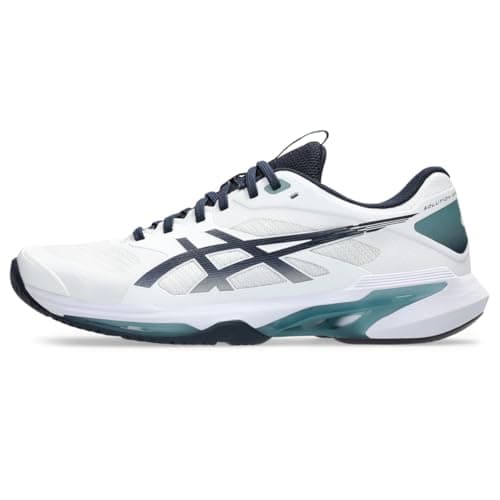 ASICS Solution Speed FF 4Top pick | Players who want the highest measured grip, full stop | 8.85 criteria | |
| 2 | 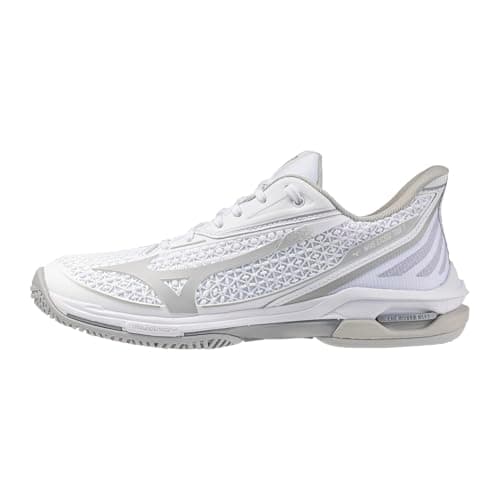 Mizuno Wave Exceed Tour 7 ACBest measured all-rounder | Players who want measured grip with a full lab panel behind it | 8.45 criteria | |
| 3 | 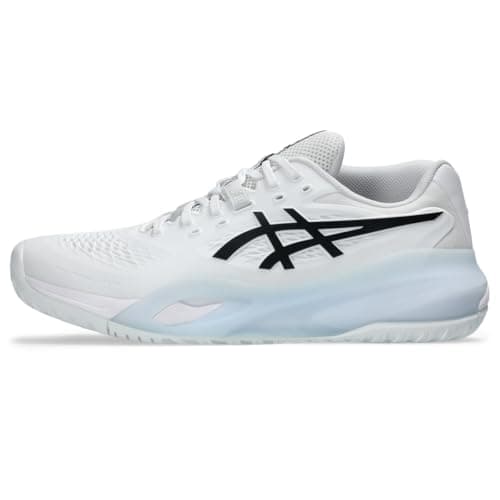 ASICS GEL-Resolution XBest for stability | Players who need grip and stability from the same shoe | 8.65 criteria | |
| 4 | 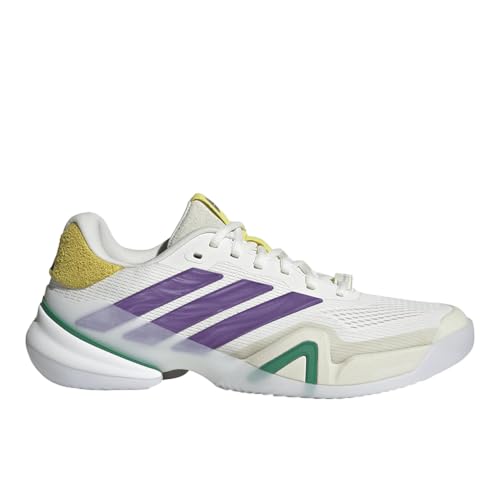 adidas Barricade 14Best court feel | Players who want court feel with the grip to use it | 7.65 criteria | $99.89 · View on Amazon Price as of November 28, 2026 · was $109.94, 9% off |
| 5 | 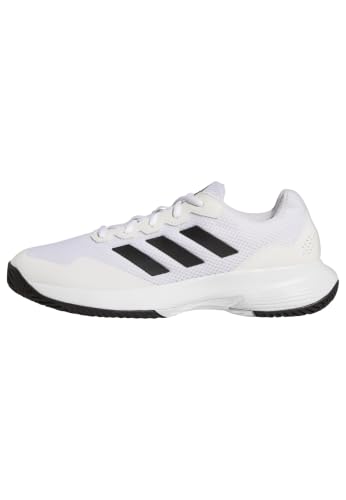 adidas GameCourt 2Budget pick | The cheapest way to buy a platform that holds an edge | 8.05 criteria | $49.97 · View on Amazon Price as of November 28, 2026 · was $70.00, 29% off |
The picks in detail
01ASICS Solution Speed FF 4
Top pickBest for: Players who want the highest measured grip, full stop
This is the highest forefoot friction coefficient in our registry at 1.11, and RunRepeat describe that as 46% above average. The figure matters more than most shoe numbers because it is a machine measurement rather than a reviewer's impression: RunRepeat drag the outsole across a dry slab and record the coefficient, so two shoes tested the same way can be compared directly.
What makes it the top pick rather than just the grippiest is that it did not buy the grip with weight or with outsole life. At 11.9 oz / 337 g it is below the 12.9 oz / 365 g category average RunRepeat quote, and its Dremel abrasion test came out 0.3 mm better than average, which is unusual - a soft, grippy compound normally wears faster, and this one did not. RunRepeat's award for it is Best for Speed.
Two honest costs. RunRepeat publish a 90 score and these three figures for this shoe but not a full lab panel, so there is no torsional rigidity, heel counter or platform-width number to set against the shoes below, and grip is only one part of what holds you in a slide. And the shoe is built on ASICS's speed chassis rather than its stability chassis, so if you need a shoe to stop your ankle rolling rather than to stop your foot sliding, the GEL-Resolution X below is the correct answer. [Best tennis shoes for ankle support](/tennis-shoes/best-for-ankle-support) covers that properly.
Our score
- Lateral stability
- 8.0
- Cushioning
- 7.5
- Outsole durability
- 8.5
- Fit accommodation
- 7.5
- Lightness
- 9.0
- Overall
- 8.8
Verified specs
- RunRepeat score
- 90 — Best for Speed
- Weight
- 11.9 oz / 337 g
- Traction
- 1.11, 46% above average
- Dremel wear
- 0.3 mm less damage than average
Specs as published by RunRepeat, checked September 2026.
Buy if
- You want the highest measured grip available
- You want a light shoe that did not trade grip away
- You play on dry hard courts
Pass if
- You need maximum ankle and torsional support
- You want a full published lab panel to compare
- You play mostly on clay
02Mizuno Wave Exceed Tour 7 AC
Best measured all-rounderBest for: Players who want measured grip with a full lab panel behind it
At 1.04 this is the second-highest friction coefficient in our registry, and it comes with the most complete set of lab figures of any shoe on this page. RunRepeat measure 55.7% heel and 58.5% forefoot energy return, 100 SA heel and 67 SA forefoot shock absorption, a 30.4 / 19.3 mm stack and 0.7 mm of outsole wear, which means you can see what the grip cost rather than guessing.
The answer is that it cost torsional rigidity, and the number is specific: 12.9 Nm against an 18.1 Nm average. A shoe that twists more easily follows the shape of a foot that is changing direction, which is part of how a compliant outsole keeps contact with the court, and it is also less supportive under a hard lateral load. Mizuno also back the outsole with a 6-month warranty, which is a manufacturer putting its own money behind the durability claim.
Two honest costs. RunRepeat list this shoe as not for wide feet, and a shoe that does not fit cannot grip, because your foot moves inside it before the rubber moves on the court. And the low torsional rigidity is a genuine limitation rather than a quirk: if you are a heavy player who loads the outside edge hard, you will feel the platform give. [How to choose tennis shoes](/guides/how-to-choose-tennis-shoes) covers the fit-first order these decisions belong in.
Our score
- Lateral stability
- 7.0
- Cushioning
- 8.5
- Outsole durability
- 8.0
- Fit accommodation
- 6.5
- Lightness
- 8.5
- Overall
- 8.4
Verified specs
- RunRepeat score
- 90
- Tested pair
- Men's — women's AC version sold separately
- Weight
- 12.1 oz / 343 g
- Heel / forefoot stack
- 30.4 mm / 19.3 mm
- Drop
- 11.1 mm
- Energy return
- 55.7% heel / 58.5% forefoot
- Shock absorption
- 100 SA heel / 67 SA forefoot
- Traction
- 1.04
- Torsional rigidity
- 12.9 Nm (average 18.1 Nm)
- Heel counter stiffness
- 4/5
- Outsole wear
- 0.7 mm
- Fit note
- RunRepeat: not for wide feet
- Outsole warranty
- 6 months
Specs as published by RunRepeat, checked September 2026.
Buy if
- You want measured grip with the lab panel to back it
- You want cushioning as well as traction
- You have a medium or narrow foot
Pass if
- You have wide feet
- You load the outside edge hard and need a rigid platform
- You want maximum torsional support
03ASICS GEL-Resolution X
Best for stabilityBest for: Players who need grip and stability from the same shoe
This is the shoe for the player whose real question is quick direction changes rather than grip in isolation, because it is the only shoe here that measures above average on friction and maxes out the support figures. RunRepeat record 0.89 forefoot traction from its AHARPLUS rubber against the 0.78 average they cite across 47 tennis shoes, with 5 out of 5 for torsional rigidity and 5 out of 5 for heel counter stiffness. Their award for it is Best Stability.
The platform numbers explain why it holds an edge. At 116.5 mm across the forefoot and 94.1 mm at the heel it is wider than the 112.5 / 89.7 mm averages, and a wider base is more leverage against the ground when you plant and push off. The outsole is the hardest in our set at 90.4 HC and it still only lost 0.6 mm in the abrasion test, so this is a grippy shoe that is also a long-lasting one - a combination the next pick shows is not guaranteed.
The honest cost is weight, and it is not small: 14.7 oz / 417 g in a men's 9, against a 365 g category average. That is roughly 50 g per foot more than the top pick, and over a three-set match you feel it. RunRepeat call the fit perfect for wide feet but snug at the big toe, which is a specific combination worth knowing before you order. Our [GEL-Resolution X review](/reviews/asics-gel-resolution-x) goes further, and [best tennis shoes for wide feet](/tennis-shoes/best-for-wide-feet) covers the fit side.
Our score
- Lateral stability
- 9.5
- Cushioning
- 8.0
- Outsole durability
- 9.0
- Fit accommodation
- 9.0
- Lightness
- 5.5
- Overall
- 8.6
Verified specs
- RunRepeat score
- 90 — Best Stability
- Weight
- 14.7 oz / 417 g (men's 9)
- Heel / forefoot stack
- 30.8 mm / 21.9 mm
- Drop
- 8.9 mm
- Torsional rigidity
- 5/5
- Heel counter stiffness
- 5/5
- Heel shock absorption
- 98 SA
- Outsole wear
- 0.6 mm depth, 90.4 HC
- Forefoot traction
- 0.89 friction coefficient (average 0.78 across 47 shoes), AHARPLUS rubber
- Platform width
- 116.5 mm forefoot / 94.1 mm heel (average 112.5 / 89.7)
- Toebox width
- 96.9 mm widest / 66.6 mm at the big toe (average 69.3)
- Fit note
- RunRepeat: perfect for wide feet; snug at the big toe
Specs as published by RunRepeat, checked September 2026.
Buy if
- Direction changes rather than grip alone are your problem
- You want above-average grip and a long-lasting outsole
- You have wide feet
Pass if
- You want a light shoe
- You have a narrow foot or a long big toe
- You want the single highest friction figure
04adidas Barricade 14
Best court feelBest for: Players who want court feel with the grip to use it
At 0.84 this clears the 0.78 average RunRepeat cite, and it does it on the widest platform in our registry: 116.8 mm across the forefoot and 93.6 mm at the heel. Combined with a 14.4 mm forefoot stack - the lowest here - that is a shoe that puts your foot close to the court on a broad, grippy base, which is exactly the arrangement a player who wants to feel the surface is looking for. RunRepeat's award is Best Court Feel.
The low stack is the point rather than a shortcut. A thinner forefoot means less material flexing between your foot and the ground, so the proprioceptive feedback is better and the platform is less likely to roll under a hard cut. The Lighttraxion outsole is what produces the 0.84. If your complaint is that modern shoes feel disconnected from the court, this is the shoe on this page that answers it.
Two honest costs, and the second one is serious. Forefoot shock absorption measures 47 SA, which is the lowest in our registry and the direct consequence of a 14.4 mm stack - on concrete, several times a week, that is a real amount of impact reaching your legs. And its Dremel abrasion test came out at 2.6 mm, which RunRepeat record as the worst result in the category: this is a grippy outsole with a short life. [Best cushioned tennis shoes](/tennis-shoes/best-cushioned) and [best most durable tennis shoes](/tennis-shoes/best-most-durable) are the pages for the opposite priorities.
Our score
- Lateral stability
- 7.5
- Cushioning
- 5.5
- Outsole durability
- 4.0
- Fit accommodation
- 8.0
- Lightness
- 6.5
- Overall
- 7.6
Verified specs
- RunRepeat award
- Best Court Feel
- Heel stack
- 26.3 mm
- Forefoot stack
- 14.4 mm
- Heel shock absorption
- 89 SA
- Forefoot shock absorption
- 47 SA
- Forefoot traction
- 0.84 friction coefficient (average 0.78 across 47 shoes), Lighttraxion outsole
- Platform width
- 116.8 mm forefoot / 93.6 mm heel (average 112.5 / 89.7)
- Torsional rigidity
- 13.4 Nm (average 18.1 Nm)
- Dremel wear
- 2.6 mm, the worst result in RunRepeat's category
Specs as published by RunRepeat, checked September 2026.
Buy if
- You want to feel the court under you
- You want a wide, stable base for hard cuts
- You replace shoes often anyway
Pass if
- You need forefoot cushioning
- You want an outsole that lasts a season
- You play on abrasive courts several times a week
Price as of November 28, 2026 · was $109.94, 9% off
05adidas GameCourt 2
Budget pickBest for: The cheapest way to buy a platform that holds an edge
RunRepeat publish no friction coefficient for this shoe, and we are saying that first rather than last. What they do publish is the other half of traction: 5 out of 5 for lateral stability against a 4.5 average, 5 out of 5 for torsional rigidity, a 115.7 / 93.9 mm platform that is wider than average at both ends, and a Dremel result of 0.4 mm against a 0.8 mm average. Their award for it is Best durability among budget tennis shoes.
Those numbers matter because rubber is only half of why a shoe holds. The other half is whether the platform underneath lets you load the outside edge without the shoe folding, and this is the only shoe on this page with a maximum lateral stability score. For a club player whose complaint is slipping on a hard change of direction, a rigid, wide, hard-wearing platform at the cheapest price in our registry is a more efficient purchase than a premium friction figure.
The honest costs are cushioning and the missing number. Heel shock absorption is 94 SA against a 99 SA average and the forefoot stack is 15.5 mm, so this is a firm shoe, and the 72.9 mm toebox at the big toe is roomy rather than precise. And without a published coefficient we cannot tell you how the rubber itself compares - we can only tell you what holds it up. [Best tennis shoes under $100](/tennis-shoes/best-under-100) covers the rest of this price band.
Our score
- Lateral stability
- 9.0
- Cushioning
- 6.0
- Outsole durability
- 9.0
- Fit accommodation
- 8.0
- Lightness
- 8.0
- Overall
- 8.0
Verified specs
- RunRepeat award
- Best durability, budget tennis shoes
- Weight
- 11.9 oz / 336 g
- Dremel wear
- 0.4 mm dent
- Torsional rigidity
- 5/5
- Lateral stability
- 5/5 (average 4.5)
- Platform width
- 115.7 mm forefoot / 93.9 mm heel
- Forefoot stack
- 15.5 mm
- Heel shock absorption
- 94 SA (average 99 SA)
- Toebox at big toe
- 72.9 mm
- Breathability
- 4/5 (average 3.1)
- Toebox durability
- 4/5
Specs as published by RunRepeat, checked September 2026.
Buy if
- Your problem is the platform folding, not the rubber slipping
- You want the longest outsole life here
- You want to spend as little as possible
Pass if
- You want a published friction coefficient
- You need cushioning on a hard court
- You want a precise, snug forefoot
Price as of November 28, 2026 · was $70.00, 29% off
What traction actually measures
Traction is one of the few properties of a tennis shoe that is genuinely measured rather than described. RunRepeat put each outsole on a machine, drag it across a dry slab and record a friction coefficient at the forefoot - a unitless number where higher means more grip. On their product pages they state the category average as 0.78 across 47 tennis shoes, which is the figure every number on this page should be read against.
That single average is why this page exists. Brands describe outsoles with trademarks - AHARPLUS, Lighttraxion, a herringbone pattern - and none of those words can be compared with each other. A coefficient can. The spread in our registry runs from 0.63 to 1.11, which is a difference of roughly 75% between the least and most grippy shoe we have a figure for, and no amount of marketing copy would have told you that.
Two limits on the number, stated plainly. It is measured dry, so it does not tell you how a shoe behaves on a damp morning court, and it is measured on one test surface rather than on hard court, clay and grass separately. It is still far better than nothing, and it is the only grip figure anybody publishes consistently.
We do not write prices into the text of our pages, because a typed price is wrong within days. Every buy button on this page carries the current retailer price with its own as-of date, refreshed daily, so if a pick has moved you see that rather than our guess.
Grip is not only the rubber
The query behind this page is often really about quick direction changes rather than friction, and those are related but not the same thing. A shoe can have a sticky outsole and still slip out from under you, because the sequence of a hard change of direction loads three separate parts of the shoe.
- 01The upper has to hold your foot. If your foot slides inside the shoe, the rubber never gets the chance to grip, which is why RunRepeat's fit notes matter as much as their friction numbers and why a wide-footed player in a narrow shoe will slip no matter what the outsole measures.
- 02The platform has to resist folding. Platform width and torsional rigidity decide whether the shoe stays flat under the load of a lateral push or rolls over its edge. Our widest base is the adidas Barricade 14 at 116.8 mm across the forefoot; the adidas GameCourt 2 is the only shoe here with a maximum lateral stability score.
- 03The outsole has to bite. This is the friction coefficient, and it is the last link in the chain rather than the first. It is also the only one of the three that most buyers look at.
One measurement caution. RunRepeat report torsional rigidity two different ways depending on the shoe: a 1-to-5 score for some and a newton-meter figure for others, where the category average is 18.1 Nm. A 5 out of 5 and a 13.4 Nm result are not comparable with each other, and we have not pretended otherwise anywhere on this page. What are court shoes covers why a court outsole is built differently from a running one in the first place.
The measured numbers, side by side
| Shoe | Forefoot traction | Platform (forefoot / heel) | Outsole wear | Weight | Torsional rigidity |
|---|---|---|---|---|---|
| ASICS Solution Speed FF 4 | 1.11 | Not published | 0.3 mm better than average | 11.9 oz / 337 g | Not published |
| Mizuno Wave Exceed Tour 7 AC | 1.04 | Not published | 0.7 mm | 12.1 oz / 343 g | 12.9 Nm (average 18.1) |
| ASICS GEL-Resolution X | 0.89 | 116.5 / 94.1 mm | 0.6 mm, 90.4 HC | 14.7 oz / 417 g | 5/5 |
| adidas Barricade 14 | 0.84 | 116.8 / 93.6 mm | 2.6 mm - worst in category | Not published | 13.4 Nm (average 18.1) |
| adidas GameCourt 2 | Not published | 115.7 / 93.9 mm | 0.4 mm | 11.9 oz / 336 g | 5/5 |
| adidas CourtJam Control 3 (for contrast) | 0.64 | 116.6 / 95.1 mm | 1.0 mm | 13.2 oz / 374 g | 5/5 |
| New Balance Coco CG2 (for contrast) | 0.63 | Not published | 1.9 mm | 12.6 oz / 356 g | 5/5 |
The useful pattern in that table is that grip and platform do not travel together. The adidas CourtJam Control 3 has a 116.6 mm forefoot platform and a maximum torsional score, and the worst grip figure of any shoe here but one - a broad, rigid base under rubber that does not bite. The ASICS Solution Speed FF 4 is the reverse: the best rubber on the page with no published platform data at all. If you only read one column you will buy the wrong shoe.
The trade nobody advertises: grip against outsole life
A softer, stickier rubber compound grips better and wears out faster. That is not a brand failing, it is how rubber works, and our registry contains the cleanest possible illustration of it. The adidas Barricade 14 measures 0.84 on grip - comfortably above average - and lost 2.6 mm in RunRepeat's Dremel abrasion test, which they record as the worst result in the category. The ASICS GEL-Resolution X has the hardest outsole here at 90.4 HC and lost 0.6 mm.
Which is why this page and our durability page disagree on purpose. Best most durable tennis shoes ranks on outsole hardness and abrasion resistance, and the shoes that win there are not the shoes that win here. If you play twice a week on an abrasive outdoor hard court, outsole life may genuinely be worth more to you than the last 0.2 of a friction coefficient, and buying for grip would be the wrong decision.
The exception is worth noting because it shows the trade is a tendency rather than a law. The ASICS Solution Speed FF 4 has our best grip figure and still tested 0.3 mm better than average on abrasion, and the adidas GameCourt 2 pairs a 0.4 mm wear result with a maximum lateral stability score. Compounds have improved, and a shoe that wins on both is possible - just rare enough that you should check rather than assume. When to replace tennis shoes covers how to tell your outsole has gone.
Surface changes the answer
Every coefficient above was measured on a dry test slab, which makes them a hard-court proxy rather than a universal grip ranking. On clay the mechanism is different: you are not trying to stick, you are trying to slide in a controlled way and then stop, and that needs a full herringbone pattern with closed channels that shed the top dressing rather than the stickiest compound available.
Our registry has one clay-measured figure for comparison: RunRepeat record 0.82 on clay for the ASICS GEL-Resolution 9 Clay, with a 5 out of 5 torsional rigidity score and an 88.5 HC outsole. That is a clay number from a clay test and should not be lined up against the dry-slab figures in the table above. If clay is your surface, best clay court tennis shoes is the right page, and can you wear clay court shoes on hard court answers the question that follows it.
One more surface note. Indoor hard courts and painted outdoor courts are not the same surface either, and a high-friction outsole on a slick indoor floor is a different experience from the same shoe outdoors. If you play indoors and keep catching rather than sliding, a lower coefficient is not a defect - it is the shoe letting your foot pivot. Best hard court tennis shoes and best all-court tennis shoes cover the broader choice.
How these picks were made
Racket & Rally does not run a test lab and does not play-test equipment. Nothing on this page is written as though we had hit with anything ourselves, because we have not. What we do is read the published specifications, the independent lab reports, the retailer listings cited at the foot of the page, set them against each other, and say which differences change something you will actually notice.
Every product here was confirmed on sale when its registry entry was built, and every claim traces to one of the sources listed at the bottom. Our full selection criteria set out the method, and the editorial policy covers corrections and how often pages are revisited. Where a brand or a listing does not state a figure, we say so rather than filling the gap.
Common questions
Which tennis shoe has the best traction?
The ASICS Solution Speed FF 4, at a 1.11 forefoot friction coefficient - the highest in our registry, and a figure RunRepeat describe as 46% above average. The Mizuno Wave Exceed Tour 7 AC is second at 1.04. Both are measured on a dry slab, so they are a hard-court comparison rather than a universal ranking.
How is tennis shoe traction measured?
RunRepeat drag the outsole across a dry slab on a machine and record a unitless friction coefficient at the forefoot, where higher means more grip. Their product pages state the category average as 0.78 across 47 tennis shoes. It is the only grip figure published consistently enough to compare shoes with, and it is measured dry rather than wet.
What tennis shoes are best for quick direction changes?
The ASICS GEL-Resolution X, because direction changes load more than the rubber. It clears the grip average at 0.89 and also scores 5 out of 5 for both torsional rigidity and heel counter stiffness on a 116.5 mm forefoot platform, which is what stops the shoe folding when you plant. The adidas GameCourt 2 is the budget version of the same argument.
Does more grip mean the outsole wears out faster?
Usually, because a softer compound grips better and abrades faster. The adidas Barricade 14 is the clearest example in our registry: 0.84 on grip, and the worst abrasion result in RunRepeat's category at 2.6 mm. It is a tendency rather than a law, though - the ASICS Solution Speed FF 4 has our best grip figure and still tested better than average on wear.
Do I need high-traction shoes for clay?
No, and chasing a high dry-slab coefficient on clay is counterproductive. Clay movement is a controlled slide into a stop, which needs a full herringbone pattern with channels that shed the top dressing rather than the stickiest rubber available. RunRepeat measure the ASICS GEL-Resolution 9 Clay at 0.82 on clay, which is a clay figure and not comparable with the dry numbers here.
Can a shoe grip well and still slip?
Yes, and it is common. If the upper lets your foot slide inside the shoe, or the platform folds over its edge under a lateral load, the outsole never gets to do its job. That is why fit comes before friction, and why platform width and torsional rigidity sit alongside the coefficient on this page rather than underneath it.
Is a high traction figure bad on indoor courts?
It can be. A very sticky outsole on a slick indoor floor catches where you wanted to pivot, which loads the knee rather than the court. If you play indoors and keep catching, a mid-range coefficient is doing you a favor rather than failing you - the shoe is letting your foot rotate.
Read next
Sources
- 01RunRepeat - best tennis shoes
- 02RunRepeat - ASICS GEL-Resolution X
- 03RunRepeat - adidas Barricade 14
- 04RunRepeat - best hard court tennis shoes
- 05RunRepeat - ASICS Court FF 3
Every source above was retrieved while writing this page. Specifications are quoted from the listing or manufacturer page cited, not from memory.