Buying guide
Most durable tennis shoes in 2026
Court shoes die two ways: the outsole wears through or the toebox does. Both are measured, and the best shoe for one is not the best for the other.
By Janet H.Updated
The short answer
The ASICS GEL-Resolution X is the most durable tennis shoe overall: the hardest outsole in the set at 90.4 HC, with only 0.6 mm of depth lost in RunRepeat's abrasion test. The adidas GameCourt 2 is the budget pick and the single best abrasion result here at 0.4 mm. If you drag a toe on serve, buy the ASICS Court FF 3 instead for its 5/5 toebox.
Disclosure — we earn a commission on qualifying purchases made through links on this page, at no extra cost to you. It never changes which product we rank first. How this site is funded.
Our picks
| # | Product | Best for | Score | Price |
|---|---|---|---|---|
| 1 | 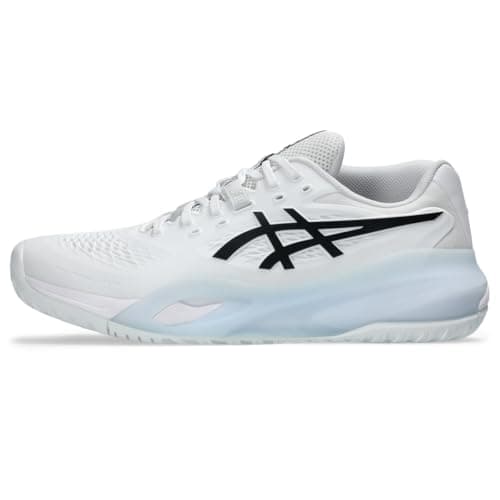 ASICS GEL-Resolution XTop pick | Players who grind outsoles on abrasive outdoor courts | 8.95 criteria | |
| 2 | 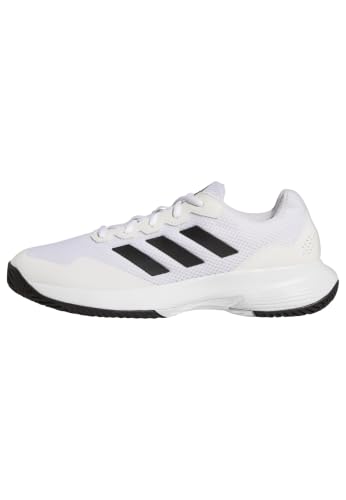 adidas GameCourt 2Budget pick | The cheapest shoe that outlasts the expensive ones | 8.05 criteria | $49.97 · View on Amazon Price as of November 28, 2026 · was $70.00, 29% off |
| 3 | 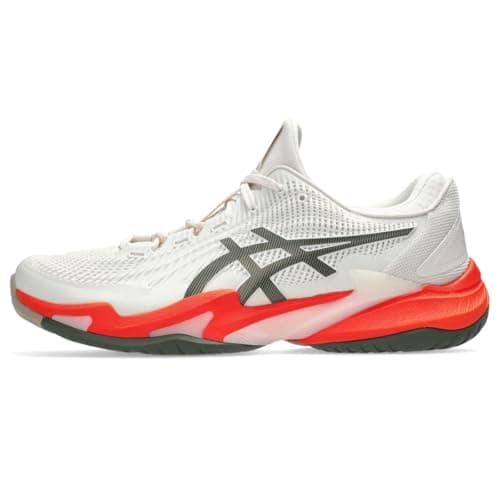 ASICS Court FF 3Best toebox | Players who drag a toe on serve | 8.75 criteria | |
| 4 | 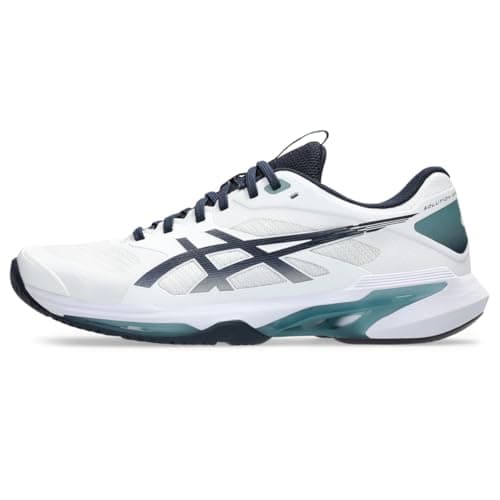 ASICS Solution Speed FF 4Most durable light shoe | Players who want outsole life without the weight | 8.55 criteria | |
| 5 | 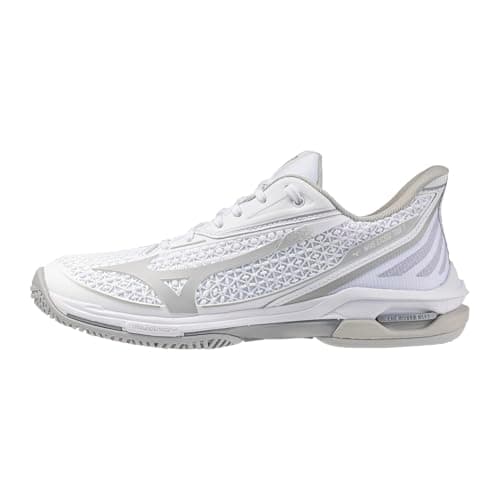 Mizuno Wave Exceed Tour 7 ACMost durable springy shoe | Players who want a long-lasting outsole and a springy ride | 8.25 criteria |
The picks in detail
01ASICS GEL-Resolution X
Top pickBest for: Players who grind outsoles on abrasive outdoor courts
Outsole wear is how most court shoes actually die, and this is the hardest outsole in our set. The durometer read 90.4 HC and RunRepeat's abrasion test took only 0.6 mm of depth out of it. Hard rubber is what survives the sandpaper texture of an outdoor hard court, and the figure is not a marginal lead: the softest comparable outsole here lost three times as much depth in the same test.
It is also the shoe that will not be structurally finished before the sole is. Torsional rigidity and heel counter stiffness both scored 5/5, which means the chassis is not slackening while the rubber lasts, and RunRepeat score the shoe 90 overall with their best stability award. A durable shoe that goes soft in the midfoot is still a shoe you replace, which is why we rank structure alongside rubber here.
Two honest costs. It is heavy at 14.7 oz / 417 g, well above the 12.9 oz / 365 g average, and RunRepeat flag the big toe as snug at 66.6 mm against a 69.3 mm average even though the widest point measures 96.9 mm and they call it perfect for wide feet. If weight is what you care about, [best lightweight tennis shoes](/tennis-shoes/best-lightweight) ranks the other end of the same decision.
Our score
- Lateral stability
- 9.5
- Cushioning
- 7.5
- Outsole durability
- 9.0
- Fit accommodation
- 7.0
- Lightness
- 4.0
- Overall
- 8.9
Verified specs
- RunRepeat score
- 90 — Best Stability
- Weight
- 14.7 oz / 417 g (men's 9)
- Heel / forefoot stack
- 30.8 mm / 21.9 mm
- Drop
- 8.9 mm
- Torsional rigidity
- 5/5
- Heel counter stiffness
- 5/5
- Heel shock absorption
- 98 SA
- Outsole wear
- 0.6 mm depth, 90.4 HC
- Forefoot traction
- 0.89 friction coefficient (average 0.78 across 47 shoes), AHARPLUS rubber
- Platform width
- 116.5 mm forefoot / 94.1 mm heel (average 112.5 / 89.7)
- Toebox width
- 96.9 mm widest / 66.6 mm at the big toe (average 69.3)
- Fit note
- RunRepeat: perfect for wide feet; snug at the big toe
Specs as published by RunRepeat, checked September 2026.
Buy if
- You play on abrasive outdoor hard courts
- You want the hardest measured outsole
- You want 5/5 structural figures as well
Pass if
- Weight is your main complaint
- You want a plush ride
- Your big toe needs room
02adidas GameCourt 2
Budget pickBest for: The cheapest shoe that outlasts the expensive ones
This has the single best abrasion result on the page: a 0.4 mm Dremel dent, roughly half the category average, and RunRepeat give it their durability award in the budget set. It is an entry-tier shoe beating premium models on the measurement that decides how many months a pair lasts, which is the most useful fact in this whole category.
Two more figures make it a genuine recommendation rather than a curiosity. Torsional rigidity scored 5/5 and lateral stability 5/5 against a 4.5 average, so the chassis is flagship-rigid, and toebox durability scored 4/5. The toebox is also the widest RunRepeat have recorded in tennis at 72.9 mm at the big toe against a 69.3 mm average, on a 115.7 mm forefoot platform.
The honest cost is underfoot. The forefoot stack is 15.5 mm and heel shock absorption measured 94 SA against a 99 SA average, so this is a firm, low shoe with no cushioning story at all. At 11.9 oz / 336 g it is light, which helps, but if anything hurts after a match this is the wrong shoe. [Most cushioned tennis shoes](/tennis-shoes/best-cushioned) is the opposite end.
Our score
- Lateral stability
- 8.5
- Cushioning
- 6.5
- Outsole durability
- 9.0
- Fit accommodation
- 9.0
- Lightness
- 8.0
- Overall
- 8.0
Verified specs
- RunRepeat award
- Best durability, budget tennis shoes
- Weight
- 11.9 oz / 336 g
- Dremel wear
- 0.4 mm dent
- Torsional rigidity
- 5/5
- Lateral stability
- 5/5 (average 4.5)
- Platform width
- 115.7 mm forefoot / 93.9 mm heel
- Forefoot stack
- 15.5 mm
- Heel shock absorption
- 94 SA (average 99 SA)
- Toebox at big toe
- 72.9 mm
- Breathability
- 4/5 (average 3.1)
- Toebox durability
- 4/5
Specs as published by RunRepeat, checked September 2026.
Buy if
- You want maximum outsole life for the least money
- You have wide feet
- You want 5/5 torsional and lateral figures
Pass if
- You need cushioning
- You have forefoot or heel sensitivity
- You want a premium shoe
Price as of November 28, 2026 · was $70.00, 29% off
03ASICS Court FF 3
Best toeboxBest for: Players who drag a toe on serve
There are two ways a court shoe dies, and this is the answer to the second. Toebox durability scored 5/5 against a 3.7 average: twelve seconds of Dremel at 5,000 rpm did not get halfway through the shell. If you drag your toe on serve, that is the part that fails first and the most expensive one to lose, because a hole in the upper ends a shoe that still has sole left.
The outsole is standard rather than exceptional at 85.3 HC, but RunRepeat describe its wear resistance as second to none, and the structural figures are the best on this page: 5/5 torsional rigidity and a 93 overall score, which is their top-scoring tennis shoe outright. The stack is 32.2 mm at the heel and 21.8 mm at the forefoot with 100 SA heel and an unusually high 77 SA forefoot, so it is cushioned as well as durable.
Two honest costs. RunRepeat list not for wide feet as a con: the Mono-Sock upper measures 92.2 mm at its widest point, exactly average, and 66.2 mm at the big toe, a few millimetres narrower than average. And heel padding durability scored only 2/5 after four seconds of the same abrasion test, so the one part of this shoe that is not durable is the heel lining.
Our score
- Lateral stability
- 9.5
- Cushioning
- 8.0
- Outsole durability
- 8.5
- Fit accommodation
- 5.0
- Lightness
- 5.0
- Overall
- 8.7
Verified specs
- RunRepeat score
- 93 — Top pick, best tennis shoes
- Weight
- 14.3 oz / 406 g
- Heel / forefoot stack
- 32.2 mm / 21.8 mm
- Drop
- 10.4 mm
- Torsional rigidity
- 5/5 (average 4.5)
- Heel counter stiffness
- 4/5 (average 4.2)
- Shock absorption
- 100 SA heel / 77 SA forefoot
- Energy return
- 42.1% heel / 42.5% forefoot (average 50.2%)
- Outsole hardness
- 85.3 HC
- Toebox width
- 92.2 mm widest / 66.2 mm at the big toe
- Toebox durability
- 5/5 (average 3.7)
- Heel padding durability
- 2/5 (average 3.2)
- Fit note
- RunRepeat: not for wide feet
Specs as published by RunRepeat, checked September 2026.
Buy if
- You drag your toe on serve
- You want the highest-scoring shoe here
- You want cushioning with the durability
Pass if
- You have wide feet or bunions
- You want the hardest outsole
- Heel lining wear has ended shoes for you before
04ASICS Solution Speed FF 4
Most durable light shoeBest for: Players who want outsole life without the weight
Light court shoes normally buy their weight saving out of the outsole, and this one did not. The Dremel abrasion test came in 0.3 mm shallower than average at 11.9 oz / 337 g, which is 80 g under the top pick. For a player whose shoes wear out on the plant foot rather than feeling unstable, that combination is the one to want.
Grip is the other half of the case. Traction measured 1.11, which RunRepeat put at 46 percent above the category average and the highest figure in their hard-court set, and they score the shoe 90 with their best for speed award. Hard-wearing and high-grip are usually opposites in rubber compounds, so having both measured on one shoe is the reason it is here, and [best tennis shoes for traction](/tennis-shoes/best-traction) ranks the whole field on that figure.
The honest cost is the chassis. This is ASICS' speed platform rather than their stability platform, and our source does not publish torsional-rigidity or heel-counter numbers for it, so you are trading measured structure for measured grip and weight. If you have ever rolled an ankle, do not make that trade on durability grounds alone.
Our score
- Lateral stability
- 7.5
- Cushioning
- 7.5
- Outsole durability
- 8.5
- Fit accommodation
- 7.5
- Lightness
- 8.5
- Overall
- 8.5
Verified specs
- RunRepeat score
- 90 — Best for Speed
- Weight
- 11.9 oz / 337 g
- Traction
- 1.11, 46% above average
- Dremel wear
- 0.3 mm less damage than average
Specs as published by RunRepeat, checked September 2026.
Buy if
- You want durability at a low weight
- You want the highest measured traction
- You wear out plant-foot outsoles
Pass if
- Ankle history is your concern
- You want published structural figures
- You want the hardest outsole available
05Mizuno Wave Exceed Tour 7 AC
Most durable springy shoeBest for: Players who want a long-lasting outsole and a springy ride
This is the third-best abrasion result here at 0.7 mm of wear, with a 1.04 traction figure and a six-month outsole warranty from the brand. RunRepeat score it 90. At 12.1 oz / 343 g on a 30.4 mm heel and 19.3 mm forefoot stack, it is also the only durable shoe on this page that is genuinely lively underfoot.
That liveliness is measured rather than claimed: energy return came in at 55.7 percent at the heel and 58.5 percent at the forefoot, both above the 50.2 percent average, where the top pick's figures sit in the low forties. If you find hard-wearing court shoes dead feeling, this is the one that is not.
Two honest costs, and the first is significant. Torsional rigidity measured 12.9 Nm against an 18.1 Nm average, which is well below par and the lowest structural figure on this page, so the midfoot flexes more than any other pick here. RunRepeat also list not for wide feet. It is a trade rather than an upgrade, and worth reading twice if ankles are a concern.
Our score
- Lateral stability
- 6.5
- Cushioning
- 7.5
- Outsole durability
- 8.5
- Fit accommodation
- 5.5
- Lightness
- 8.0
- Overall
- 8.2
Verified specs
- RunRepeat score
- 90
- Tested pair
- Men's — women's AC version sold separately
- Weight
- 12.1 oz / 343 g
- Heel / forefoot stack
- 30.4 mm / 19.3 mm
- Drop
- 11.1 mm
- Energy return
- 55.7% heel / 58.5% forefoot
- Shock absorption
- 100 SA heel / 67 SA forefoot
- Traction
- 1.04
- Torsional rigidity
- 12.9 Nm (average 18.1 Nm)
- Heel counter stiffness
- 4/5
- Outsole wear
- 0.7 mm
- Fit note
- RunRepeat: not for wide feet
- Outsole warranty
- 6 months
Specs as published by RunRepeat, checked September 2026.
Buy if
- You want a springy ride and a long-lasting sole
- You want a published outsole warranty
- You dislike dead-feeling durable shoes
Pass if
- You have rolled an ankle
- You have wide feet
- You want maximum midfoot rigidity
The two ways a court shoe dies
The first is the outsole. An outdoor hard court is effectively sandpaper, and every slide and stop takes rubber off the plant foot and the lateral edges. This is measured two ways: a durometer reading in HC, which says how hard the compound is, and a Dremel abrasion test that reports how many millimetres of depth a fixed amount of grinding removes. Higher HC and lower abrasion depth both mean a longer life.
The second is the upper, and specifically the toebox. If you drag your toe on serve, the shell over the big toe is the part that fails, and a hole there ends a shoe with plenty of sole left. RunRepeat score this separately out of five with a published average of 3.7. The reason this page has two different winners is that the best outsole and the best toebox are not the same shoe, and which one matters to you depends entirely on how you serve.
We do not write prices into the text of our pages, because a typed price is wrong within days. Every buy button on this page carries the current retailer price with its own as-of date, refreshed daily, so if a pick has moved you see that rather than our guess.
Outsole and upper, measured side by side
| Shoe | Outsole hardness | Abrasion wear | Toebox durability | Weight |
|---|---|---|---|---|
| ASICS GEL-Resolution X | 90.4 HC | 0.6 mm | Not published | 14.7 oz / 417 g |
| adidas GameCourt 2 | Not published | 0.4 mm dent | 4/5 (average 3.7) | 11.9 oz / 336 g |
| ASICS Court FF 3 | 85.3 HC | Wear resistance second to none | 5/5 (average 3.7) | 14.3 oz / 406 g |
| ASICS Solution Speed FF 4 | Not published | 0.3 mm better than average | Not published | 11.9 oz / 337 g |
| Mizuno Wave Exceed Tour 7 AC | Not published | 0.7 mm | Not published | 12.1 oz / 343 g |
The two cells worth reading twice are the GameCourt 2's 0.4 mm and the Court FF 3's 5/5. One is an entry-tier shoe beating premium models on sole life; the other is the only shoe here with a published toebox score high enough to survive a toe-dragger. Neither is the shoe with the hardest outsole.
What actually extends the life of a pair
Four things, in order of how much difference they make.
- 01Rotate two pairs. Alternated pairs outlast two pairs worn to death one after the other, because midsole foam recovers between sessions and a damp upper is a weaker upper.
- 02Match the outsole to the surface. A clay pattern on hard court wears out in weeks; a hard-court pattern on clay clogs and slides. Can you wear clay court shoes on hard court covers the specifics.
- 03Fix the drag rather than the shoe. Toe-drag on serve is usually a trailing-leg habit, and a toe guard treats the symptom. If you cannot change it, buy on the toebox column above.
- 04Replace on evidence, not on a date. When to replace tennis shoes lists five checks, and the one that matters most is whether the outsole pattern is still readable under the plant foot.
Two things to settle before you order. Get the width right, because a shoe that is too narrow is stretched out of shape and fails early: best tennis shoes for wide feet and best tennis shoes for narrow feet list the models whose fit is documented. And if you are shopping a budget rather than a characteristic, best tennis shoes under $100 and best tennis shoes under $150 rank by ceiling instead.
How these picks were made
Racket & Rally does not run a test lab. Nothing on this page is written as though we had worn, swung or measured anything ourselves, because we have not. What we do is read the published specifications, the independent lab results and the retailer listings cited at the foot of the page, set them against each other, and say which differences change something you will actually notice.
Every product here was confirmed on sale when its registry entry was built, and every claim traces to one of the sources listed at the bottom. Our full selection criteria set out the method, and the editorial policy covers corrections and how often pages are revisited. Where a brand or a listing does not state a figure, we say that rather than filling the gap.
Common questions
What are the most durable tennis shoes?
On measured outsole figures, the ASICS GEL-Resolution X: the hardest compound in our set at 90.4 HC, losing only 0.6 mm of depth in RunRepeat's abrasion test, with 5/5 for both torsional rigidity and heel counter stiffness so the chassis lasts as long as the rubber. The best single abrasion result belongs to the adidas GameCourt 2 at a 0.4 mm dent, which is roughly half the category average.
How long should tennis shoes last?
There is no honest number in months, because it depends on your surface, your weight and how many hours you play, which is why we quote outsole figures instead. The spread is real: the GEL-Resolution X lost 0.6 mm in the abrasion test while the New Balance Coco CG2 lost 1.9 mm on a similar 89.4 HC compound, roughly three times the wear. When to replace tennis shoes lists the checks that actually tell you.
Do expensive tennis shoes last longer?
Not reliably. The best abrasion result on this page belongs to an entry-tier shoe, the adidas GameCourt 2 at 0.4 mm, and it beat several premium models. What premium money buys consistently is structural figures and cushioning, not rubber. The one place price does track durability is the toebox shell, where the premium ASICS Court FF 3 scored 5/5 and the budget GEL-Dedicate 8 scored 1/5.
Why does my toe wear through before the sole?
Because you drag your trailing toe on serve, which grinds the upper rather than the outsole. Buy on the toebox column: the ASICS Court FF 3 scored 5/5 against a 3.7 average and survived twelve seconds of Dremel at 5,000 rpm, while the ASICS GEL-Dedicate 8 scored 1/5 and the same test went through its upper in the same twelve seconds.
Does a harder outsole mean less grip?
Usually, but not always, and this page has the counter-example. The ASICS Solution Speed FF 4 measured traction at 1.11, 46 percent above the category average, while still coming in 0.3 mm better than average on abrasion. The adidas CourtJam Control 3 is the ordinary case in the other direction at 0.64 traction against a 0.78 average.
Is an outsole warranty worth anything?
It is worth reading, because it tells you what the brand expects. Two shoes we track publish a six-month outsole guarantee: the Mizuno Wave Exceed Tour 7 AC and the New Balance Coco CG2. That is a statement about typical wear rather than a promise about yours, and it says nothing about the upper, which is the part that fails first for toe-draggers.
Read next
Sources
- 01RunRepeat - ASICS GEL-Resolution X lab report
- 02RunRepeat - ASICS Court FF 3 lab report
- 03RunRepeat - adidas GameCourt 2.0 lab report
- 04RunRepeat - Mizuno Wave Exceed Tour 7 lab report
- 05RunRepeat - New Balance Coco CG2 lab report
- 06RunRepeat - best hard court tennis shoes
- 07RunRepeat - best cheap tennis shoes
Every source above was retrieved while writing this page. Specifications are quoted from the listing or manufacturer page cited, not from memory.