Buying guide
Best tennis strings under $25
At this ceiling the string is the cheap part of a restring. Four sets, one from each family, and the honest note that the stringer costs more than any of them.
By Janet H.Updated
The short answer
The Solinco Hyper-G is the best tennis string under $25: Tennis Warehouse's control polyester, with the widest gauge range of any set here at 15L to 20. It is also the cheapest string in our registry, so it is the budget pick in the same breath. For comfort, the Wilson NXT multifilament; for power, the Tecnifibre X-One Biphase.
Disclosure — we earn a commission on qualifying purchases made through links on this page, at no extra cost to you. It never changes which product we rank first. How this site is funded.
Our picks
| # | Product | Best for | Score | Price |
|---|---|---|---|---|
| 1 | 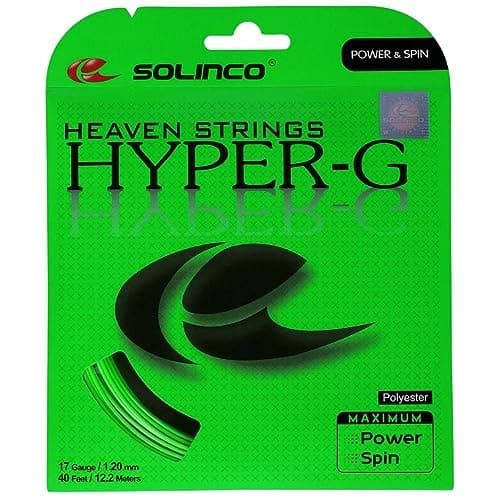 Solinco Hyper-GTop pick and budget pick | Intermediate and advanced players who want control and spin | 8.74 criteria | |
| 2 | 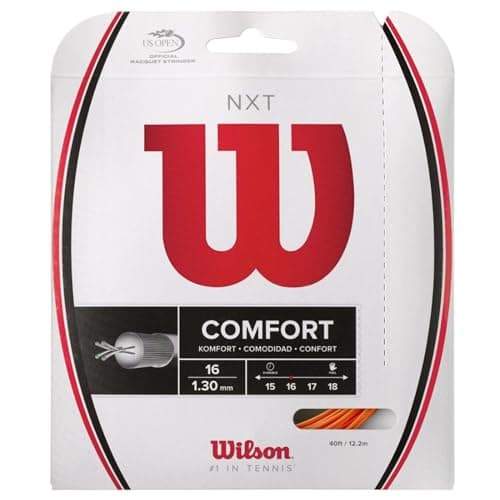 Wilson NXTBest comfort | Players whose arm complains before their technique does | 8.54 criteria | $20.36 · View on Amazon Price as of November 28, 2026 · was $23.95, 15% off |
| 3 | 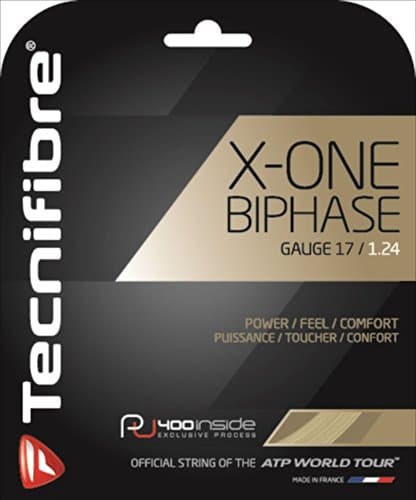 Tecnifibre X-One BiphaseBest power | Players who want a soft string that still adds pace | 8.44 criteria | |
| 4 | 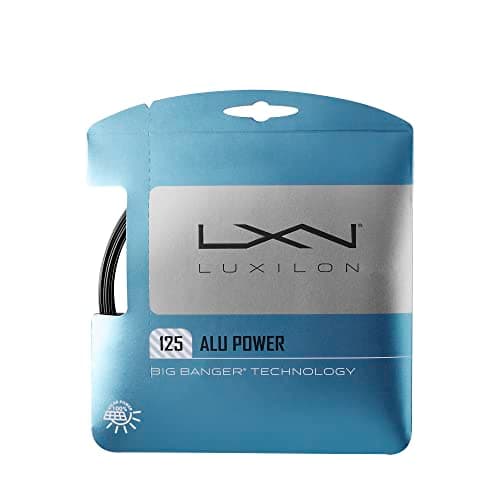 Luxilon ALU PowerThe benchmark poly | Advanced players who want the category reference | 8.04 criteria | $17.99 · View on Amazon Price as of November 28, 2026 · was $21.50, 16% off |
The picks in detail
01Solinco Hyper-G
Top pick and budget pickBest for: Intermediate and advanced players who want control and spin
Tennis Warehouse give this their control award in the polyester category, and it is the cheapest string in our registry, which is an unusually clean result: the best-value set here is also the one the retailer rates highest for the thing most players want from a poly.
The gauge range is the detail that earns the top slot. Tennis Warehouse list it from 15L to 20, which is the widest spread of any string on this page, and gauge is the lever you pull once you know what you want: thicker for durability, thinner for spin and feel. A string you can buy in six thicknesses is a string you can keep using as your game changes. [Tennis string gauge](/guides/tennis-string-gauge) explains the numbering.
The honest cost is comfort. Polyester is the stiffest string family and this is a firm poly, so in a stiff frame it is a hard combination. If your elbow has ever complained, this is the wrong string regardless of price, and [best tennis strings for tennis elbow](/gear/best-tennis-strings-for-tennis-elbow) is the page you want. It also loses tension faster than a multifilament, which means restringing on a schedule rather than when it breaks.
Our score
- Performance
- 9.0
- Comfort
- 6.0
- Durability
- 8.5
- Value
- 10.0
- Overall
- 8.7
Verified specs
- Type
- Polyester
- Gauges
- 15L to 20
- TW award
- Control
- Listed price
- $13.99 per set
Specs as published by Tennis Warehouse, checked September 2026.
Buy if
- You want control and spin
- You want the widest gauge choice
- You break strings regularly
Pass if
- Your elbow complains
- You want maximum comfort
- You restring only when the string breaks
02Wilson NXT
Best comfortBest for: Players whose arm complains before their technique does
Tennis Warehouse's comfort winner, and the string to fit first if your elbow is the limiting factor. The construction is the reason: over a thousand fibres bonded with polyurethane, which is what a multifilament is, and that bundle deforms and recovers in a way a single polyester filament cannot.
The practical effect is that a multifilament at a moderate tension is the single largest comfort change available to a club player, and it costs less than any frame change. Players managing an elbow often buy a softer racket first; the string is cheaper, faster and usually more effective. [Best tennis strings for tennis elbow](/gear/best-tennis-strings-for-tennis-elbow) covers the full approach.
The honest cost is durability and spin. A multifilament frays rather than snapping cleanly and will not last as long as a poly in the hands of a player who hits with heavy spin, and it does not grip the ball the way a textured polyester does. It is sold in 16 and 17 gauges only, so there is less room to tune than with the Hyper-G.
Our score
- Performance
- 8.0
- Comfort
- 9.5
- Durability
- 7.0
- Value
- 8.5
- Overall
- 8.5
Verified specs
- Type
- Multifilament
- Gauges
- 16, 17
- TW award
- Comfort
- Construction
- 1,000+ fibers bonded with polyurethane
- Listed price
- $23.95 per set
Specs as published by Tennis Warehouse, checked September 2026.
Buy if
- Comfort is your priority
- Your elbow or shoulder complains
- You do not break strings often
Pass if
- You break strings every few weeks
- You want maximum spin
- You want a wide gauge range
Price as of November 28, 2026 · was $23.95, 15% off
03Tecnifibre X-One Biphase
Best powerBest for: Players who want a soft string that still adds pace
Tennis Warehouse's power award in the multifilament category, which is a more useful distinction than it sounds. Most soft strings are soft because they absorb, and absorption costs pace; this one is rated for power, meaning it returns energy rather than only cushioning the impact.
The gauge range is the second reason it is here: 15L, 16, 17 and 18, which is four thicknesses and more than the Wilson NXT offers. For a player who wants comfort and is also willing to tune, that combination of a power-rated multifilament with real gauge choice is the most flexible soft setup inside this ceiling.
The honest cost is durability, and it is the usual multifilament limitation in a premium package. A soft, powerful string in a thin gauge is the shortest-lived combination available, so if you break strings this is an expensive habit at any list price. A hybrid setup is the standard answer: [hybrid tennis string setups](/guides/hybrid-tennis-string-setups) covers putting a poly in the mains and a multi in the crosses.
Our score
- Performance
- 8.5
- Comfort
- 9.0
- Durability
- 6.5
- Value
- 8.0
- Overall
- 8.4
Verified specs
- Type
- Multifilament
- Gauges
- 15L, 16, 17, 18
- TW award
- Power
- Listed price
- $22.95-$23.95 per set
Specs as published by Tennis Warehouse, checked September 2026.
Buy if
- You want comfort and pace together
- You want four gauges to choose from
- You do not break strings often
Pass if
- You are a string breaker
- You want maximum control
- You want the lowest cost per set
04Luxilon ALU Power
The benchmark polyBest for: Advanced players who want the category reference
This is the polyester the rest of the category is measured against, and it is worth naming on any string page for that reason alone. Tennis Warehouse carry it as their reference polyester, in 16, 16L, 17L and 18 gauges.
The player it genuinely suits is an advanced one who swings fast, produces their own spin and wants a string bed that holds its shape under a heavy load. For that player, nothing in this bracket does the job better, and the fact that it fits inside a $25 ceiling at all is the useful information.
The honest cost is that it is the wrong string for most club players, which we would rather say plainly than bury. It is the stiffest set on this page, it loses tension and it demands racket-head speed to come alive; at a moderate swing it is simply hard. If you are not sure whether you are that player, you are probably not, and the Hyper-G at the top of this page is the better poly to start with.
Our score
- Performance
- 9.0
- Comfort
- 5.0
- Durability
- 8.0
- Value
- 7.5
- Overall
- 8.0
Verified specs
- Type
- Polyester
- Gauges
- 16, 16L, 17L, 18
- TW category
- Reference polyester
- Listed price
- $21.50 per set
Specs as published by Tennis Warehouse, checked September 2026.
Buy if
- You are an advanced, fast-swinging player
- You want the category benchmark
- You produce your own spin
Pass if
- You are a club-level player
- Your arm has ever complained
- Your swing speed is moderate
Price as of November 28, 2026 · was $21.50, 16% off
At this ceiling the string is the cheap part
Four strings in our registry held a live price under $25 at the last price refresh, and they cover all the ground that matters: two polyesters, one of them the category benchmark, and two multifilaments, one rated for comfort and one for power. There is no meaningful string family missing from this bracket, which makes the ceiling almost irrelevant as a constraint.
What is not inside the ceiling is the labour. A restring at a shop typically costs as much as or more than any set on this page, which flips the usual economics: the cheapest thing you can do to improve a $25 string decision is not to find a cheaper string, it is to stop choosing on price at all and choose on family. If you restring often enough for the labour to add up, should you string your own racket runs the arithmetic.
We do not write prices into the text of our pages, because a typed price is wrong within days. Every buy button on this page carries the current retailer price with its own as-of date, refreshed daily, so if a pick has moved you see that rather than our guess.
The four, side by side
| String | Type | Gauges | Tennis Warehouse award | Best for |
|---|---|---|---|---|
| Solinco Hyper-G | Polyester | 15L to 20 | Control | Control and spin, widest tuning range |
| Wilson NXT | Multifilament | 16, 17 | Comfort | Arm comfort |
| Tecnifibre X-One Biphase | Multifilament | 15L, 16, 17, 18 | Power | Comfort with pace |
| Luxilon ALU Power | Polyester | 16, 16L, 17L, 18 | Reference polyester | Advanced, fast swings |
Read the type column before anything else. The gap between a polyester and a multifilament is far larger than the gap between any two strings within a family, and it is the decision that determines comfort, durability and how often you will be restringing. Tennis string types explained covers the four materials.
What this ceiling rules out
Two things, and the first is not a price issue.
- Natural gut. It is the softest and most responsive string material available and it sits well above this bracket, and we have no live listing for a set. It is also fragile in damp conditions, so it is a specialist choice rather than an upgrade everyone should save for.
- The budget end, oddly. The Prince Synthetic Gut Duraflex is Tennis Warehouse's all-around value award and the honest default for a first restring, at a listed price well under everything on this page, and its price-layer entry shows no live offer, so we cannot send you to it. That is a listing gap rather than a judgement on the string.
Two things to settle before you order. Decide tension at the same time as string, because a soft string at a high tension plays firm and a stiff string at a low tension is still stiff: tennis string tension covers the range. And if you break strings often, consider a hybrid rather than a cheaper set: hybrid tennis string setups explains putting a poly in the mains and a softer string in the crosses, which is how most string breakers get comfort and durability at once. Best tennis strings ranks the whole category.
How these picks were made
Racket & Rally does not run a test lab and has not hit with any of this equipment. Nothing on this page is written as though we had, because we have not. What we do is read the published specifications, the retailer awards and the independent reviews cited at the foot of the page, set them against each other, and say which differences change something you will actually notice.
Every product here was confirmed on sale when its registry entry was built, and every claim traces to one of the sources listed at the bottom. Our full selection criteria set out the method, and the editorial policy covers corrections and how often pages are revisited. Where a brand or a retailer does not state a figure, we say so rather than filling the gap.
Common questions
What is the best tennis string under $25?
The Solinco Hyper-G: Tennis Warehouse's control polyester, with the widest gauge range of any set here at 15L to 20, and the cheapest string in our registry. For comfort, the Wilson NXT multifilament is their comfort award winner; for comfort with pace, the Tecnifibre X-One Biphase.
How much does tennis string cost?
Every string in our registry held a live price under $25 per set at the last price refresh, which covers both polyesters and multifilaments. The larger cost is usually the labour: a shop restring typically costs as much as or more than the string itself, which is why the string is rarely the thing worth economising on.
Is cheap tennis string worse?
Not within this bracket. The cheapest set in our registry is also the one Tennis Warehouse give their control award to, and the most expensive set on this page is the one we would recommend to the fewest players. What matters is matching the string family to your arm and your swing, not the price per set.
Should I use polyester or multifilament?
Polyester if you swing fast, produce your own spin and break strings; multifilament if your arm complains or you want more free power. That decision matters far more than any choice within either family. Polyester is stiffer, holds its shape under heavy load and loses tension faster; multifilament is softer and frays rather than snapping. Tennis string types explained covers both.
How often should I restring?
The old rule is as many times a year as you play per week, but the honest trigger depends on material: a polyester should be replaced on a schedule because it loses tension long before it breaks, while a multifilament usually tells you by fraying. How often should you restring a tennis racket goes through it.
Is it cheaper to string my own racket?
It becomes cheaper at a volume most club players do not reach quickly, because the machine is the cost. If you restring a single racket three times a year, a shop is cheaper; if you restring several frames monthly, the machine pays for itself. Should you string your own racket runs the numbers properly.
Read next
Sources
Every source above was retrieved while writing this page. Specifications are quoted from the listing or manufacturer page cited, not from memory.