Comparison
Wilson Clash 100 v3 vs Babolat Pure Drive 2025
These two get shortlisted together constantly and they are not close relatives. Both are 100 square inches with a 16x19 pattern at 27 inches - and then one is the softest mainstream frame on the market and the other is one of the stiffest. That single number decides the whole comparison.
By Janet H.Updated
The short answer
Buy the Wilson Clash 100 v3 if arm comfort or feel is your priority: 54 RA stiffness, 11 oz / 312 g strung, 7 points head light, 308 swingweight. Buy the Babolat Pure Drive 2025 if you want free depth and pace: 69 RA, 11.2 oz / 318 g, 4 points head light, 317 swingweight, on a 23/26/23 mm beam. The 15-point stiffness gap is the decision; everything else is a detail.
Disclosure — we earn a commission on qualifying purchases made through links on this page, at no extra cost to you. It never changes which product we rank first. How this site is funded.
Our picks
| # | Product | Best for | Score | Price |
|---|---|---|---|---|
| 1 | 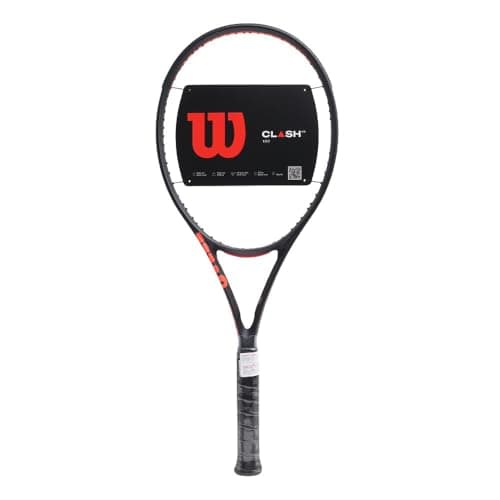 Wilson Clash 100 v3Best for arm comfort | Arm comfort, feel and a full swing | 8.65 criteria | $253.76 · View on Amazon Price as of October 29, 2026 · was $299.00, 15% off |
| 2 | 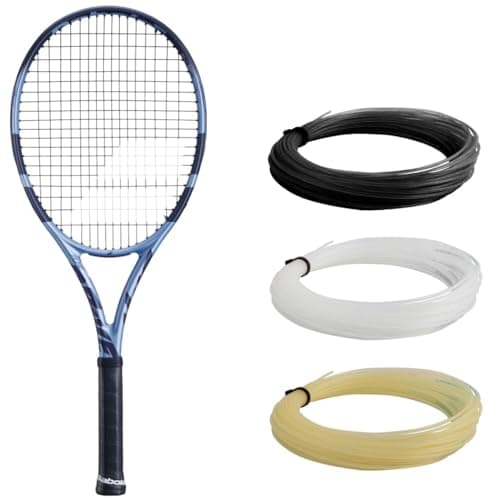 Babolat Pure Drive 2025Best for power | Free depth, pace and a compact swing | 8.55 criteria | |
| 3 | 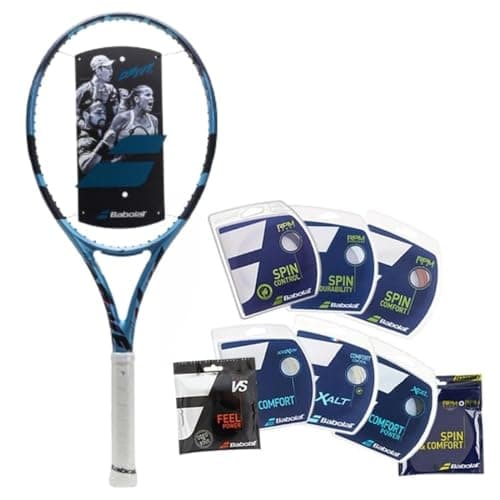 Babolat Pure Drive Lite 2025Best lighter option | The Pure Drive profile at a lower swingweight | 8.25 criteria |
The picks in detail
01Wilson Clash 100 v3
Best for arm comfortBest for: Arm comfort, feel and a full swing
The number that defines this racket is 54 RA. Stiffness ratings in modern frames mostly live between the low 60s and the low 70s, so a 54 is not a point or two softer than the field - it is a different category, and it is the softest you can buy without leaving the standard 100 square inch midplus shape behind. A flexible frame deforms on impact instead of passing the shock straight into your forearm, which is why this is the frame we point arm-trouble readers at first.
The rest of the specification is built to keep that flex usable. 11 oz / 312 g strung at 7 points head light with a 308 swingweight makes it the quicker of these two rackets through the contact zone, despite being only six grams lighter overall, because more of the mass sits behind your hand. The beam is 24.5 mm uniform - the same depth from throat to tip - which is unusual and part of how Wilson gets the bend without the frame feeling vague in one section.
The honest cost is pace. A frame that bends absorbs energy it does not return, so a ball struck with a short, defensive swing comes off this racket slower than it would off the Pure Drive - and players who want the racket to supply depth rather than their swing often describe the Clash as underpowered. It is also a premium frame. If you want the comfort without the price, [best tennis rackets for tennis elbow](/tennis-rackets/best-for-tennis-elbow) covers cheaper routes to the same goal.
Our score
- Power
- 7.0
- Control
- 8.5
- Forgiveness
- 8.5
- Arm comfort
- 9.5
- Maneuverability
- 8.5
- Overall
- 8.6
Verified specs
- Head size
- 100 sq in
- Strung weight
- 11 oz / 312 g
- Balance
- 7 pts head light
- Swingweight
- 308
- Stiffness (RA)
- 54
- Beam
- 24.5 mm uniform
- String pattern
- 16x19
- Length
- 27 in
Specs as published by Tennis Warehouse, checked September 2026.
Buy if
- You have a history of elbow, wrist or shoulder trouble
- You generate your own pace with a full swing
- You want feel and placement over free depth
Pass if
- You want the ball to leave quickly off a short swing
- Your biggest problem is that balls land short
- You want the cheapest route to a 100 sq in frame
Price as of October 29, 2026 · was $299.00, 15% off
02Babolat Pure Drive 2025
Best for powerBest for: Free depth, pace and a compact swing
The Pure Drive is the reference power frame of the last two decades and the specification shows exactly where that comes from. 69 RA stiffness on a 23 / 26 / 23 mm beam: the frame is nearly 26 mm deep through the middle of the hoop, and a deeper, stiffer beam bends less on impact and returns more of the ball's energy. If your well-struck balls land short of the baseline, this is the racket that fixes it without you changing anything.
It is also the more stable of the two on contact. 11.2 oz / 318 g strung at 4 points head light with a 317 swingweight puts more mass further forward than the Clash does, which means it resists twisting and pushing back when a heavy ball arrives. For a player who gets overpowered in rallies rather than out-rallied, that combination is the answer.
The honest cost is comfort, and it is not a small one. A 69 RA frame on a thick beam transmits more of every impact into the arm, and Babolat have never positioned this frame as an arm-friendly racket - our review of it says the same. It is also the slower of these two through the contact zone despite a six-gram weight difference, because the 317 swingweight and the 4-point balance both sit forward. Read the [Pure Drive review](/reviews/babolat-pure-drive-2025) for the full specification picture.
Our score
- Power
- 9.5
- Control
- 7.5
- Forgiveness
- 8.0
- Arm comfort
- 6.0
- Maneuverability
- 7.5
- Overall
- 8.5
Verified specs
- Head size
- 100 sq in
- Strung weight
- 11.2 oz / 318 g
- Balance
- 4 pts head light
- Swingweight
- 317
- Stiffness (RA)
- 69
- Beam
- 23 / 26 / 23 mm
- String pattern
- 16x19
- Length
- 27 in
Specs as published by Tennis Warehouse, checked September 2026.
Buy if
- Well-struck balls land short of the baseline
- You hit with a compact or defensive swing
- You get pushed back in rallies and want stability
Pass if
- You have any history of arm pain
- You already hit the ball long
- You want maximum feel on touch shots
03Babolat Pure Drive Lite 2025
Best lighter optionBest for: The Pure Drive profile at a lower swingweight
If the Pure Drive's power profile is what you want and its 317 swingweight is what puts you off, this is the resolution rather than a compromise. Same 100 sq in head, same 69 RA, same 23 / 26 / 23 mm beam and same 16x19 pattern - so the power source is identical - at 10 oz / 283 g strung with a 295 swingweight.
A 22-point swingweight reduction is a large, genuinely noticeable change. It is the difference between a racket you are still swinging in the third set and one you are late with, and it matters most to players with a shorter backswing, players coming back from injury, and anybody who plays doubles and lives at the net.
The honest cost is stability. Taking 35 g and 22 swingweight points out of a frame means less mass behind the ball, so a heavy flat drive will push this racket back in a way it would not push back the full-weight Pure Drive. It is on this page as the third option, not as a better version of the second - and if lightness is your real requirement rather than power, [best tennis rackets for seniors](/tennis-rackets/best-for-seniors) is the better-aimed page.
Our score
- Power
- 9.0
- Control
- 7.0
- Forgiveness
- 8.5
- Arm comfort
- 6.5
- Maneuverability
- 9.5
- Overall
- 8.2
Verified specs
- Head size
- 100 sq in
- Strung weight
- 10 oz / 283 g
- Balance
- 1 pt head light
- Swingweight
- 295
- Stiffness (RA)
- 69
- Beam
- 23 / 26 / 23 mm
- String pattern
- 16x19
- Length
- 27 in
Specs as published by Tennis Warehouse, checked September 2026.
Buy if
- You want Pure Drive power with a quicker swing
- You play a lot of doubles or net points
- The full-weight frame feels heavy by the third set
Pass if
- You need stability against heavy hitters
- You want the comfort of the Clash
- You already swing a 320 swingweight comfortably
The two frames side by side
Four of these rows are identical, and people shortlist these rackets together because of exactly that. Read the rows that differ.
| Wilson Clash 100 v3 | Babolat Pure Drive 2025 | |
|---|---|---|
| Head size | 100 sq in | 100 sq in |
| Length | 27 in | 27 in |
| String pattern | 16x19 | 16x19 |
| Strung weight | 11 oz / 312 g | 11.2 oz / 318 g |
| Balance | 7 pts head light | 4 pts head light |
| Swingweight | 308 | 317 |
| Stiffness (RA) | 54 | 69 |
| Beam | 24.5 mm uniform | 23 / 26 / 23 mm |
The weight row is the one to stop reading into. Six grams is roughly the mass of a replacement grip and is not a difference you can feel in the hand. What you can feel is where mass sits: the Clash is 7 points head light with a 308 swingweight, the Pure Drive is 4 points head light with a 317 swingweight, and that 9-point swingweight gap makes the heavier racket also the slower one through contact. Balance and swingweight explained covers why swingweight tells you more than weight ever will.
The 15-point stiffness gap is the whole decision
RA, or stiffness, measures how much a frame resists bending when it is loaded. The scale in common use runs roughly from the low 50s to the mid 70s, so 54 against 69 is not a nudge along that scale - it is most of it. Everything else on this page is downstream of that one number.
What a stiff frame does
A stiff frame bends less on impact, so less of the ball's energy is absorbed in deforming the racket and more is returned to the ball. That is free depth: the ball leaves faster for the same swing. The trade is that energy which does not go into bending the frame has to go somewhere, and a meaningful share of it travels down the handle into your hand, wrist and forearm. A stiff racket is also less informative - you feel the result of a shot rather than the shot itself, because the frame is not flexing around the contact.
What a flexible frame does
A flexible frame absorbs more and returns less. You get less free depth and have to supply more of the pace yourself, and in exchange you get two things: a longer, softer impact event that is gentler on the arm, and considerably more feedback about where on the string bed you made contact. That feedback is what players mean by feel, and it is why touch players and volleyers tend to prefer softer frames even when their arms are fine.
Neither is better. They are answers to different questions, and the useful thing is that the question is easy to answer honestly: watch where your well-struck balls land. We go through the whole axis on tennis racket stiffness, which is the page to read if you have never checked the RA of the racket you currently own.
Which one you are
Three questions, in this order. The first one answers it for most people.
- 01Have you had elbow, wrist or shoulder pain from tennis? Then take the Clash and stop reading. A 54 RA frame is the single most effective equipment change available to you, and no amount of extra depth from a stiffer racket is worth playing through pain for. Neither Pure Drive on this page is recommended for arm trouble.
- 02Where do your well-struck balls land? Consistently short of the baseline means you are not getting enough depth from your own swing and the Pure Drive will supply it. Consistently long means you have plenty of pace already and a stiffer frame will make it worse - take the Clash, which asks you to swing and rewards placement.
- 03How long is your swing? A full, shoulder-driven swing generates its own pace and pairs naturally with a flexible frame. A compact, blocking or defensive swing does not, and needs the frame to do more of the work - which is the Pure Drive's entire design brief.
If questions two and three disagree - you hit long but with a short swing, say - weight question one most heavily and then question two. Depth is easier to adjust with string and tension than comfort is.
The two frames we would look at instead
Neither of these rackets is the right answer for everybody who ends up on this page, and both have a sibling worth knowing about.
| If this is you | Look at | Why |
|---|---|---|
| You like the Clash but want more margin on mishits | Wilson Clash 108 v3 | 108 sq in, 10.4 oz / 295 g, 58 RA, 27.25 in - a bigger hoop and a quarter-inch of extra length, at the cost of 4 RA points of softness |
| You like the Pure Drive but not the swingweight | Babolat Pure Drive Lite 2025 | Same 100 sq in head, same 69 RA, same 23/26/23 beam at 10 oz / 283 g and a 295 swingweight |
| You want control rather than depth from a Babolat | Babolat Pure Aero 98 2026 | 98 sq in, 66 RA, 21/23/22 mm beam, 16x20 - the control frame of the family despite the Aero badge |
| You want a soft frame cheaper than the Clash | Prince O3 Legacy 120 or the ProKennex range | Covered on our tennis elbow roundup - several soft frames sit well below premium pricing |
Two of those have their own head-to-head on this site already. Babolat Pure Aero 98 vs Pure Drive is the in-family decision, and Babolat Pure Drive vs Yonex EZONE 100 is the one for players who have landed on a stiff 100 and are choosing between brands.
What neither racket will fix
Both of these are genuinely good frames at the top of their category, which means the gap between them is smaller than the gap between either one and the things players actually blame their racket for.
- Grip size. Too small and you grip harder than you need to, which loads the forearm; too large and you lose wrist mobility. It costs nothing to get right and it is the most commonly wrong spec on a club player's racket - tennis racket grip size has the measurement.
- Dead string. A string bed that has lost its tension and its snapback feels like a frame that has gone dull, and most club players leave string in far too long. How often to restring a tennis racket has the rule of thumb.
- The wrong string in the right frame. A full bed of stiff polyester undoes a 54 RA frame's comfort advantage and will undo your elbow with it.
- Contact point. A late contact point sprays the ball and loads the arm regardless of what you are holding, and no frame on the market corrects it.
If you are not sure a new racket is the right purchase at all, does a good tennis racket make a difference is the honest version of that question, and it does not conclude what you might expect.
How this comparison was put together
We did not hit with either racket. Racket & Rally does not run a test lab, and nothing on this page is written as though we had. Every head size, weight, balance, swingweight, stiffness, beam and string pattern figure below is the published specification from the Tennis Warehouse listing cited at the foot of the page, read on 2026-10-29.
What we add is the reading: what a 15-point stiffness gap actually changes for a player, and which of the two sides of it you belong on. Our full selection criteria set out the method, and the editorial policy covers corrections and how often pages are revisited. We earn a commission if you buy through our links, which is disclosed on every page and never changes what we recommend.
Common questions
What is the difference between the Wilson Clash and the Babolat Pure Drive?
Stiffness, mostly. Both are 100 sq in, 27 in and 16x19, six grams apart on strung weight. The Clash 100 v3 is 54 RA on a 24.5 mm uniform beam with a 308 swingweight; the Pure Drive 2025 is 69 RA on a 23 / 26 / 23 mm beam with a 317 swingweight. The Clash is softer, quicker and more comfortable; the Pure Drive supplies more free depth and is more stable.
Is the Wilson Clash better for tennis elbow than the Pure Drive?
On the published specification, yes - a 54 RA frame bends more on impact and passes less shock into the arm than a 69 RA frame on a thicker beam, and we do not recommend either Pure Drive for arm trouble. That is a spec-based comparison rather than medical advice; see a professional about the pain itself, and read our tennis elbow rackets roundup for the wider shortlist.
Which has more power, the Clash 100 or the Pure Drive?
The Pure Drive, clearly. A 69 RA frame on a 26 mm mid-beam bends less on impact and returns more energy to the ball than a 54 RA frame on a 24.5 mm uniform beam, so the same swing produces a deeper ball. That is also why the Pure Drive is the harsher of the two on the arm - the energy that does not bend the frame goes somewhere.
Is the Clash harder to swing than the Pure Drive?
No, it is easier. Despite being only six grams lighter, the Clash is 7 points head light with a 308 swingweight against the Pure Drive's 4 points and 317, so more of its mass sits behind your hand and it moves faster through the contact zone.
Which is better for a beginner?
Neither, really - both are premium frames aimed at players with a developed swing. A beginner is better served by something lighter and more forgiving; our beginner rackets roundup covers the right starting point, and the Pure Drive Lite on this page is the closest either family comes to it.
Does the Clash come in a bigger head size?
Yes. The Clash 108 v3 is 108 sq in at 10.4 oz / 295 g with a 58 RA and a 27.25 in length - a bigger sweet spot and a little extra reach, four RA points stiffer than the 100. It is on our oversize rackets roundup.
Can string make a stiff racket comfortable?
It can move things a long way, and it is the cheaper variable. A multifilament at a lower tension in a stiff frame is meaningfully softer than tight polyester in a flexible one - which is also the mistake to avoid, because stringing a Clash with a full bed of tight poly spends the money on comfort and then gives it back.
Read next
Sources
- 01Tennis Warehouse - Wilson Clash 100 v3
- 02Tennis Warehouse - Babolat Pure Drive 2025
- 03Tennis Warehouse - Babolat Pure Drive Lite 2025
- 04Tennis Warehouse - Wilson Clash 108 v3
- 05Tennis Warehouse - Babolat Pure Aero 98 2026
Every source above was retrieved while writing this page. Specifications are quoted from the listing or manufacturer page cited, not from memory.