Buying guide
Best tennis shoes under $150 in 2026
This is the bracket where the decision flips: instead of the best entry-level shoe, you can have a genuine flagship. Here is which one, and what you give up to stay under the line.
By Janet H.Updated
The short answer
The ASICS GEL-Resolution X is the best tennis shoe under $150: RunRepeat score it 90 and award it best stability, with 5/5 for torsional rigidity, 5/5 for heel counter stiffness and the hardest outsole in the set at 90.4 HC. The Court FF 3 scores higher overall at 93 if your feet are not wide, and the GEL-Challenger 15 is the value pick.
Disclosure — we earn a commission on qualifying purchases made through links on this page, at no extra cost to you. It never changes which product we rank first. How this site is funded.
Our picks
| # | Product | Best for | Score | Price |
|---|---|---|---|---|
| 1 | 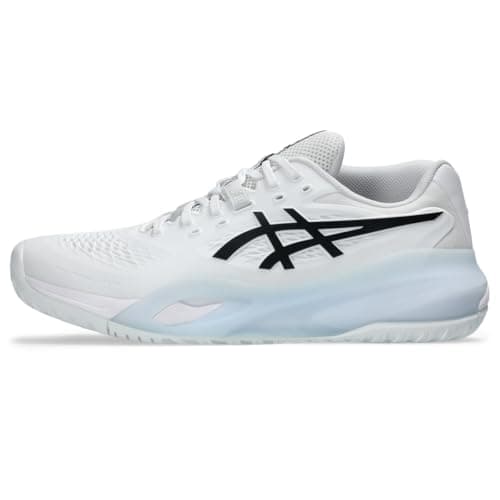 ASICS GEL-Resolution XTop pick | Players who change direction hard | 8.95 criteria | |
| 2 | 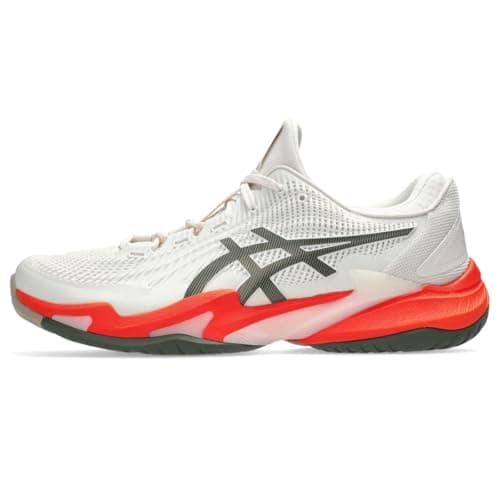 ASICS Court FF 3Best overall score | The highest-scoring shoe that fits the ceiling | 8.85 criteria | |
| 3 | 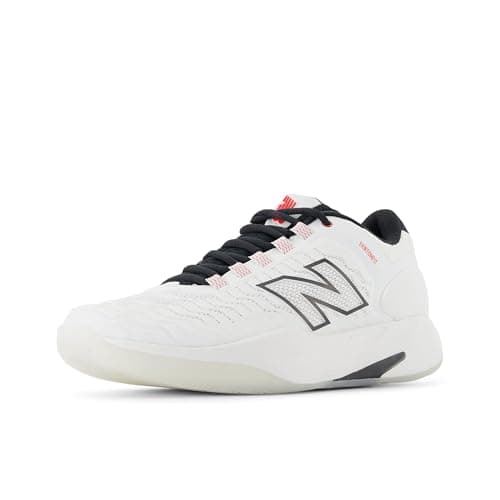 New Balance Fresh Foam X CT-Rally v2Most cushioning | Knees and heels that complain | 8.55 criteria | $127.79 · View on Amazon Price as of November 28, 2026 · was $149.99, 15% off |
| 4 | 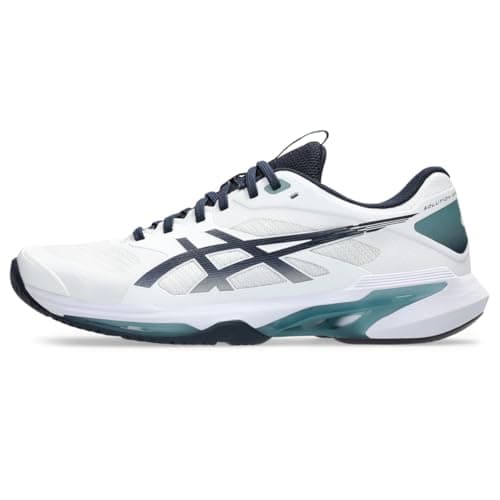 ASICS Solution Speed FF 4Lightest pick | Players who live on the baseline | 8.55 criteria | |
| 5 | 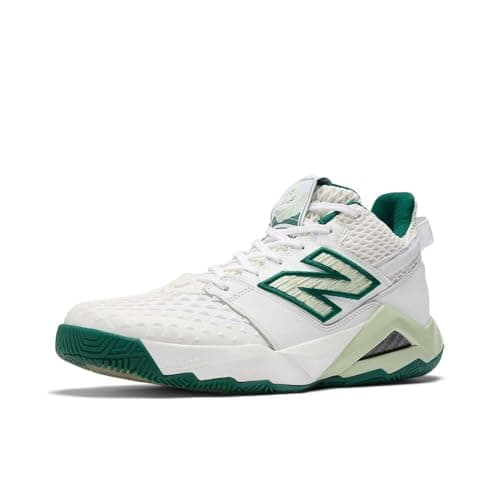 New Balance Coco CG2Best for women | Women's sizing, measured on a women's pair | 8.45 criteria | $132.76 · View on Amazon Price as of November 28, 2026 · was $159.99, 17% off |
| 6 | 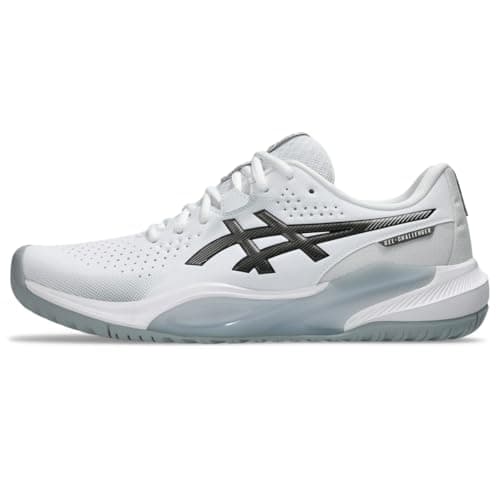 ASICS GEL-Challenger 15Best value | Spending the least for real structure | 7.95 criteria | |
| 7 | 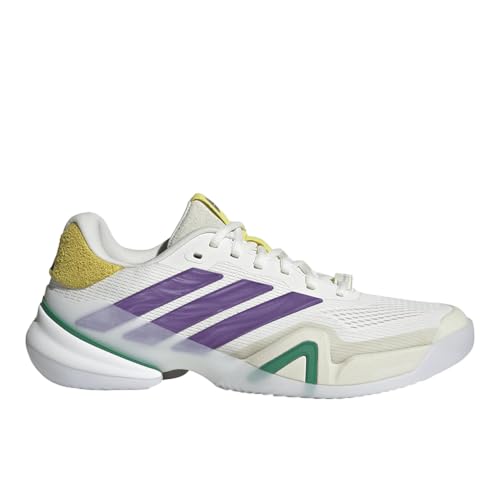 adidas Barricade 14Best court feel | Feeling the court under you | 8.05 criteria | $99.89 · View on Amazon Price as of November 28, 2026 · was $109.94, 9% off |
The picks in detail
01ASICS GEL-Resolution X
Top pickBest for: Players who change direction hard
A flagship stability shoe inside a $150 ceiling is the single best use of this budget, and this is that shoe. RunRepeat score the GEL-Resolution X 90 and award it best stability, and the two figures that justify it are both full marks: 5/5 for torsional rigidity and 5/5 for heel counter stiffness. Those measure how much the shoe resists twisting under a hard change of direction and how firmly it holds your heel - the two things that decide whether a court shoe protects an ankle or merely covers a foot.
The outsole is the other reason it leads. The durometer read 90.4 HC, the hardest compound on this page, and the abrasion test took only 0.6 mm of depth out of it. Hard rubber is what survives the sandpaper texture of an outdoor hard court, and outsole wear is how most court shoes actually die. On the comfort side the stack is 30.8 mm at the heel and 21.9 mm at the forefoot with 98 SA of heel shock absorption - not plush, but well inside normal.
The honest cost is weight, and it is the biggest number on the page: 14.7 oz / 417 g in a men's 9, against a category average nearer 365 g. All that structure has to be built out of something. If you cover a lot of ground, or you are coming from a light trainer, you will feel it in your legs before you feel the benefit in your ankles - and in that case the Solution Speed FF 4 below is the honest alternative. We have a full [GEL-Resolution X review](/reviews/asics-gel-resolution-x), and [GEL-Resolution alternatives](/tennis-shoes/asics-gel-resolution-alternatives) covers the swaps if one specification here is wrong for you.
Our score
- Lateral stability
- 9.5
- Cushioning
- 7.5
- Outsole durability
- 9.0
- Fit accommodation
- 7.0
- Lightness
- 4.0
- Overall
- 8.9
Verified specs
- RunRepeat score
- 90 — Best Stability
- Weight
- 14.7 oz / 417 g (men's 9)
- Heel / forefoot stack
- 30.8 mm / 21.9 mm
- Drop
- 8.9 mm
- Torsional rigidity
- 5/5
- Heel counter stiffness
- 5/5
- Heel shock absorption
- 98 SA
- Outsole wear
- 0.6 mm depth, 90.4 HC
- Forefoot traction
- 0.89 friction coefficient (average 0.78 across 47 shoes), AHARPLUS rubber
- Platform width
- 116.5 mm forefoot / 94.1 mm heel (average 112.5 / 89.7)
- Toebox width
- 96.9 mm widest / 66.6 mm at the big toe (average 69.3)
- Fit note
- RunRepeat: perfect for wide feet; snug at the big toe
Specs as published by RunRepeat, checked September 2026.
Buy if
- You have rolled an ankle before
- You play on abrasive outdoor hard courts
- You want flagship structure inside the bracket
Pass if
- Weight is what you notice first in a shoe
- You want a plush, high-stack ride
- You want a shoe that is playable on day one
02ASICS Court FF 3
Best overall scoreBest for: The highest-scoring shoe that fits the ceiling
This is the best-scoring court shoe on this entire site - RunRepeat give it 93 and make it the top pick of their main tennis-shoe guide - and it is also the clearest illustration of what this bracket is. RunRepeat describe it as an elite $170 shoe and one of the priciest on the market; it fits a $150 ceiling only because court shoes discount. For a player who wants the best shoe the budget reaches and has no specific structural requirement, this is the straightforward answer.
The structure is flagship and measured. Torsional rigidity scored the maximum 5/5 against a 4.5 average, heel counter stiffness 4/5, and the forefoot returned an unusually high 77 SA of shock absorption on a 32.2 mm heel and 21.8 mm forefoot stack - a thicker heel than anything else in this bracket except the CT-Rally v2. The outsole reads 85.3 HC, which is standard hardness, but RunRepeat call its wear resistance second to none, and the toebox took 5/5 for durability against a 3.7 average after twelve seconds of Dremel abrasion. For anyone who drags a toe on serve, that last figure is the one to buy on.
Three honest costs. RunRepeat list "not for wide feet" as a con: the one-piece Mono-Sock upper measures 92.2 mm at its widest point and 66.2 mm at the big toe, a few millimeters narrower than average, and they send wide-footed players to a GEL-Resolution instead. The heel lining is delicate - 2/5 for padding durability, with a visible hole after four seconds of the same abrasion test. And energy return is below average at 42.1 percent heel and 42.5 percent forefoot against a 50.2 percent average, so it plays planted rather than lively. At 14.3 oz / 406 g it is also one of the heaviest shoes here, and the pick most likely to move above the bracket when a discount ends.
Our score
- Lateral stability
- 8.0
- Cushioning
- 7.5
- Outsole durability
- 8.5
- Fit accommodation
- 9.5
- Lightness
- 8.0
- Overall
- 8.8
Verified specs
- RunRepeat score
- 93 — Top pick, best tennis shoes
- Weight
- 14.3 oz / 406 g
- Heel / forefoot stack
- 32.2 mm / 21.8 mm
- Drop
- 10.4 mm
- Torsional rigidity
- 5/5 (average 4.5)
- Heel counter stiffness
- 4/5 (average 4.2)
- Shock absorption
- 100 SA heel / 77 SA forefoot
- Energy return
- 42.1% heel / 42.5% forefoot (average 50.2%)
- Outsole hardness
- 85.3 HC
- Toebox width
- 92.2 mm widest / 66.2 mm at the big toe
- Toebox durability
- 5/5 (average 3.7)
- Heel padding durability
- 2/5 (average 3.2)
- Fit note
- RunRepeat: not for wide feet
Specs as published by RunRepeat, checked September 2026.
Buy if
- You want the highest lab score the budget reaches
- You want 5/5 torsional rigidity and a 5/5 toebox
- You drag your toe on serve
Pass if
- You have wide feet or bunions
- You want a light shoe
- You want a springy, high-energy-return ride
03New Balance Fresh Foam X CT-Rally v2
Most cushioningBest for: Knees and heels that complain
If impact is what ends your matches, this is the shoe in the bracket. RunRepeat recorded 116 SA of heel shock absorption - the highest reading in their hard-court set - on a 33.3 mm heel stack, and score it 92 with the award for shock absorption. For context, most court shoes in this comparison sit near 89 to 98 SA at the heel, so this is a step rather than a nudge.
The reason it is not simply a soft shoe is the midfoot: torsional rigidity scored 5/5, which is the same mark the dedicated stability shoe at the top of this page earns. Adding this much foam normally costs you the twist resistance, and this one kept it. That combination - a tall, soft heel and a rigid chassis - is the one to want if you are managing heel pain but still play competitive points.
Two honest costs. The gain is concentrated at the back: the forefoot measures 20.2 mm with 78 SA, so if your pain is under the ball of the foot this does less than the headline suggests. And a 33.3 mm heel stack puts you further off the ground, which asks more of the shoe when you slide. Our source publishes no outsole hardness or abrasion figure for it, so longevity is the open question here - [best tennis shoes for plantar fasciitis](/tennis-shoes/best-for-plantar-fasciitis) and [best tennis shoes for Achilles tendonitis](/tennis-shoes/best-for-achilles-tendonitis) cover the rest of that category.
Our score
- Lateral stability
- 8.5
- Cushioning
- 9.5
- Outsole durability
- 7.0
- Fit accommodation
- 7.5
- Lightness
- 7.0
- Overall
- 8.5
Verified specs
- RunRepeat score
- 92 — Best Shock Absorption
- Heel stack
- 33.3 mm
- Forefoot stack
- 20.2 mm
- Heel shock absorption
- 116 SA
- Forefoot shock absorption
- 78 SA
- Torsional rigidity
- 5/5
Specs as published by RunRepeat, checked September 2026.
Buy if
- Heel impact is your limiting factor
- You want cushioning without losing midfoot rigidity
- You play long matches on concrete
Pass if
- Your pain is in the forefoot
- You want maximum court feel
- You want published outsole-wear data
Price as of November 28, 2026 · was $149.99, 15% off
04ASICS Solution Speed FF 4
Lightest pickBest for: Players who live on the baseline
This is the bracket's answer for anyone whose game is covering ground rather than bracing against it. RunRepeat measured it at 11.9 oz / 337 g - 80 g lighter than the GEL-Resolution X at the top of this page - score it 90 and award it best for speed.
Most light court shoes save their weight in the outsole, and the lab figures say this one did not. Traction measured 1.11, which RunRepeat put 46 percent above the category average, and the abrasion test came in 0.3 mm shallower than typical. A light shoe that grips harder than average and wears slower than average is the rare combination in this category, and it is why this ranks above several higher-structure shoes for the players it suits.
The honest cost is the chassis it is built on. This is ASICS' speed platform, not their stability platform, and our source does not publish torsional-rigidity or heel-counter figures for it - so the structural evidence that justifies the Resolution X simply is not available here. If you have a history of rolled ankles, do not buy this on the weight figure alone; [best tennis shoes for ankle support](/tennis-shoes/best-for-ankle-support) ranks on those two measurements specifically.
Our score
- Lateral stability
- 7.5
- Cushioning
- 7.5
- Outsole durability
- 8.5
- Fit accommodation
- 7.5
- Lightness
- 8.5
- Overall
- 8.5
Verified specs
- RunRepeat score
- 90 — Best for Speed
- Weight
- 11.9 oz / 337 g
- Traction
- 1.11, 46% above average
- Dremel wear
- 0.3 mm less damage than average
Specs as published by RunRepeat, checked September 2026.
Buy if
- You want the lightest real court shoe in the bracket
- You want above-average grip and wear figures
- Your game is built on first-step speed
Pass if
- Ankle support is your priority
- You want published stability numbers
- You want a cushioned, high-stack ride
05New Balance Coco CG2
Best for womenBest for: Women's sizing, measured on a women's pair
This is the only shoe on the page whose lab teardown was performed on a women's pair - a US 9.5 - rather than a men's 9, which matters because a women's last is built on different proportions and most published court-shoe data is not. RunRepeat score it 92 and name it their best overall women's tennis shoe. It is also sold in both B and D widths at retail, so the fit can actually be matched rather than guessed.
The measurements are genuinely good rather than merely convenient. Forefoot energy return came in at 60.4 percent, the most propulsive figure in this group, with 113 SA at the heel and 72 SA at the forefoot and a 5/5 torsional rigidity score on a 28.2 / 22.0 mm stack and a low 6.2 mm drop. A six-month outsole warranty backs it. For a player who wants one shoe that is quick, cushioned and still rigid through the middle, this is the most balanced card here.
Two honest costs, both measured. The heel counter scored 3/5, the lowest on this page, so rearfoot lockdown is where it gives ground against the Resolution X's 5/5 - worth weighing if you have ankle history. And the outsole is the softest story here: 89.4 HC with 1.9 mm of Dremel wear, which is roughly three times the Resolution X's 0.6 mm, with traction at 0.63. Expect to replace it sooner than the ASICS pair. Our [best tennis shoes for women](/tennis-shoes/best-for-women) roundup covers the rest of that field.
Our score
- Lateral stability
- 8.5
- Cushioning
- 8.5
- Outsole durability
- 6.5
- Fit accommodation
- 8.5
- Lightness
- 7.5
- Overall
- 8.4
Verified specs
- RunRepeat score
- 92 — Best Overall, women's
- Tested pair
- Women's US 9.5
- Weight
- 12.6 oz / 356 g
- Heel / forefoot stack
- 28.2 mm / 22.0 mm
- Drop
- 6.2 mm
- Torsional rigidity
- 5/5
- Heel counter stiffness
- 3/5
- Forefoot energy return
- 60.4%
- Shock absorption
- 113 SA heel / 72 SA forefoot
- Outsole
- 89.4 HC, 1.9 mm Dremel wear
- Traction
- 0.63
- Widths at retail
- B and D
- Outsole warranty
- 6 months
Specs as published by RunRepeat, checked September 2026.
Buy if
- You buy women's sizing and want data from a women's pair
- You want a quick, propulsive ride
- You need a B or D width
Pass if
- You need maximum heel lockdown
- You wear outsoles out quickly
- You want the hardest-wearing option in the bracket
Price as of November 28, 2026 · was $159.99, 17% off
06ASICS GEL-Challenger 15
Best valueBest for: Spending the least for real structure
At the bottom of this bracket is the shoe that keeps the two measurements that matter most and gives up almost everything else. RunRepeat record 5/5 for midsole stiffness and 5/5 for heel counter stiffness - the structural pair that the flagship stability shoe at the top of this page also scores - and list it in their wide-feet catalog. They score it 83 and label it best for beginners, which undersells it: a stiff midsole and a stiff heel counter are what a developing player's ankles actually need.
It is the right purchase for two specific buyers. The first is a new player who does not yet know how often they will play, and who should not spend flagship money to find out. The second is anyone who wants a second pair in rotation - two pairs alternated last longer than two pairs worn out consecutively, and this is the cheapest way to make the pair you love last a season longer.
Two honest costs. It is the lowest-scoring shoe here at 83, and RunRepeat describe it as notably heavier than average - so it does not solve the weight problem the Resolution X has, it just costs less to live with. And the published data thins out at this price: no traction coefficient, no abrasion figure, no stack measurement, so outsole life is unknown. There is a full [GEL-Challenger 15 review](/reviews/asics-gel-challenger-15) if you want the detail.
Our score
- Lateral stability
- 9.0
- Cushioning
- 6.5
- Outsole durability
- 7.5
- Fit accommodation
- 8.5
- Lightness
- 5.5
- Overall
- 7.9
Verified specs
- RunRepeat score
- 83 — Best for Beginners
- Midsole stiffness
- 5/5
- Heel counter stiffness
- 5/5
- Weight
- Notably heavier than average
- Width fit
- Listed in RunRepeat's wide-feet catalog
Specs as published by RunRepeat, checked September 2026.
Buy if
- You want a 5/5 heel counter at the lowest price here
- You are buying a first or second pair
- You need a wider fit
Pass if
- You want a light shoe
- You want published traction and wear data
- You play four or more times a week
07adidas Barricade 14
Best court feelBest for: Feeling the court under you
The Barricade is tennis's other stability-first line, and the current generation is in this bracket rather than above it. RunRepeat award it best court feel, and the measurements explain why: a 26.3 mm heel and a 14.4 mm forefoot, which is the lowest, most grounded platform on this page. Standing closer to the court gives you a much clearer sense of where your weight is, which matters more than cushioning to players who slide into shots and push off hard off the back foot.
If you have ever stepped off a thickly cushioned shoe and felt like you were playing on a mattress, this is the corrective - and inside this ceiling it is the cheapest way to get a flagship chassis rather than an entry one. It is the opposite end of the same decision as the CT-Rally v2 above, which is the point of ranking both.
The honest cost is severe and it is measured: forefoot shock absorption of 47 SA, against a category average near 99 SA. That is less than half the protection under the ball of your foot. If you have any forefoot or heel sensitivity, or you play long matches on concrete, this is the wrong shoe at any price. Our source does not publish a weight figure for it either, and Barricades have historically not been light. [Best all-court tennis shoes](/tennis-shoes/best-all-court) sets the line against the rest of the premium field.
Our score
- Lateral stability
- 9.0
- Cushioning
- 4.5
- Outsole durability
- 8.0
- Fit accommodation
- 7.0
- Lightness
- 6.0
- Overall
- 8.0
Verified specs
- RunRepeat award
- Best Court Feel
- Heel stack
- 26.3 mm
- Forefoot stack
- 14.4 mm
- Heel shock absorption
- 89 SA
- Forefoot shock absorption
- 47 SA
- Forefoot traction
- 0.84 friction coefficient (average 0.78 across 47 shoes), Lighttraxion outsole
- Platform width
- 116.8 mm forefoot / 93.6 mm heel (average 112.5 / 89.7)
- Torsional rigidity
- 13.4 Nm (average 18.1 Nm)
- Dremel wear
- 2.6 mm, the worst result in RunRepeat's category
Specs as published by RunRepeat, checked September 2026.
Buy if
- You want court feel rather than cushioning
- You slide and push off aggressively
- You want a flagship stability chassis low in the bracket
Pass if
- You have any forefoot or heel sensitivity
- You play long matches on hard concrete
- You want a light shoe
Price as of November 28, 2026 · was $109.94, 9% off
What $150 actually buys in a court shoe
This bracket is interesting because of where it sits. Under $100 you are choosing the best entry-level court shoe and accepting one real weakness. At $150 that flips: the ceiling is high enough to reach current flagship models, so the question stops being which compromise you can live with and starts being which flagship strength you actually need.
Four things separate a flagship court shoe from an entry one, and all four are measurable rather than marketing.
- Torsional rigidity and heel counter stiffness. These are the structural pair, scored out of 5, and they decide whether the shoe resists twisting when you plant and change direction. The GEL-Resolution X scores 5/5 on both. Entry shoes very often do not, and this is the gap that matters if you have an ankle history.
- Outsole compound. Durometer hardness and abrasion depth together tell you how long the shoe survives. The Resolution X read 90.4 HC and lost 0.6 mm in the Dremel test; the Coco CG2 read 89.4 HC and lost 1.9 mm. A shoe that lasts a full season at this price is cheaper per month than a cheaper shoe you replace twice.
- Shock absorption, measured at both ends. Heel and forefoot figures are separate and often very different: the CT-Rally v2 is 116 SA at the heel but 78 SA at the forefoot, and the Barricade 14 is 47 SA at the forefoot. Match the end that hurts, not the headline number.
- Fit, documented rather than assumed. A published toebox measurement - the GEL-Resolution X's 96.9 mm at the widest point against the Court FF 3's 92.2 mm - or retail widths like the Coco CG2's B and D is worth more than any score if standard court shoes pinch you. RunRepeat call the Resolution X perfect for wide feet and the Court FF 3 not for wide feet, and those two sit in the same bracket at the same lab.
Nothing on that list is about colorways, upper weave or the technology names printed on the midsole. If a shoe at this price does not have published numbers behind at least two of those four, you are paying for a tier you cannot verify - which is why every card above states plainly where our source stops publishing.
Most of this bracket is discounted flagships, and that is the point
Five of the seven shoes on this page are premium-tier models. They fit under $150 because court shoes discount steeply and predictably once the next generation is announced, not because they were built to a budget. That is a genuinely good deal: last season's flagship outperforms this season's entry shoe on almost every measurement that matters, and the lab figures do not expire when the colorway does.
It comes with two real costs, and they are worth stating before you shop. The first is availability: discounted stock runs out by size and width rather than evenly, so the shoe you want may not exist in your size - and if your size is unusual, buy when you find it. The second is that a bracket is a snapshot. Prices in this category move weekly, so a shoe sitting just under the line today can be above it next month, and the opposite happens just as often.
The specs side by side
Every figure is a RunRepeat lab measurement from the pages cited in Sources. Where they have not published one, the cell says so rather than guessing.
| Shoe | RunRepeat score | Weight | Heel / forefoot stack | Structure (torsional / heel counter) | Best for |
|---|---|---|---|---|---|
| ASICS GEL-Resolution X | 90 - Best Stability | 14.7 oz / 417 g | 30.8 / 21.9 mm | 5/5 and 5/5 | Hard direction changes |
| ASICS Court FF 3 | 93 - Top pick, best tennis shoes | 14.3 oz / 406 g | 32.2 / 21.8 mm | 5/5 and 4/5 | Best score, narrow feet |
| New Balance CT-Rally v2 | 92 - Best Shock Absorption | Not published | 33.3 / 20.2 mm | 5/5 and not published | Heel pain |
| ASICS Solution Speed FF 4 | 90 - Best for Speed | 11.9 oz / 337 g | Not published | Not published | Covering ground |
| New Balance Coco CG2 | 92 - Best Overall, women's | 12.6 oz / 356 g | 28.2 / 22.0 mm | 5/5 and 3/5 | Women's sizing |
| ASICS GEL-Challenger 15 | 83 - Best for Beginners | Heavier than average | Not published | 5/5 midsole and 5/5 | Spending the least |
| adidas Barricade 14 | Best Court Feel | Not published | 26.3 / 14.4 mm | Not published | Court feel |
Read the structure column first if you have ever turned an ankle, and the stack column first if something hurts after a match. Those two columns disagree with each other more than any others on the page: the shoe with the most cushioning is not the shoe with the most support, and the shoe with the most court feel has the least protection of anything here.
How to choose between them
One pass, in order, stopping at the first line that describes you.
- 01If you have rolled an ankle, buy the ASICS GEL-Resolution X. It is the only shoe here with 5/5 published for both torsional rigidity and heel counter stiffness, and it has the hardest-wearing outsole in the set.
- 02If your heels or knees are what stop you, buy the New Balance CT-Rally v2 - 116 SA at the heel, and still 5/5 torsional.
- 03If standard court shoes pinch across the ball of the foot, buy the GEL-Resolution X - RunRepeat call it perfect for wide feet at 96.9 mm across the widest point - and do NOT buy the Court FF 3, which they flag as not for wide feet.
- 04If you cover more ground than anyone else in your group, buy the ASICS Solution Speed FF 4 - 80 g lighter than the top pick, with grip 46 percent above average.
- 05If you buy women's sizing, start with the New Balance Coco CG2: the only shoe here measured on a women's pair, in B and D widths.
- 06If you want to spend as little as possible and still get real structure, buy the ASICS GEL-Challenger 15.
- 07If you want to feel the court and your forefoot is not sensitive, buy the adidas Barricade 14 - and read the 47 SA figure twice first.
Two things to settle before you order. Get the width right - best tennis shoes for wide feet and best tennis shoes for narrow feet list the shoes whose fit is documented. And check what the pair you own actually has left: when to replace tennis shoes is worth reading before you spend anything, and how to choose tennis shoes for your court surface covers the outsole question this page assumes.
What you still cannot get under $150
Three things the ceiling rules out, so you know what you are not buying.
- The most structurally rigid Nike. The Zoom GP Challenge 1 scores 88 with a 5/5 torsional rigidity figure and a rebound-focused midsole, and it sits above this bracket - it is the one shoe we would name as worth saving for if a springy ride is what you want. It is on our best hard court tennis shoes roundup.
- The springiest ride in the category. The Mizuno Wave Exceed Tour 7 AC measured 55.7 percent heel and 58.5 percent forefoot energy return with a 1.04 traction figure, and it typically sits just over the line. Its 12.9 Nm torsional figure is below the 18.1 Nm average, so it is a trade rather than an upgrade - but it is the ride nothing in this bracket matches.
- A dedicated clay chassis with full published data. The most thoroughly measured clay shoe in the category is the ASICS GEL-Resolution 9 Clay, and we have no live listing to send you to for it. For clay inside this budget, the adidas Barricade 13 Clay and the ASICS Solution Speed FF 3 Clay are the two options with listings - see best clay court tennis shoes.
Worth saying the other way round too: none of those three is a reason to wait. At this ceiling you are already buying the same chassis, the same outsole compounds and the same published structural scores as the tier above. What the extra money buys is a specific characteristic, not a better shoe in general.
How these picks were made
Racket & Rally does not run a test lab. Nothing on this page is written as though we had worn, swung or measured anything ourselves, because we have not. What we do is read the published specifications, the independent lab results and the retailer listings cited at the foot of the page, set them against each other, and say which differences change something you will actually notice.
Every product here was confirmed on sale when its registry entry was built, and every claim traces to one of the sources listed at the bottom. Our full selection criteria set out the method, and the editorial policy covers corrections and how often pages are revisited. Where a brand or a listing does not state a figure, we say that rather than filling the gap.
Common questions
What is the best tennis shoe under $150?
The ASICS GEL-Resolution X. RunRepeat score it 90 and award it best stability, with 5/5 for torsional rigidity, 5/5 for heel counter stiffness, the hardest outsole in the set at 90.4 HC and only 0.6 mm of abrasion wear. The cost is weight: 14.7 oz / 417 g, which is well above the category average.
Is it better to buy last year's flagship or this year's entry shoe?
Last year's flagship, for almost every club player. Five of the seven picks on this page are premium-tier models that fit the ceiling because court shoes discount steeply once the next generation lands, and the lab measurements do not get worse when the colorway changes. The catch is stock - discounted sizes and widths sell out unevenly, so buy when you find yours.
What do you give up by staying under $150?
Three specific things rather than quality in general: the most structurally rigid Nike flagship, which sits above the bracket; the springiest ride in the category, which is the Mizuno Wave Exceed Tour 7 AC just over the line; and a clay chassis with a full published teardown. Inside the bracket you still get 5/5 structural scores, flagship outsole compounds and documented fit widths.
Which shoe under $150 is best for wide feet?
The ASICS GEL-Resolution X. RunRepeat put "perfect for wide feet" in its pros, name wide feet and bunions among the players it suits, and measure its toebox at 96.9 mm across the widest point - among the widest figures they have recorded in tennis. If you want to spend less, the GEL-Challenger 15 and the adidas Barricade 13 Clay are both in their wide-feet catalog and the New Balance Coco CG2 is sold in B and D widths. The one to avoid is the Court FF 3, which they flag as not for wide feet. More in best tennis shoes for wide feet.
Which shoe under $150 has the most cushioning?
The New Balance Fresh Foam X CT-Rally v2, at 116 SA of heel shock absorption on a 33.3 mm heel stack - the highest reading in RunRepeat's hard-court set. It also holds 5/5 torsional rigidity, so the cushioning does not come at the cost of midfoot support. The forefoot is more modest at 20.2 mm and 78 SA.
Will a shoe in this bracket last a full season?
That depends on your surface and how often you play, which is why we quote outsole figures rather than months. The spread on this page is real: the GEL-Resolution X lost 0.6 mm of depth in the abrasion test on the hardest outsole here at 90.4 HC, while the Coco CG2 lost 1.9 mm on an 89.4 HC outsole - roughly three times the wear. The Court FF 3 reads a standard 85.3 HC and RunRepeat call its wear resistance second to none, though its heel lining scored only 2/5. If you grind outsoles on abrasive courts, buy on those numbers. When to replace tennis shoes covers the warning signs.
Is there a good option under $100 instead?
Yes - the bracket below has six real court shoes in it, led by the K-Swiss Ultrashot Light at 11.0 oz / 312 g with an abrasion result 25 percent better than average. You give up the flagship structural scores and most of the published lab data. Best tennis shoes under $100 is the full ranking.
Do I need court shoes at all, or will running shoes do?
You need court shoes. Running shoes are built for forward load and have no lateral structure, and the failure mode is an ankle rather than a worn sole. Are court shoes different than running shoes sets out the construction differences and tennis shoes vs running shoes covers the injury risk. For the same field sorted on a single measurement instead of a ceiling, see most cushioned tennis shoes and best tennis shoes with no break-in.
Read next
Sources
- 01RunRepeat - ASICS GEL-Resolution X lab report
- 02RunRepeat - ASICS Court FF 3 lab report
- 03RunRepeat - best hard court tennis shoes
- 04RunRepeat - New Balance Coco CG2 lab report
- 05RunRepeat - New Balance Fresh Foam X CT-Rally v2 lab report
- 06RunRepeat - Mizuno Wave Exceed Tour 7 lab report
- 07RunRepeat - best tennis shoes
- 08RunRepeat - best cheap tennis shoes
- 09RunRepeat - wide tennis shoes catalog
Every source above was retrieved while writing this page. Specifications are quoted from the listing or manufacturer page cited, not from memory.